

La oficina de la ONU para la defensa de los DDHH documentó graves vulneraciones de los derechos económicos, sociales, civiles, políticos y culturales en Venezuela.
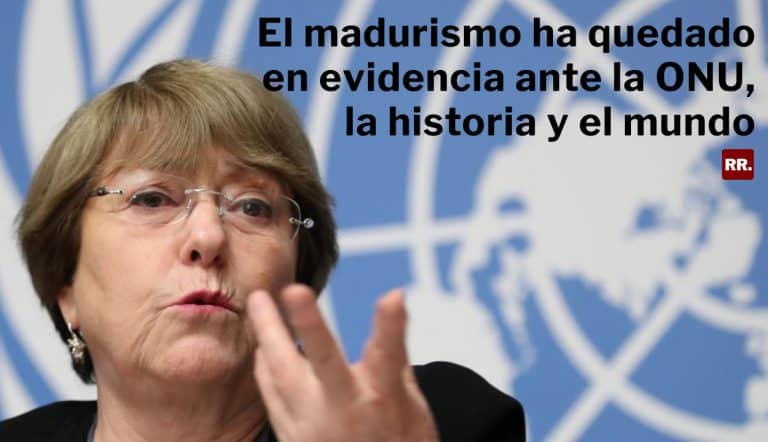
La oficina de la ONU para la defensa de los DDHH documentó graves vulneraciones de los derechos económicos, sociales, civiles, políticos y culturales en Venezuela.
Lector – «Luna menguante. No Luna de Fausto sino de Rafael. Usted ensalza a un criminal, el mayor responsable de la debacle p…»
Yo – «Ya que tiene las pruebas debería denunciarlo, eso sí, si es un buen ciudadano…»
Lector – «Lo he hecho repetidas veces… Está bajo investigación y algunos miembros de su pandilla ya están presos o prófugos…El también irá preso…» Gustavo coronel
Rafael Ramírez no ha sido juzgado. Hay una denuncia de la fiscalía y este supuesto ciudadano tiene otra, según argumenta. A Rafael Ramírez no se le permite defenderse, pues si viene a Venezuela lo ponen preso, porque una denuncia del fiscal, para el gobierno, es ya una condena.
En Venezuela se acabaron (hace rato) los juicios sumarios, todo señalado de cometer un delito es inocente hasta que no se demuestre lo contrario. Pero al gobierno eso le resbala, junto al fiscal ya lo condenaron (y, de paso, también este señor). Por ejemplo, este señor lo llama de una vez criminal. Sin juicio y sin condena, para él es un criminal. Esto se llama «prejuicio», en sentido estricto, un juicio hecho antes de que un tribunal condene – o una entidad suprema –, alguien, o juzgue como uno hecho definitivo la condición moral o judicial de alguien.
Podríamos decir que no hacen faltas pruebas judiciales si existen las pruebas políticas, o morales; que, por ejemplo, debido a la cantidad de personas vinculadas con su gestión en PDVSA en su misma condición, o ya condenados, debemos concluir que él, que fue su jefe, debe tener la misma responsabilidad o más, en hechos imputados y ya juzgados. Siguiendo este razonamiento el responsable principal de estas imputaciones criminal llegaría hasta la persona de Chávez. Pero, más aún, las imputaciones de personalidades como Eulogio del Pino y Nelson Martínez implicarían directamente a Nicolás Maduro, el acusador principal de Rafael Ramírez de ladrón, quién fue quien hizo ese famoso enroque entre los anteriores incluido Asdrúbal Chávez.
El asunto es que estos prejuicios dañan la reputación de las personas por el efecto pernicioso de la calificación, o descalificación imputándoles delitos que no han sido comprobados, a una persona, o a personas que ni siquiera se han podido defender (Luongo, Ramírez, Del Pino y el difunto Nelson Martínez, la lista es grande de presos de PDVSA sin sentencias, sin poder defenderse, confinados como si estuvieran en la Rotunda). Se trata de una técnica política, muy utilizada en tiempos de los atajaperros de entre adecos, copeyanos y masistas: la orden era desprestigiar al contrario (argumentar ad verecundia), «todo el mundo tiene rabo de paja», era la orden, igualar a los mejores al nivel de los peores, un poco para sentirse consolado de cargar con tana villanía, tanta mierda encima. Pero es un método más viejo aún.
En la conciencia colectiva queda ese sentimiento (o resentimiento) de venganza cuando una persona como Rafael Ramírez es calificado de pillo, de criminal, como hace este correcto ciudadano al llamar, de una, y sin juicio y sentencia, al ex ministro.
Pero, sigamos con los juicios políticos. Si acaso a mi persona le tocara decidir quién debería administrar ahora a PDVSA no lo pensaría dos veces, dría que Rafael Ramírez «y su pandilla». Las razones son obvias. Resulta que sus acusadores, sustitutos, envidiosos y resentidos quebraron la empresa y ahora quiebran al país, para entregárselo en bandeja a los privados. Eso es peor que unos cuantos ladrones descubiertos y juzgados se hayan robado millones (de «millones» a quebrar PDVSA y quebrar un país completo hay mucho cuento). O entregarle la empresa a las trasnacionales, lo que haría la derecha, en provecho propio. Yo le preguntaría a quien escribe, el supuesto señor Gustavo Coronel, si usted denunció a Ramírez ¿Cuál sería la razón?, ¿justicia, restitución de la empresa a las trasnacionales, o justificar a Maduro y su equipo que quebró la empresa (o casi casi)? Usted debe representar o apoyar algo o alguien. Yo apoyo a Rafael Ramírez, no por ingenuo, sino porque creo en las personas, a través de sus obras ¿A quién apoya usted y por qué? Si realmente existe un Gustavo Coronel debería hablar de forma honesta y directa, «tomar partido» ¿No cree?
Pero de eso se trata el método, de «aparecer» condenando a la personas como una «voz interior», como la «conciencia del pueblo» o de algo superior y difuso, descalificando; irrebatibles porque simulan a la «conciencia» en sí misma. Y no lo és, o no lo son, estos señores son «máquinas», humanas o electrónicas, al servicio de los intereses de alguien o de algo. La Razón no existe pura y simple (algunos tontos la contraponen a la ideología) siempre está al servicio de algo o de alguien, no existe una consciencia anterior al hombre o a la historia, desinfectada de humanidad, siempre alguien o algo la embarra.
Entre otras muchas amenazas, Rafael Ramírez le teme a estos cabilleros asolapados, estos instigadores, es decir, al síndrome Ruanda, que dejó un millón de cadáveres tutsi regados en las calles del país, todos asesinados solo en una noche. Por prejuicios como este y descalificaciones de esta naturaleza una horda de pendejos llevados de las narices, arrastrados por el resentimiento, la envicia y el odio, son capaces de asesinar a muchos inocentes. Y eso lo sabe Maduro y sus similares. Y eso lo sabe la derecha que ha usado al fantasma del comunismo y del socialismo para asesinar a sus competidores y enemigos, y a la corrupción, al narcotráfico, a la pederastia o cualquier otro estigma social para descalificar, la confusión moral se ha puesto de moda en la política de mala calaña. En esto los dos grupos son como mellizos idénticos.
No obstante, no dejo de pensar que se agota el tiempo para retomar el camino de Chávez, el Plan de la Patria original baja el mando de un líder capaz y verdaderamente chavista, para nosotros debe ser Rafael Ramírez, así de sencillo. Si salen otros junto a él, ¡perfecto!; sin hay «pueblo en armas», ¡perfecto! Pero deben aparecer y manifestarse ahora, porque la torta del país se la están repartiendo en Barbados y el fascismo aumenta cada día.
The Food and Agriculture Organization of the United Nations (FAO) has published its most recent report of the series “The State of the World”, entitled “The State of Food Security and Nutrition in the World 2019”. This is the third consecutive year this report has been prepared by various UN agencies such as FAO, FIDA, WHO, WFP, and UNICEF.
This annual report monitors the issues of “hunger, food insecurity, and malnourishment in the world” in a display of the UN agencies commitment of working in the “2030 Agenda for Sustainable Development” which was adopted by member States, including our own, to achieve the “Development Goals” for 2030. In this particular case, the agencies work to achieve the Development Goal listed as number two, “Zero Hunger” for 2030.
However, the report is far from encouraging. In it, it states that “More than 820 million people in the world are still hungry today”. It also indicates that “another disturbing fact is that about 2 billion people in the world experience moderate or severe food insecurity. The lack of regular access to nutritious and sufficient food that these people experience puts them at greater risk of malnutrition and poor health.”
The UN agencies reflect the paradox: this phenomenon is taking place at the same time technology is experiencing a meteoric growth in an ever more interconnected and globalized economy. Nonetheless, it is an unbalanced growth. Many countries do not register such growth rates: the economy, conflicts, instability, and, above all, inequalities, seriously hinder the possibilities to achieve the 2030 Development Goals, including ending hunger and poverty.
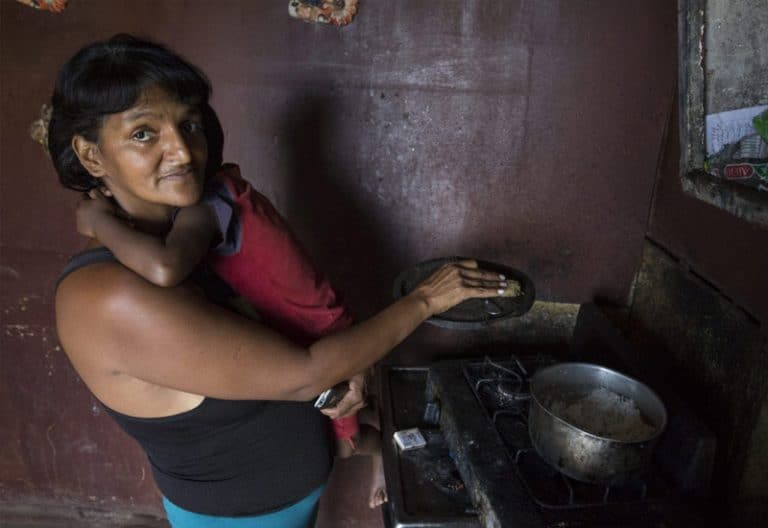
In the case of Venezuela, the report published by FAO is utterly devastating. This indicates that 6.8 million Venezuelans live with hunger in the country. In other words, 2.2 out of every 10 people face hunger, defined as people that “have likely run out of food, experienced hunger and, at the most extreme, gone for days without eating, putting their health and well-being at grave risk.” (FAO Op.cit.)
There was an increase of 21.2% in hunger rates in the period 2013–2018 (maduro’s first term in as president), which means, an increase of more than 17.2% of hungry Venezuelans in the country.
 The prevalence of undernourishment is the traditional indicator by FAO used to monitor hunger at global and regional levels. (FAO “The State of Food Security and Nutrition in the World 2019”, figure 8)
The chart shows how until 2012, this indicator remained below the average of 5.3% in South America and 6.8% in Latin America and the Caribbean. FAO explains that “The increase observed in recent years (in South America) is due to the economic slowdown in several countries, particularly the Bolivarian Republic of Venezuela, where the PoU increased almost fourfold, from 6.4 percent in 2012 — 2014 to 21.2 percent in 2016 — 2018”
Between 2009 and 2011, our rate was only 3.1%. If compared to the current 21.2%, it is worth asking, what has happened during the period of the madurismo? Let us see.
The first thing the madurismo would argue is that this report by FAO is “part of the war against the country” and that the director of FAO, José́ Graziano da Silva, “wrote it in the offices of Elliott Abrams”, as they disrespectfully addressed the report of the High Commissioner, Michelle Bachelet. But the truth is that this new UN report comes from the same agency, FAO, which recognized in 2012 the achievements of the government of Chávez in “eradicating hunger and extreme poverty in the country”.
They would likely argue that “with maduro, the oil prices dropped to unprecedented levels in the history of the country”, and not as with Chávez, when “it was very easy to make a revolution with the price of oil at 100”, as they rudely and inconsiderately say about the Bolivarian government, obviously lying because they omit that, when Chávez came to power in 1999, our basket price was 11 dollars a barrel; they forget that in January 2003 we produced only 23 thousand barrels of oil per day because of the oil sabotage; and, that in January 2009 (when the hunger rate was only 3.1% as the chart above shows), the oil price was 30 dollars a barrel, a price that we later recovered with a dramatic cut in the production of 4.5 million of barrels of oil per day as established by OPEC, of which we had to cut 364 thousand barrels per day, which led our production of oil from 3.374 million of barrels per day to 3.010 million of barrels per day until 2013.
Additionally, the madurismo and its propaganda always kept silence on the sanctions imposed in 2010, when the United States sanctioned PDVSA, accusing it of having relations with the Islamic Republic of Iran. Illegal sanctions and absurd accusations since Iran, an OPEC founding member, held relations with our country, as well as with all the other OPEC members. But, also, they forget to mention that although the sanctions against PDVSA were harsh, we were able to manage the crisis, seek our technological sovereignty, and resort to alternative markets, as a result of our diversification policy. The impact of those sanctions was never felt in the country; there was gasoline, cooking gas, and oil production. There was no hunger.
They probably allege that these figures related to hunger in the country are the result of the “economic war” and the “sanctions”. But by seeing the chart above, it is easy to realize that it is since maduro’s government the data about hunger in the country skyrocket, long before the 2017 sanctions. Why?
Because of the mismanagement of the economy, the absolute improvisation, the lack of economic planning, the lack of official figures, the hyperinflation, the mega devaluation, the inexistence of a foreign exchange policy, the abrupt change of direction of maduro to the right; the dismantling of the social Missions, including the Misión Alimentación (Food Mission); the destruction of PDVSA, the plummet of oil production and fiscal oil revenue; the collapse of the non-oil economy, including agriculture, livestock, imports, and food distribution; the increase in poverty, extreme poverty, exclusion, and inequality.
According to FAO, “Economic events generally affect food security and nutrition, depending on the extreme poverty level, but also on the existence of inequalities in income distribution as well as in access to basic services and assets, many of which result from social exclusion and the marginalization of groups. Where inequality is greater, economic slowdowns and downturns have a disproportionate effect on food security and nutrition for lower-income populations. Inequality increases the likelihood of severe food insecurity…” (FAO Op.cit.)
Indeed, the disastrous effects of maduro’s package and his terrible administration are being felt in the country; and these are now displayed by the most serious agencies in the world. We are not talking about NGOs funded by foreign governments; we are talking about nothing less than the United Nations, the quintessential multilateral organization, the major leagues of international politics, where all the countries of the world are represented; an organization respected by all, with agencies and a methodology that has been developed for over 70 years in which they have served the peoples of the world. This organization is currently headed by the Secretary-General Antonio Guterres, along with a first-class working team which includes former president Michelle Bachelet, High Commissioner for Human Rights, and Mr. José Graziano Da Silva, FAO Director-General, who, in the discharge of their functions, alert and denounce the deplorable situation in Venezuela.
The political sectors, including the government, instead of discrediting and trying to ignore these telling reports, should take actions to rectify and redress the revolutionary policies of president Chávez. Since it is evident that neither the madurismo nor the extreme right is willing to do so, it is then up to the people and the progressive and patriotic sectors to resume these programs and policies because these are the essential instruments to reverse this crime against the people, the hunger as the ultimate expression of anti-grass-root policies, a serious setback for our country.
Now, these tasks are a national emergency, thus, they will have to be addressed with the highest popular participation and all the power of the State, in order to ensure people’s access to food. Defeating hunger and poverty was always one of the main concerns and tasks of our Bolivarian government and it was successfully addressed until 2012; in fact, just as the Bachelet report indicated, it is the State’s responsibility and part of the human, economic, and social rights of the population, rights that are nowadays violated in our country.
Tackling hunger was a priority in the destination of the oil revenue, in other words, the oil revenues in our period between 2004 and 2012. That was the scope of our offensive, right from the defeat of the Oil Sabotage: the Full Oil Sovereignty, the recovery of PDVSA, the new redder PDVSA, the Fiscal Oil Revenue, royalties, and oil tax, as well as maintaining the operational control of the business; it was about putting oil at the service of the people, in favor of the national development. That was what we did during that period of time, we generated 500 billion dollars, of which 100 billion dollars were destined to social development, namely the Missions, including the Food Mission. The rest of this enormous amount of resources went to the national treasury and the different funds created by the new “financial architecture” of the country.
The revolutionary offensive started in 2003–2004, alongside the oil offensive and the popular offensive with the Missions: Barrio Adentro, Robinson, Ribas, Sucre, and Food. Fundamental factors in these programs were the new redder PDVSA, the Bolivarian Armed Forces, the emerging People’s Power, and the authentic cooperation with Cuba.
Those were years of national mobilization, deployment, and transformation of the State institutions and their nature, with a transformation into a revolutionary State at the service of the people. All of us, under the leadership of President Chávez, dedicated ourselves completely to the fight against hunger and poverty. And it was a success, one recognized by the United Nations which highlighted our social progress and the fact that we were one of the first countries to achieve the UN millennium goals; we reduced poverty and exclusion, having one of the highest minimum wages in the region, 450 dollars a month, with an enviable Gini index (coefficient that measures inequality), only surpassed in the region by Uruguay.
In the food sector, the generalized well-being of the population, we can graph the results, using data from FAO:

In the words of Dr. Bernard Mommer, good friend, oil expert, author of fundamental works on the oil issue, who is currently persecuted and defamed by the madurismo and its prosecutor, the best way of measuring the popular distribution of the oil revenues is through the population’s possibility to access food, quality food. He is right.

Let us examine in these charts, whose source is the reports of FAO, how the favorable effects of the grass-root offensive during the period of president Chávez, particularly between 2003 and 2004 and until 2012. The oil revenue is there, and so is the social investment, the Missions, the grass root and revolutionary orientation of a government in the discharge of the mandate of the Constitution and the laws.

In terms of capabilities developed in Revolution, between 2003 and 2013, we can see that:
The Food Mission began in April 2003 becoming the spearhead for guaranteeing food security, by using a network composed by Mercal, PDVAL, and Abastos Bicentenarios, with more than 21,130 stores nationwide, distributed as follows: 13,455 Mercal stores, 50 Abastos Bicentenarios stores, 942 PDVAL stores, 6,000 Food Centers, 363 stores of Red Venezuela, 81 popular pharmacies, 127 production facilities, food processing plants, packaging plants, and distribution (Mercal, Lácteos Los Andes, Industrias Diana), 65 silo plants, collection centers, storages, CASA refrigerating centers, and CEALCO refrigerating plants.
The Food Mission distributed between 2003 and until 2013 more than 21 million tons of food, benefiting more than 19 million people, which represents 64% of the Venezuelan population.
The big question to maduro’s administration and the denunciation before the people is: where are all those assets that belong to the State? Maduro dismantled the Food Mission, accusing it of “corruption”. He closed the “food centers”; he also closed the public distribution network, or worse, he transferred them, as if nothing happened, privatizing them in favor of his friends and figureheads. How did we go from Food Mission to “Bodegones” (big pantry-like stores) where the new delicacies for that minority denounced by FAO are sold? Who owns those “Bodegones”?
And what about the people? Behind a Clap box, that not only is an embarrassment but that it contains poor quality, sometimes expired, products which are not produced in the country. Poor quality products brought from Turkey or other countries that are “partners” of the madurismo. A mechanism under investigation by the Mexican Prosecution, but in the meantime, the opposition in charge of the Comptroller’s Commission remains particularly silent.
Where is the national production of food? Where are the nationalized lands? How many farmers have been killed by the new “lords of the land”? Where are Pequiven’s fertilizers? Where are the Urea and Ammonia plants of Morón?
And, of course, where is PDVSA? The workers of the Workers Front have denounced a technical completion of areas of production and refinement. With a production every time closer to 500 thousand barrels of oil per day, without gasoline, diesel or cooking gas, where are the oil revenues? If the little production and export we have are used to pay the loans taken by the government from his foreign partners, if maduro ordains exemptions on oil taxes, if he is offered to reduce royalties to Chevron Texaco so it does not leave the country, if PDVSA does not generate oil revenues.
That is the disaster created by maduro, a disaster that has caused that four million Venezuelans fled the country; that we have the highest hyperinflation rates in the world, and in the history of the world; that the minimum wage is only 7 dollars a month, lower than in Haiti and Cuba, the lowest in the region.
What we have in Venezuela is hunger and the destruction of a country, with an extremely kind and patient people. How long will this complicit silence last? How long will all this surrendering and misery last? I stand by my historic role, I am loyal to my principles and convictions, I speak with figures and facts. The government is persecuting me, I am being politically persecuted; the government’s figureheads pay lawyers and oppositionists to persecute me, they are willing to do any kind of atrocity to silence me. I will go on with my ideas, my principles, always alongside the people. At some point, I will return to be with you, in my homeland, fighting for a future we all deserve, fighting for the reconstruction of the country. We will be victorious!

Una nueva agencia de la ONU, la FAO, desenmascara a maduro. Según su más reciente Informe 6,8 millones de venezolanos padecen de hambre. 4 veces más que durante el gobierno de Chávez, cuando Venezuela logró “Hambre Cero”, según el reconocimiento que la propia FAO le hiciera entonces al Comandante Chávez.
La gráfica que acompaña el informe es contundente y revela que esta tragedia no se debe a “guerras económicas” ni sanciones, sino que son directamente atribuibles al mal gobierno de maduro, quién ha desmantelado los exitosos programas de abatimiento de la pobreza de la Revolución Bolivariana, entre ellos la Misión Alimentación.
Los sectores políticos, incluyendo el gobierno, en vez de descalificar o tratar de ignorar estos contundentes informes, deberían accionar para corregir y retomar las políticas revolucionarias del presidente Chávez. Como resulta evidente que ni el madurismo, ni la extrema derecha, lo harán, entonces corresponde al pueblo y a los sectores progresistas y patriotas, reasumir estos programas y políticas, pues son ellas las herramientas fundamentales para revertir este crimen contra el pueblo, el hambre como la máxima expresión de una política anti popular, un retroceso grave para nuestro país.
Ahora, estas tareas revisten carácter de emergencia nacional, por lo que, habrá que reasumirlos con una estrategia de máxima participación popular, todo el poder del Estado para garantizar la alimentación de la población. Derrotar el hambre y la pobreza siempre fue una preocupación y una tarea de nuestro gobierno Bolivariano y se cumplió con éxito hasta 2012; de hecho, tal como lo señala el Informe de Bachelet, son responsabilidades del Estado y forman parte de los Derechos Humanos de la población, derechos, económicos y sociales, derechos que hoy día son violados en nuestro país.
En mi último artículo, analizo este tema.
La Organización de las Naciones Unidas para la Alimentación y la Agricultura (FAO), ha emitido su último Informe de la serie “Estado del Mundo”, titulado “El estado de la seguridad alimentaria y la nutrición en el mundo. 2019”. Éste es el tercer año en que dicho informe se elabora en conjunto entre la FAO, el FIDA, la OMS, el PMA y el UNICEF, todas agencias de la ONU.
Este informe anual hace seguimiento a los problemas del “hambre, la inseguridad alimentaria y la malnutrición en el mundo”, empeñadas como están todas las agencias de la ONU, de trabajar en la “Agenda 2013 para el Desarrollo Sostenible”, aprobada por los países miembros, entre ellos el nuestro, para alcanzar los “Objetivos del Desarrollo” para el año 2030. En este caso en particular, las agencias trabajan por alcanzar el Objetivo de Desarrollo número Dos, “Hambre cero”, para el 2030.
Sin embargo, el Informe no es alentador. El mismo indica que “hoy en día, más de 820 millones de personas siguen padeciendo hambre en todo el mundo”. También señala que: “otro hecho alarmante es que cerca de 2.000 millones de personas padecen inseguridad alimentaria moderada o grave en el mundo. La falta de acceso regular a alimentos nutritivos y suficientes que estas personas padecen las pone en un mayor riesgo de mal nutrición y mala salud”.
Las agencias de la ONU reflejan la paradoja, de que este fenómeno sucede a la vez que la tecnología tiene un crecimiento vertiginoso en una economía cada vez más interconectada y globalizada. Sin embargo, es un crecimiento desequilibrado. Muchos países no experimentan ese grado de crecimiento: la economía, los conflictos, la inestabilidad; y, sobre todo, la desigualdad, comprometen seriamente las posibilidades de alcanzar los Objetivos del Desarrollo 2030, entre ellos, abatir el hambre y la pobreza.
Ahora bien, el Informe de la FAO es devastador para Venezuela. El mismo indica que existen 6,8 millones de Venezolanos que padecen hambre en el país. Es decir, que de cada 10 personas 2,2 tienen hambre, definidas como“personas que se hayan quedado sin alimentos, hayan experimentado hambre y, en las situaciones más extremas, hayan pasado varios días sin comer, lo cual pone su salud y bienestar en grave riesgo” (FAO Op.cit.)
Un aumento del hambre en el período 2013-2018 (el primero de maduro en el gobierno) del 21,2%, es decir, un aumento de más de 17,2% de venezolanos con hambre en el país.
 La prevalencia de la subalimentación es el indicador tradicional de la FAO que se utiliza para hacer un seguimiento del hambre a nivel mundial y regional. (FAO “El estado de la seguridad alimentaria y la nutrición en el mundo 2019” figura 8)
En la gráfica se puede observar cómo hasta el año 2012 este indicador se mantenía por debajo del promedio de 5,3% de Sur américa y del 6,8% de América Latina y El Caribe. Comenta la FAO: “El aumento observado en los últimos años (en Sur América) se debe a la desaceleración económica experimentada por varios países, especialmente, la República Bolivariana de Venezuela, donde la prevalencia de la subalimentación casi se cuadruplicó, al pasar del 6,4% en 2012-14 al 21,2% en 2016-18”.
Entre el 2009-2011, nuestro índice era de apenas 3,1%. Si lo comparamos con el 21,2% actual, habría que preguntarse ¿Qué ha pasado en este período del madurismo? Veamos.
Lo primero que argumentará el madurismo es que este informe de la FAO es “parte de la guerra contra el país”; y, que el director de la FAO José Graziano da Silva lo “escribió en la oficina de Elliott Abrams”, como dicen de manera irrespetuosa con respecto al Informe de la Alta Comisionada Michelle Bachelet. Pero la realidad es que, este otro informe de la ONU, proviene de la misma agencia, la FAO, que reconoció en 2012 los logros del gobierno del presidente Chávez en “erradicar el hambre y la pobreza extrema en el país”.
Probablemente argumenten que “que con maduro el precio del petróleo cayó a niveles nunca vistos en la historia del país”, y nó como Chávez cuando “era muy fácil hacer una revolución con el petróleo a cien”, como dicen de manera grosera y desconsiderada con el trabajo del gobierno Bolivariano; y, además, mintiendo, pues obvian que, en 1999, cuando Chávez llega al poder, el precio de nuestra cesta estaba en 11 dólares el barril; que en enero de 2003 producíamos sólo 23 mil barriles días de petróleo, por efectos del sabotaje petrolero; y, que en enero de 2009 (cuando el nivel de hambre era de sólo 3,1, como muestra la gráfica), el precio del petróleo estaba en 30 dólares el barril, precio que después nosotros mismos recuperamos con un recorte dramático de producción de 4,5 millones de barriles día de la OPEP, del cual nos correspondió recortar 364 mil barriles día, por lo que, tuvimos que llevar nuestra producción de petróleo de 3,374 millones día a 3,010 millones día hasta 2013.
Además, el madurismo en su propaganda siempre guarda silencio sobre las sanciones que ya sufrimos en 2010, cuando los EEUU sancionan a PDVSA, acusándonos de tener relaciones con la República Islámica de Irán. Sanciones ilegales y acusaciones absurdas siendo Irán país miembro fundador de la OPEP, con el cual nuestro país, como todos los miembros de la OPEP, tenían relaciones. Pero además, se omite mencionar que aunque eran sanciones duras contra PDVSA, tuvimos la capacidad de gerenciar esa crisis, buscar la soberanía tecnológica y acudir a nuestros mercados alternativos, todo producto de nuestra política de diversificación. Tales sanciones nunca se sintieron en el país, había gasolina, gas y producción de petróleo. No había hambre.
Tal vez argumenten que estos números del hambre en el país, son producto de la “guerra económica” y de las “sanciones”. Pero si se observa la gráfica de arriba, es fácil darse cuenta que, es a partir del gobierno de maduro que se disparan los números del hambre en el país, mucho antes que las sanciones de 2017 ¿Por qué?
Por el mal manejo de la economía, la absoluta improvisación, la falta de planes económicos, la inexistencia de cifras oficiales, la hiperinflación, la mega devaluación, la inexistencia de una política cambiaria; el “golpe de timón” a la derecha del gobierno de maduro, el desmontaje de las Misiones, entre ellas, la Misión Alimentación, la destrucción de PDVSA, la caída en picada de la producción de petróleo y del ingreso Fiscal petrolero; el colapso de la economía no petrolera, incluyendo la agricultura, la ganadería, la importación y distribución de alimentos; el aumento de la pobreza, pobreza extrema, la exclusión, la desigualdad.
Dice la FAO: “Los acontecimientos económicos generalmente afectan la seguridad alimentaria y la nutrición, no sólo en función del nivel de pobreza extrema, sino también en función de la existencia de desigualdades en la distribución de los ingresos y en el acceso a servicios y activos básicos, muchas de las cuales son resultado de la exclusión social y la marginación de algunos grupos. Allí́ donde la desigualdad es mayor, la desaceleración y el debilitamiento de la economía tienen un efecto desproporcionado en la seguridad alimentaria y la nutrición de las poblaciones de ingresos más bajos. La desigualdad aumenta la probabilidad de sufrir inseguridad alimentaria grave…” (FAO Op.cit.)
Es que los efectos desastrosos para el país del paquetazo de maduro, de su pésimo gobierno, comienzan a sentirse; y, ahora son reflejados por las Agencias más serias del mundo. No estamos hablando de Ong’s financiadas por gobiernos extranjeros, estamos hablando nada más y nada menos que de las Naciones Unidas, el organismo multilateral por excelencia, las grandes ligas de la política internacional, donde están representados todos los países del Mundo, una organización respetada por todos, que cuenta con organismos y metodología que han ido desarrollando por más de 70 años, y que prestan un innegable servicio a los pueblos del mundo. Hoy día dirigida por su Secretario General António Guterres y con un equipo de trabajo de primera línea, como la ex-presidenta Michelle Bachelet, Alta Comisionada para los DDHH y José Graziano Da Silva, Director General de la FAO, quienes en cumplimiento de sus funciones, levantan alertas y denuncian la situación deplorable que se vive en Venezuela.
Los sectores políticos, incluyendo el gobierno, en vez de descalificar o tratar de ignorar estos contundentes informes, deberían accionar para corregir y retomar las políticas revolucionarias del presidente Chávez. Como resulta evidente que ni el madurismo, ni la extrema derecha, lo harán, entonces corresponde al pueblo y a los sectores progresistas y patriotas, reasumir estos programas y políticas, pues son ellas las herramientas fundamentales para revertir este crimen contra el pueblo, el hambre como la máxima expresión de una política anti popular, un retroceso grave para nuestro país.
Ahora, estas tareas revisten carácter de emergencia nacional, por lo que, habrá que reasumirlos con una estrategia de máxima participación popular, todo el poder del Estado para garantizar la alimentación de la población. Derrotar el hambre y la pobreza siempre fue una preocupación y una tarea de nuestro gobierno Bolivariano y se cumplió con éxito hasta 2012; de hecho, tal como lo señala el Informe de Bachelet, son responsabilidades del Estado y forman parte de los Derechos Humanos de la población, derechos, económicos y sociales, derechos que hoy día son violados en nuestro país.
Fue esa la prioridad en el destino de la renta Petrolera, es decir, el ingreso petrolero en nuestro período 2004-2012. Para eso fue nuestra ofensiva, a partir de la derrota del Sabotaje Petrolero, con la Plena Soberanía Petrolera, la recuperación de PDVSA, la Nueva PDVSA Roja Rojita, el Ingreso Fiscal Petrolero, Regalías e Impuestos petroleros, y mantener el control operacional del negocio, se trataba de poner el petróleo al servicio del pueblo, a favor del desarrollo nacional. Ello fue lo que hicimos en ese lapso, ingresamos al país 500 mil millones de dólares; 100 mil millones directos al desarrollo social, es decir, las Misiones, entre ellas, la de Alimentación. El resto de esta inmensa cantidad de recursos fueron al Fisco nacional y a los distintos Fondos creados por la nueva “Arquitectura Financiera del país.
La ofensiva revolucionaria se inició a partir de 2003-2004, en paralelo a la ofensiva petrolera y a la ofensiva popular con las Misiones Barrio Adentro, Robinson, Ribas, Sucre y Alimentación. Allí fueron factores fundamentales, la Nueva PDVSA Roja Rojita, la Fuerza Armada Bolivariana, el naciente Poder Popular y la verdadera cooperación con Cuba.
Fueron años de movilización nacional, despliegue y transformación de las instituciones del Estado y de su carácter, transformándose en un Estado revolucionario al servicio del pueblo. Todos, bajo el liderazgo del Presidente Chávez, nos entregamos por completo a la batalla contra el hambre y la pobreza. Y fue un éxito, reconocido además por las Naciones Unidas, al resaltar nuestros avances sociales y el hecho de ser uno de los primeros países en alcanzar las metas del milenio de la ONU, abatimos la pobreza, la exclusión, con uno de los salarios mínimos más altos de la región, 450 dólares al mes, con un coeficiente de Gini (coeficiente que mide la desigualdad) envidiable, solo superados en la región por Uruguay.
En el sector alimentación, el bienestar generalizado de la población, los resultados los podemos graficar, usando datos de la FAO:

Siempre comenta el Dr. Bernard Mommer, gran amigo, experto del tema petrolero, autor de obras fundamentales sobre la cuestión petrolera, hoy perseguido y vilipendiado por el madurismo y su fiscal, que la mejor forma de medir la distribución popular de la renta petrolera, es la posibilidad que tiene el pueblo de acceder a la alimentación, alimentación de calidad. Tiene razón.

Observemos en todas estas gráficas, cuya fuente son los reportes de la FAO, cómo se evidencian los efectos favorables de la ofensiva popular durante el período del presidente Chávez, sobre todo, entre 2003-2004 hasta 2012. Allí está la renta petrolera, la inversión social, las Misiones, la orientación popular y revolucionaria de un gobierno, cumpliendo el mandato de la Constitución y las Leyes.

En términos de capacidades propias construidas en Revolución tenemos, que entre 2003-2013:
La misión Alimentación inició en abril de 2003 convirtiéndose en la punta de lanza para la garantía de la seguridad alimentaria, usando como redes Mercal, PDVAL y Abastos Bicentenarios, conformada por más de 21.130 establecimientos a nivel nacional, distribuidos de la siguiente manera:13.455 establecimientos Mercal, 50 Establecimientos de Abastos Bicentenario, 942 establecimientos PDVAL, 6.000 Casas de Alimentación, 363 Establecimientos de la Red Venezuela, 81 farmacias populares, 127 unidades de producción, procesadoras empaquetadoras y distribución de alimentos (Mercal, Lácteos Los Andes, Industrias Diana), 65 plantas de silos, centros de acopio, depósitos, frigorífico CASA y plantas de refrigeración CEALCO.
La Misión Alimentación distribuyó entre el año 2003 hasta el 2013, más de 21 millones de toneladas de alimentos, beneficiando a más de 19 millones de personas, lo que representa un 64% de la población venezolana.
La gran pregunta al gobierno de maduro y la denuncia al pueblo es ¿Dónde están todos esos activos del Estado? maduro desmanteló a la Misión Alimentación acusándola de “corrupta”. Cerraron las “Casas de alimentación”, la red pública de distribución las cerró o peor aún, la transfirió, así como si nada, las privatizó a favor de sus amigos y testaferros. ¿Cómo fue que pasamos de la Misión Alimentación a los “Bodegones” de donde se expenden las nuevas exquisiteces para esa minoría que denuncia la FAO? ¿De quiénes son esos “Bodegones”?
¿Y el pueblo? Detrás de una Caja Clap, que no sólo es una vergüenza, sino que son productos de mala calidad, a veces descompuestos, nada de eso se produce en el país. Productos de mala calidad triangulados de Turquía u otros países “socios” del madurismo. Un mecanismo investigado en la Fiscalía Mexicana, mientras la oposición en la Comisión de Contraloría guarda un silencio conveniente.
¿Dónde está la producción nacional de alimentos, las tierras nacionalizadas? ¿Cuántos campesinos han muerto a manos de los nuevos “señores de la tierra”? ¿Dónde están los fertilizantes de Pequiven? ¿Las nuevas Plantas de Urea y Amoníaco de Morón?
Y por supuesto, ¿Dónde está PDVSA?, los obreros del Frente de Trabajadores denuncian un cierre técnico de áreas de producción y refinación. Con una producción cada vez más cerca de los 500 mil barriles días, sin gasolina, ni diesel, ni gas. ¿Dónde está el ingreso petrolero? Si lo poco que se produce y exporta es para pagar los préstamos que ha tomado el gobierno con sus socios extranjeros, si maduro decreta exenciones a los impuestos petroleros, si le ofrecen reducir las regalías a la Chevron Texaco para que no salga del país, si PDVSA no genera ingresos petroleros.
Éste es el desastre de maduro, que ha hecho que se vayan 4 millones de venezolanos del país, que tengamos la hiperinflación más alta del mundo y de la historia del mundo, que el salario mínimo sea de apenas 7 dólares mensuales, el más bajo que el de Haití y Cuba, el más bajo de toda la región.
En Venezuela lo que hay es hambre y destrucción de un país, con un pueblo demasiado noble y paciente. ¿Hasta cuándo tanto silencio cómplice? ¿Tanta entrega y tanta miseria? Yo cumplo con mi papel histórico, yo soy leal a mis principios y convicciones, hablo con números, con hechos. El gobierno me busca, me persigue políticamente, sus testaferros pagan abogados y opositores para que me persigan, harán cualquier barbaridad para callar mi voz. Yo seguiré, con mis ideas, mis principios, siempre al lado del pueblo. En algún momento, estaré entre ustedes, en mi tierra, luchando por el futuro que todos merecemos, por la reconstrucción del país. ¡Venceremos!
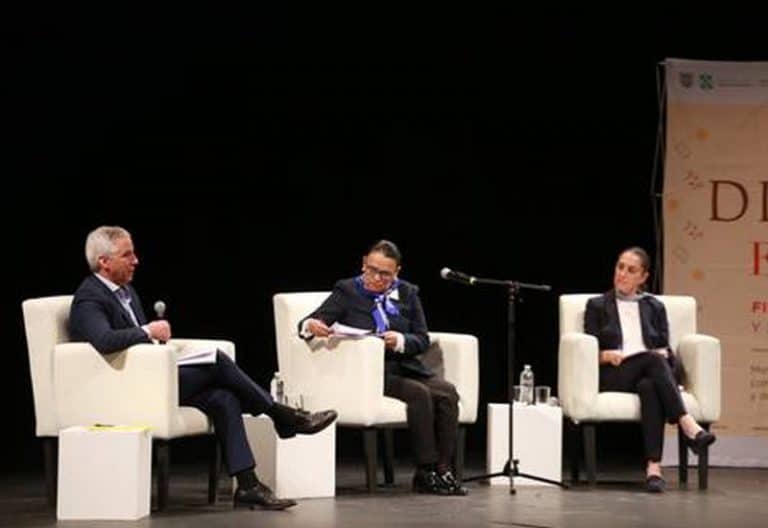
Esa asamblea era de talibanes y ella los mantenía a todos quietecitos.
El invitado de la jefa de Gobierno de la Ciudad de México hizo espacio en su apretada agenda para visitar nuestro país, pues dentro de tres meses se presenta nuevamente a elecciones, en fórmula con Evo Morales, ambos en busca de un cuarto mandato.
El encuentro entre Sheinbaum y García Linera, sesión inaugural de los Diálogos de Verano que organiza la Secretaría de Cultura capitalina, se llevó a cabo en un Teatro de la Ciudad lleno apenas a la mitad, quizá por la pobre difusión del evento.
García Linera, para muchos un extraño animal político que combina el trabajo intelectual con la praxis política, soltó, de entrada, su hoja de vida: cuatro años estudiando en México, cinco en la cárcel, 40 años en la oposición y 13 en el gobierno.
Y enseguida pasó a las reflexiones sobre el tema del día: las tareas de los gobiernos progresistas.
Figura destacada de la ola de gobiernos progresistas en el subcontinente, García Linera dijo que los triunfos electorales de los movimientos de izquierda progresistas o populistas (no me importa el nombre
), se han hecho realidad por el espaldarazo (electoral) del pueblo
: Pero la esperanza no es un cheque en blanco, no es para siempre. Requiere un conjunto de respuestas concretas, cotidianas, estabilidad y crecimiento económico. La izquierda no puede ser el administrador de la pobreza, no puede ser el implementador de las reformas de ajuste (caso Grecia), para que luego la oposición de derecha venga a cumplir las tareas menos complicadas. Los gobiernos progresistas y revolucionarios tienen que ser también gobiernos de mejora social, lento pero sistemático avance de mejores condiciones de vida
.
Con la mirada puesta en los triunfos electorales de la derecha en América Latina, García Linera expuso las dificultades y retos de los gobiernos progresistas, en un análisis que se puede extender a lo que ocurre aquí, donde, dijo el vicepresidente boliviano, ha llegado al poder un movimiento que ha hecho renacer las esperanzas de América Latina
.
Vino entonces el golpe de realidad. Los sueños no son para siempre, no son suficiente argumento social para mantener el apoyo. Si no existe una mejoría en las condiciones, que la gente pueda sentir en sus bolsillos, en la educación de sus hijos, en los servicios, existe el riesgo del retorno de la derecha, e incluso de la llegada al poder de la extrema derecha. (Sería) un regreso de sedimentos del sentido común arcaico, de derecha, racializado, clasista, discriminador, que renace de esta expectativa frustrada de la sociedad en el alma de los subalternos
En el poder, siguió el político boliviano, la izquierda tiene que ser capaz de ir generando pequeñas mejoras que le den a la gente una perspectiva de bienestar a largo plazo
.
Con un tono suave, de profesor generoso, García Linera siguió delineando las grandes líneas y retos de la izquierda en el poder.
Un reto crucial es, dijo, “avanzar en la democratización social… Izquierda significa democratizar, significa tomar en cuenta los ‘nadies’ de la sociedad no solamente para el voto, sino para ser consultados, oídos, y para que vayan tomando decisiones”.
El otro, que camina en paralelo, es mantener la ética, la moral: Podemos perder elecciones, revoluciones, confrontaciones con organismos internacionales, y nos podemos rehacer, pero cuando perdemos la moral, eso liquida la autoridad y a toda una generación
.
En su turno, Claudia Sheinbaum expresó que comparte la idea de la democratización y dijo que en México el proyecto de la Cuarta Transformación se propone recuperar el papel del Estado, no en el sentido de regreso al estatismo
, sino en lo que toca a la redistribución de la riqueza y la orientación de la economía.
En un breve diálogo que siguió a las exposiciones iniciales, García Linera soltó una pregunta que está en la mesa de debates de la izquierda latinoamericana. Habló de la paradoja que se enfrenta desde el gobierno: generar recursos para resolver necesidades sociales y al mismo tiempo proteger a la madre tierra
.
¿Cómo estás combinando el desarrollo, con extractivismo, con la protección de la madre tierra? ¿Cómo estás conviviendo con esa contradicción? ¿Cómo están pensando esta paradoja entre desarrollo y defensa del medio ambiente?
El tema imposible. Claudia Sheinbaum dijo algo sobre el desarrollo sustentable pero el tema quedó pendiente.
En el programa de mano de la Secretaría de Cultura, García Linera, en cuyo pensamiento los especialistas encuentran ecos de Pierre Bourdieu, fue presentado como un marxista clásico
. No le voy a decir, porque quizá haga un chiste
, bromeó José Crespo, embajador de Bolivia en México.
Fuente: La Jornada / Arturo Cano
![La FAO alarma al mundo tras reportar dramático aumento de la subalimentación en Venezuela [Informe Descargable]](https://www.rafaelramirez.net/wp-content/uploads/2019/07/La-FAO-alarma-al-mundo-tras-reportar-dram%C3%A1tico-aumento-de-la-subalimentaci%C3%B3n-en-Venezuela-1-768x528.jpg "La FAO alarma al mundo tras reportar dramático aumento de la subalimentación en Venezuela [Informe Descargable]")
La Organización de las Naciones Unidas para la Alimentación y la Agricultura (FAO) reveló en su informe sobre la Seguridad Alimentaria y la Nutrición en el Mundo 2019, que en Venezuela 6,8 millones de personas pasan hambre.
Los dramáticos resultados del documento, publicado recientemente, confirman un severo retroceso en materia alimentaria en Venezuela. Según las estadísticas del organismo la subalimentación en el país aumentó 231,25% entre 2012 y 2018. Resultados que claramente echan por tierra el esfuerzo realizado por el gobierno del presidente Hugo Chávez, que fue premiado por este mismo organismo tras lograr anticipadamente las metas de “Hambre Cero”.
Entre las cifras se precisa que 80% de los hogares venezolanos sufre de inseguridad alimentaria, 90% percibe ingresos insuficientes para comprar alimentos y el país ha perdido 3,5 años de esperanza de vida al nacer.
El informe divulgado también alerta que la seguridad alimentaria en América Latina y el Caribe provocó el año pasado que 42,5 millones de personas fueran afectadas por el hambre, y que en el mundo este flagelo lleva tres años en sostenido crecimiento. Acceda al informe y entérese de muchas más cifras que muestran una preocupante situación de hambruna que amenaza con seguir en ascenso.

La Junta Patriótica de Gobierno es la única propuesta que permitirá la restitución de los DDHH y la recuperación de la constitución de 1999, una de las mejores constituciones del mundo en materia de DDHH.
El informe mundial sobre la crisis alimentaria 2019, difundido por la agencia de Naciones Unidas, se queda chiquito ante la emergencia humanitaria compleja que se vive en Venezuela. La investigadora de la Fundación Bengoa, Maritza Landaeta, así lo expresa. La realidad venezolana incide en el repunte del fenómeno en el continente latinoamericano.
Caracas. No es la primera vez que la Organización de las Naciones Unidas para la Alimentación y la Agricultura (FAO) sincera las estadísticas referentes a la población subalimentada en Venezuela y a la malnutrición. Este 15 de julio informó que el hambre en el mundo lleva tres años en crecimiento, y que en el país suramericano 6,8 millones de personas la padecen.
En el trienio 2010-2012 la FAO dijo que el hambre en el país se registraba en 3,6 %, de hecho el país recibió, en junio de 2013, un reconocimiento “por lograr reducir a la mitad el porcentaje y el número de personas con hambre o subnutrición antes de 2015”.
Sin embargo, en el trienio de 2015 a 2017 dijo que había aumentado a 11,7 % de la población. Se triplicó.
Según la FAO, para ese entonces Venezuela aportaba 1,3 del total de 1,5 millones de personas con nuevos problemas estructurales en su ingesta diaria de calorías.
Dicho de otra forma, y en palabras más digeribles, la gente estaba comiendo menos. Y la Encovi lo había develado en su encuesta anual: en promedio los venezolanos habían perdido 11 kilos en 2017.
En abril de este año, la FAO, en el informe de alerta temprana sobre Seguridad Alimentaria y Agricultura Abril-Junio 2019, ubicó a Venezuela entre los 10 países del mundo con “alto riesgo” de surgimiento de una emergencia o un deterioro significativo de la situación actual de su seguridad alimentaria y la agricultura, con efectos potencialmente severos.
El informe que proporciona análisis trimestrales de los principales riesgos de desastres y emergencias de este tipo, pone a Venezuela en el tercer lugar de este ranking, en orden de intensidad (nivel alto de probabilidad y de impacto).
Los otros países señalados son Yemen, Sudán del Sur, Sudán, Zimbabwe, Camerún, Burkina Faso, Haití, Afganistán y Nigeria.
El documento atribuye esta situación a la severa crisis económica que vive el país, e indica que los porcentajes de personas malnutridas se han triplicado en 4 años: de 3,6 % en 2013 a 11,7 % en 2017 (casi 3,7 millones de personas).
También hizo referencia a que 80 % de los hogares venezolanos sufren de inseguridad alimentaria, 90 % perciben ingresos insuficientes para comprar alimentos y que el país ha perdido 3,5 años de esperanza de vida al nacer (usando cifras de nuevo de Encovi).
Este 15 de julio sale el informe mundial “Estado de la Seguridad Alimentaria y la Nutrición en el Mundo 2019”, en donde cita que «820 millones de personas siguen padeciendo hambre en todo el mundo”.

En América del Sur el número de personas subalimentadas ha venido aumentando desde el 2015, año en que se ubicó en 20,6 millones (4.9 %). En 2016, 22,2 millones (5,3 %). En 2017, 23,2 millones (5,5 %) y en 2018, 23,7 millones (5,5 %).
Este incremento del hambre en los países de la región suramericana ejerce, según la FAO, una presión respecto del alza en el promedio regional de América Latina y el Caribe. Y resalta el informe que Venezuela fue el caso de estudio del hambre en América Latina y el Caribe.
Cita la FAO que para 2018 había 42,5 millones de personas en la región. En América del Sur dice que la prevalencia de la subalimentación pasó de 4,6 % en 2013 a 5,5 % en 2017, aumento que se debe a la desaceleración económica experimentada por varios países, entre ellos Venezuela, donde el hambre pasó a 21,2 % entre 2016-18.

Resulta novedoso que el informe, aunque no reconoce abiertamente que eso en parte se debe al colapso de la producción de alimentos, sí dice que ese incremento coincide con el crecimiento de la inflación y el descenso acelerado del PIB.
«En América del Sur vive la mayoría (68 %) de las personas subalimentadas de América Latina. El aumento observado en los últimos años se debe a la desaceleración económica experimentada por varios países, especialmente la República Bolivariana de Venezuela, donde la prevalencia de la subalimentación casi se cuadruplicó, al pasar del 6,4 % en 2012-14 al 21,2 % en 2016-18. Durante el mismo período de recesión, se informó que la inflación en el país había alcanzado 10.000.000 % aproximadamente y el crecimiento real del PIB se deterioró, al pasar del -3,9 % en 2014 al -25 % estimado en 2018«, dice la FAO.
La doctora Maritza Landaeta, investigadora de la Fundación Bengoa, coincide en señalar que la FAO poco a poco ha venido sincerando las cifras. “Cuando dieron los premios, los dieron sobre la base de unas cifras viejas, por un lado y por el otro, considero que la situación del país se ha agravado tanto que ya es muy difícil que se pueda poner en blanco y negro una crisis tan compleja como esta, y que venimos alertando desde 2012. Lo bueno es que ya está pasando, eso de que se haga el reconocimiento a los problemas estructurales que padecemos”.
También consideró importante que el informe se refiera a la inseguridad alimentaria moderada “y severa y dice cuáles son las variables que contribuyen a agravar ese fenómeno. Para nadie es un secreto que en Caracas hay una ilusión de abastecimiento, que no es real para la mayoría de la población, pues el promedio de ingreso de las personas, aún con las fulanas transferencias de las remesas, no permite que los ciudadanos puedan cubrir la dieta complementaria que necesita para compensar esa alimentación basada en las cajas Clap”.
Estima que las cifras de la FAO lo que hacen es reflejar ese deterioro en la alimentación, en la disponibilidad y en la distribución.
Landaeta se refirió específicamente a las cajas Clap. Dijo que comenzaron entregando 11 productos y que hay reportes de zonas donde están recibiendo cinco, en su mayoría carbohidratos.
“Lo que el Estado está distribuyendo es calorías para que la gente pueda moverse, pero los nutrientes no están equilibrados y eso se ve en desgate de la población. Ese problema se ha venido agravando, pues se trata de la calidad de la alimentación y eso ha hecho que se incremente la vulnerabilidad ante el riesgo de seguridad alimentaria. Eso es lo que refleja este informe. Cada vez hay menos recursos para importar alimentos y los que llegan son de menor calidad, las harinas, las leches”.

Otra cosa que no dice el informe, y es algo en lo que la doctora fue pertinente, es en el hecho de que esa seguridad alimentaria también se ve vulnerada porque nadie —las autoridades nacionales— está controlando la inocuidad de los alimentos que se distribuyen a la población.
Denunció que se ha encontrado gorgojos en los granos, y cuando eso pasa el alimento está dañado, pues ese animal libera una toxina muy dañina que afecta el hígado con una cirrosis parecida a la que produce el alcohol.
“Y eso es un solo ejemplo de la mala calidad de los insumos que consumen los venezolanos, muchos de ellos traídos de Turquía, de Irak, no sabemos el tiempo que tienen almacenados. Eso no lo dice la FAO pero lo seguiremos alertando, así como el hecho de que esas cajas ya no llegan ‘resueltas’ y cuando se entregan a la población pasa hasta un mes y medio, ya no son tan periódicas. Hay ahora una gran inequidad en la estructura del programa y al que más necesita le está llegando menos”.

La doctora e investigadora Susana Raffalli también salió al paso al informe, a pocos minutos de su presentación, y para ella (lo reflejó en su cuenta personal de Twitter) lo “más brutal es que apunta al colapso económico como la causa de la seguridad alimentaria”, lo que hizo que se cuadruplicara el hambre: 6,8 millones de personas.
“Esto es un incremento de 83 % con respecto al trienio 2015-2017. ¿A esta tasa de incremento, esto puede llegar a 9 millones de personas en situación de hambre a final de este año?”.
Y si el número de venezolanos con hambre destaca, también el número de mujeres con anemia: 2 millones, situación de salud que se extiende a sus hijos. Esta cifra es solo superada por pocos países.
Tal como lo comentó Maritza Landaeta. “La desnutrición se está desplazando a los más chiquitos. Ya nacen con esa patología, hay desnutrición intrauterina. Los pediatras nos están reportando que los niños menores de 6 meses tienen desnutrición grave y el doctor Bengoa nos decía que cuando llega un caso a un hospital es porque hay 20 en la comunidad. Eso es muy grave”.
Por ahora está el informe que ratifica la lucha interna y la crisis humanitaria compleja. Queda ahora, y así lo recomienda Landaeta, que el Estado garantice la alimentación de los niños al nacer, que reactive la producción nacional y que en vez de importar harina de Turquía, fortalezca la nacional que ya está fortificada, para así recuperar a la población de los cuadros de anemia.
«Se necesita consumo de hierro que no se está dando y reforzar los sistemas de atención y protección de los niños en edad escolar, que puedan recibir sus desayunos y almuerzos es fundamental. No se justifica que Venezuela ocupe esos niveles, cuando no es un país en guerra. La FAO se está sincerando con la crisis nuestra, aunque no hace mucha insistencia en otras cosas como en el hecho de que también hay inseguridad alimentaria porque no hay servicios públicos. Por eso decimos que con el análisis de la situación venezolana se queda corta”.
La meta: Hambre cero para 2030, ¿está en el ojo del huracán? La pregunta nos debe poner a reflexionar.
Fuente: cronica.uno
After six years of a madurista government, the wrecking of the work of President Chávez and, with it, the destruction of the country is more evident than ever before. I remember at the beginning of maduro’s first term that the “creators” of the madurismo repeated that “nicolás cannot have anyone near that could overshadow him”, that “he is now the boss”, that “he needs his own room for action”, his “own decisions”, he “needs to control it all”, among other fictional pieces of advice made up by the group taking up power. They needed a government for themselves; they created a “circus” where he could be head and shoulders above everyone else, where the master could stand out. They accomplished so; they displaced the Chavistas from power, at least the ministers that were part of Chávez government, one by one, each of us was kicked out. We did not realize at the time, always as loyal as we were to the oath of unity sworn before Chávez, such treachery like no other to Commander Chávez and to the people. Treason that was planned from the very first moment there were clear signs of the president’s disease.
Maybe they had privileged information and had the international support of those with greater influence in the last stage of the president’s life, evidently affected by such a consuming disease. Whatever the motivation, they got well prepared for the absence of the Commander. Meanwhile, Chávez’ ministers, and I speak for myself and a few others, work tirelessly to keep the country running, as we did, to help the Commander, with the best hopes for his recovery and return to the government, while others advanced their own plans for controlling power, taking stances, making agreements with businessmen, “building bridges” towards a transition. What it was always known as the “Chavismo without Chávez”, hidden till then in the corners of the Casa Amarilla and other spaces, among businesspeople and “spiritual guides”, as well as resented people to whom the Commander himself had cast aside, just like many others, saw in maduro the inconsistencies of what they would get without major efforts: an instrument to promote their own political and economic model, a regression of the socialism and Chávez Homeland Plan. A very characteristic aspect of President Chávez presidency was that he was always ahead of the human group that followed him, his party, and his government. Chávez was revolutionary with deep nationalist roots. Set in the military field and filled with the Bolivarian ideals, he could not remain indifferent to the suffering of the people, leading the insurgence of February 04, 1992. Once he became Head of State, studious as he was and with the humility of recognizing his limitations, but with an iron will to solve the grave issues that plagued the country, his political ideal took giant strides, thus making great progress. He went from a miquelenista type of government to “capitalism with human face” and to a “third way”, only to realize that our nation was such a backward and dependent country, with such intolerant and violent elites that were not even willing to accept a reformist government.
Then the coup, the oil sabotage, the elitist violence, and the international factors came into play; all of which made him understand many things. The relationship and long conversations with Commander Fidel and other world leaders allowed him to tune in his very own response to help the country. There and then is when the President began to make a series of decisions and definitions which, in the end, enabled him to better define his objectives and take steps to start solving effectively the problems the nation faced.
First of all, he understood the importance of oil, of PDVSA; he recognized Venezuela as an oil country and we went on to the quest to conquer that mountain, taking control of the oil revenues to put them at the service of the people. He then defined our revolution as anti-imperialist and raised the flags of the socialism of the XXI century. Later on, the Homeland Plan and his historic objectives came to be, a document that constitutes the most shattered part of his legacy.
But not all his followers supported his ideals; he was joined by the same rightist and nationalist lieutenants or captains, the remains of the miquilenismo. He was joined by the same sectors of the old leftist group and with the “best” of the Fourth Republic. Therefore, the President understood that he needed to urgently transfer the power to the people, breathing life on the new political categories enshrined in the Constitution, such as the Participatory and Protagonist Democracy and the People’s Power. It was necessary to give power to people, open the political debate, give room to the freedom of thought, the alternative media, the 3R; he thus created the PSUV as an instrument of transformation, the main challenger of the government, at the forefront of the revolution.
Within the government, and for the same diversity of groups and characters that he dealt with since the beginning, President Chávez relied on varying levels of support and political commitment, as well as with different levels of performance efficiency and he was well aware of this.
In terms of oil, he had our full and unwavering support and, since we were aware of the strategic value of the sector, we made progress to break the links of dependency and leave the backwardness of the country behind. We deployed the Full Oil Sovereignty Plan, we dismantled the nefarious “oil opening policy”, which expropriated our wealth; we regained control of our resources and company. We turned oil into an instrument of liberation of our people and PDVSA, that redder than red, into a national and deeply popular company, the fifth most important in the world, capable of exploiting and developing our vast oil and gas resources and put them at the service of the people, just as we did and as the entire nation can attest, for over ten years of prosperity and social development.
Therefore, I always counted on his support; I was the minister who lasted the longest with him in the government, twelve years to be exact, not because I was from the military or from Barinas or for whichever reason. I accompanied him for twelve years because I was one of the very few ministers who shared his ideas and political postulates, but I also did so accurately and efficiently, obtaining undeniable success and results and the most important and strategic sector of the country: oil and PDVSA. A sector that paved the way for him to develop his social and economic approach; otherwise, his administration would have not lasted long. Hence, when the madurismo implies the opposite, it is not only blatantly lying but also makes president Chávez look like a dumbass.
In other ministries or sectors, such political commitment was nowhere to be found. That is why they “dragged their feet around”, they are the reason why the government did not advance at Chávez pace, they never did, they crouched, and they tried to become invisible. There are ministries, institutions and State-owned companies where the revolution never came; nothing was ever done to break the chains of dependency, to help build socialism; and the President knew this too, because of this, he casted them aside or simply ignored them, focused as he was in the problem as a whole.
Such were the sectors that always tried to “moderate Chávez”; those that suggested moving “little by little”, because it was “too soon” to speak of socialism. They were the ones who pretended to attenuate the revolutionary discourse. They were relegated to a second stage by Chávez, where they hid in the National Assembly or in the party, but always devising plans with the boldness that only the ambitious is able to display, out of the sight of the Commander: the Boston Group, the crooked intellectuals and “Frenchified” thinkers that populated the Foreign Ministry, the “ex” that wallowed in the resentment, the business people who were always part of large business deals and who were “there” helping and improving the lives and privileges of the “cautious”, always with a “plan B”, their plan without Chávez.
It is precisely this sector, the “Chavismo without Chávez”, the “endogenous right”, which took over power with maduro. They are the ones that have destroyed with great cruelty the work of the Chavista government: the participatory and protagonist democracy, the People’s Power, PDVSA, the State-owned companies, the social Missions, the economy, the institutions, everything. There is nothing left and, consequentially, the country has plunged into a total collapse.
Such a power group, in addition to being extremely greedy, has been very incompetent and corrupt; that is why the country is completely out of their control. They never built anything from the ground or worked a single day; they lack preparation as well as political and human qualities. The country is in shambles. Everything they touch turns to “ashes”.
Because of this, they have resorted to violence. They first openly directed it against the opposition sectors, which threw their youth onto the streets to be slaughtered in the guarimbas, while they remained safe, always thinking of violence as a way to seize power. There were about 200 people dead as a result of political violence on the streets, an unprecedented event in our history. The dialogue held in the Dominican Republic gave way to the impunity in exchange for ending the protests on the streets. The victims still await justice.
But the violence now is systematic, structured; it is now a policy of the State, designed to impose fear and hold onto social control. It is violence of the State, which translates into the violation of human rights of all Venezuelans, as it has been registered and documented today and for history by the Office of the UN High Commissioner for Human Rights and; clearly portrayed in Bachelet’s Report issued last July 4, a report that has been attacked by the coup-plotting extreme right and the madurismo.
The madurismo vociferates, shouts, insults, and attacks the former President of Chile and the UN. They organize demonstrations to repudiate Bachelet. It is the same tactic carried out by Morocco against the former UN Secretary-General Ban Ki-moon when he mentioned the rights of the Saharawi people, or what Israel does against the UN when the reports denounce the repression against the Palestinian people. Although they are clearly different cases, it is the same reaction. Why, instead of lashing out against Bachelet and the UN, the madurismo, the NCA, the prosecutor’s office, the ombudsman, or the so-called leftist intellectuals who speak in favor of maduro, do not stop to think, how it is possible that there are, according to the figures provided by the government itself, 6,856 deaths for “resisting the authority” of police officers in the neighborhoods? Do such a high number of deaths call anyone’s attention? How long has it been since any of them has been to the neighborhood ravaged by FAES to hear what the people say? Why does a masked, scot-free police force deserve credibility? Is such a massive figure an isolated case or is it part of a policy of the State?
On the other hand, in the Fourth Republic, it was considered a crime when tortured people were murdered, but in the end, the bodies of the victims were returned to their families for the proper burial, unless it was one of the many missing persons. Why remaining silent before the torture of Navy Captain Rafael Acosta Arévalo and the fact that his body was neither returned to his family nor were they allowed to have a wake and give him a proper burial? His captors buried his body eight days after his death, and so they did with the body of Oscar Pérez and his group. Why is such a cruel practice being imposed? What are they hiding?
The report presents a great deal of data and documents so many human rights violations that evidences more than a reasonable doubt about the performance of the government and its police forces regarding torture and all kinds of abuses, the complicit conduct of the public prosecutor and the judiciary. This report would be enough for a debate on the issue to be held in any normal country and to take action. However, and rather paradoxically, the children of yesterday’s victims, who are now ministers, believe more in the police than in Bachelet’s report. It is truly incomprehensible. The Bachelet report, regardless of what the madurismo does, is out there and it will continue to be discussed at the United Nations. Let us hope that someone in the government pays attention.
This human group, the madurismo, is the one negotiating in Barbados. The other group, voluntad popular, is no better than the madurismo. It is equally intolerant and violent, but it has not had the chance to seize power. There is a serious legitimacy issue in those negotiations. The sectors that negotiate, behind the back of the country, do not represent the majority of Venezuelans and certainly do not have the citizens’ trust.
Even though the political negotiation is the right path towards solving issues, in this case, the negotiators do not represent the country. They have granted themselves such role, ones because they have the force of arms, the others because they have international support; but none of them have popular support. The lack of participation of Venezuelans is the underlying issue of these secret negotiations. The efforts carried out by Norway and the countries of the group of friends, among which Sweden, Italy, Mexico, and Uruguay, are commendable. They are not the problem, as neither is Bachelet; the problem is internal, it is among Venezuelans.
A new pact is being negotiated in Barbados. Faced with the madurismo failure and the collapse of the country, he is desperately seeking a negotiation that allows him to stay, to coexist with the rightist factors in an unpredictable political future, in a country they destroyed themselves; one in which they demolished all the columns that gave it stability and governability, a chaotic State where their economy, their psyche, and values have taken over. It is a negotiation among capitalists, neither the Chavismo nor the serious opposition is represented, none of the economic and social conquests of the Bolivarian era are considered, under any circumstance, and much less the Full Oil Sovereignty, the control over PDVSA, the Constitution, the Homeland Plan, and the socialism.
Maduro negotiates while in dire straits, as he tries to find a personal way out for him and his people. He knows that it will end badly, there cannot be any other way, and he uses the Chavismo and the Bolivarian Armed Forces to reach a solution, to maintain some sort of political presence in the country, something that allows him to survive. The extreme right is in Barbados due to its inability and overt failure in overthrowing the government, its intolerance and sectarianism prevent it to understand the FANB, and it is unable to gather trust and to mobilize enough people to seize power as they wanted and promised their political and economic mentors.
On the other hand, the United States and Russia have engaged in conversation and support Norway’s efforts. They have instructed their factions in the country to sit down in the negotiating table. Thus, as if by magic, both sectors, apparently confronted and incompatible, managed to sit down, negotiate, make agreements. They do so because, deep down, they have no significant differences.
Let us see what maduro is really doing and what the right is promising to do in its “Plan País”: hand over the oil and privatize PDVSA; privatize the State-owned companies: the basic and service companies, everything; reverse all the nationalizations and invite the transnational sector to take over the control of our strategic sectors, oil, gas, energy, communications, transport, natural resources, gold, coltan, among other minerals. For this purpose, they will have to modify the Constitution and the laws. Maduro does it in reality, through his illegal decrees and laws acclaimed by the NCA; the right will do it in the new pact, from within the power.
Maduro has crushed the social programs of the Revolution; simply, there are no educational missions, no health missions, no food missions, and not even the Great Missions. He has only maintained the degrading mechanisms of social control, the Clap boxes, and monopoly money given in the homeland card. The right has no interest in reviving them; they consider them expensive and fear popular organization. In the pact, they will agree on aid measures of capitalist austerity enabled in economic crisis.
However, there are economic elements of conflict. The very first of which is the transnational interests. The United States claim their presence and economic dominance of the oil sector and strategic companies; therefore, the economic chief is from the right, he is the former leader of CAP’s package and the architect of the oil opening. The extreme right delegation is always accompanied by someone who represents such interests. The Russians and Chinese demand to maintain everything accomplished with maduro: oil, gas, telecommunications, gold, coltan, and even fishing.
Another element of conflict is the economic situation. Maduro already imposed a package, destroyed the social and economic conquests, and swept away the costs of the workforce. Hyperinflation has expropriated the workers’ labor and savings. It is an ideal world to impose an unscrupulous, brutal, and dependent capitalism. The problem is that maduro’s incompetence does not allow him to organize anything. That is the moment when the right enters into play. Our homeland is being auctioned from abroad. Each factor has identified which sector of the economy they will take over, but they have not agreed yet how to control the unleashed demons during this period: hyperinflation, dollarization, monetary policy, shortages.
That is why the negotiation is secret. No one knows what is being agreed upon in the new pact. It is all rather confusing.
It seems that he has finally understood that he is part of the negotiation. Maduro has led him to endorse everything he has done, from within the NCA, from within the PSUV, he has supported what maduro has done with PDVSA, with the economy, with his fellow government companions, with his own comrades-in-arms. One of them, Major General Rodríguez Torres, who has been kidnapped by the government, has gone on a hunger strike, and he is not even kind enough to speak up in defense of the personal integrity and rights of his 4F companions. Now he resists to the negotiation, kicks the table, is out of tune with his show, claims there will be no elections, contradicts anything maduro says, but, at the same time, tries to find his own space.
Each of us is free to make their own political decisions and assume the consequences before history, and that has to be respected. But what no one can do is lie. Diosdado went to Havana, the Cubans do not clearly understand what this pact is going to lead to, and affirmed to Prensa Latina, that I was the leader of an “economic sabotage” against the country from within PDVSA, and that during my time at the front of the company the oil production was of two million one hundred thousand barrels per day. You are blatantly lying, Diosdado.
I have never led any sort of sabotage or attack against my country, not now, not during maduro’s government, and much less during President Chávez administration. Once again, he is being belittled.
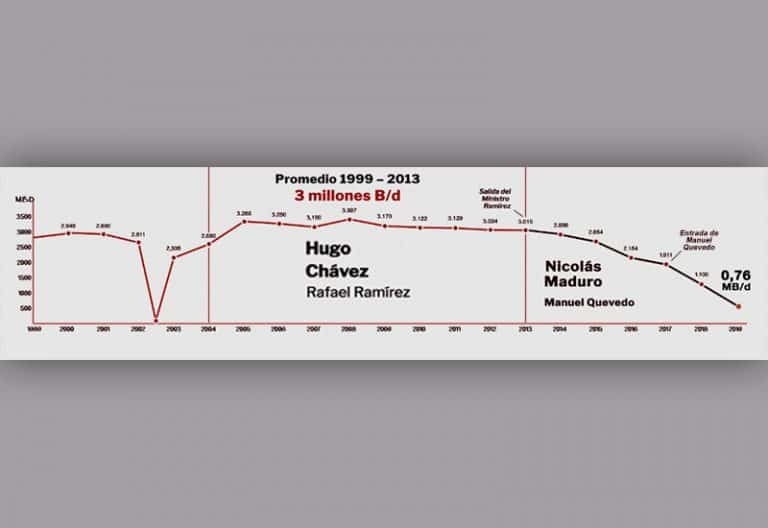
What you say, Diosdado, is not only a lie that can be broken down by reviewing the production figures of OPEC itself, whose chart you can find below, as well as it is clearly reflected in the PDVSA audited reports and public audiences only during my term as president, because such auditing was done neither before nor after the end of December 2013. It is evident that we handed over the industry with a production of three million ten thousand barrels of oil per day. Go on, check the chart, and review what you have said yourself, take a look at yourself so you can stop lying.
Your lie is also shameful because you, and the entire government, know well the efforts that we undertook from PDVSA to sustain the country during the revolutionary period. We carried out significant efforts to provide the government of Commander Chávez with 500 billion dollars in a ten-year period. If that was not the case, where do you think the resources to maintain the government social programs came from? Where did the resources for the ministries? You yourself were the minister of infrastructure and received large amounts of that money; you were governor of Miranda state and, what did you do with the funds you were given? You talk about Commander Chávez and lie. I could say what Commander Chávez said about you after you lost the governorship and were pushed aside. But I will not because I respect his trust. On that same 2014, as I promised maduro, we gave him 45 billion dollars, I handed them to fleming, malpica, and zerpa, for them to do I do not know what with such massive amount of money. That is when the economic downturn began. They already came up with the idea of corruption; they already chased and kidnapped anyone that could say something. No one believes them.
I wish Prensa Latina would give me the right to reply, it is the least I deserve after successfully presiding over the Joint Commission Cuba-Venezuela for over 10 years. Sometimes, I get the impression that the Cuban leaders are trying to bestow some sort of epic or heroic character to maduro’s government. It does not have it, fellow companions. The period of the Bolivarian Revolution the Cuban people recalls with affection and solidarity is that of Chávez. This, with maduro, is not a revolution that deserves the support of your noble people.
The country continues to stumble around, our nation is sinking, and the elites negotiate behind the backs of the people. It will be necessary to summon the opinion and participation of the people to resurface from the abyss. Such crisis can only be faced with the people, putting the ultimate interests of the homeland above any petty interest, with our Constitution, out Full Sovereignty, our Homeland Plan, with Chávez.