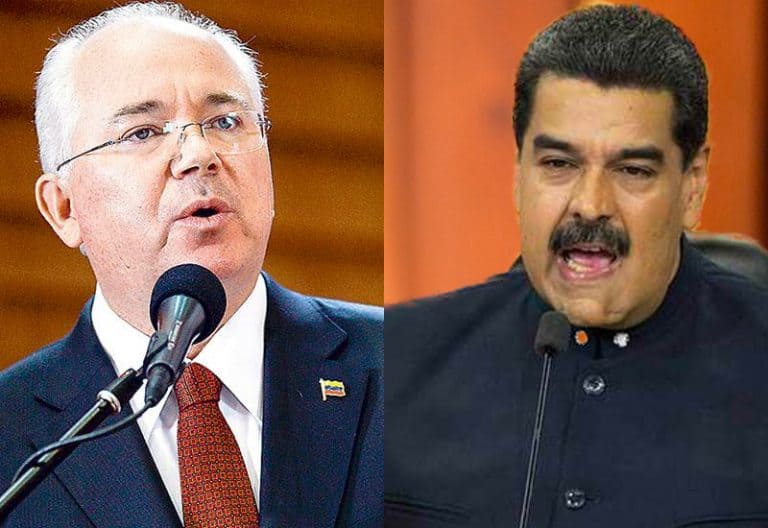
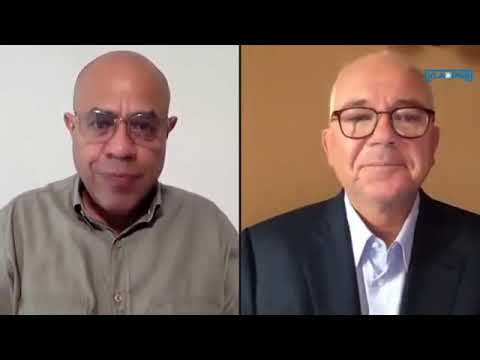
No deja de sorprender y preocupar el talante autoritario y violento de nicolás maduro, quien, a pesar de tener todo el poder en sus manos y que utiliza a su antojo a los cuerpos de seguridad, fiscalía y Poder Judicial para perseguir y encarcelar a sus oponentes políticos, sin embargo se desestabiliza y “pierde los tapones” ante una entrevista, como la que tuve con Vladimir Villegas, el pasado martes en su programa “Vladimir a la Carta”.
Un maduro, descompuesto, alterado, al día siguiente de la entrevista, montó un acto con “trabajadores” (wills rangel y su combo), solo para arremeter en mi contra, insultar y mentir, para luego, cual malandro, prometer que “me pondrá los ganchos” (maduro dixit). Dice maduro, envenenado con su propio odio, que yo pagué “300 millones de dólares” a la empresa Harvest para que ésta retirara su demanda. Lo anterior, por supuesto, es completamente falso. Nadie te cree nicolás, te hubiese bastado con ver la decisión de la Juez del Tribunal de Houston para que te dieras cuenta, que no hubo ningún tipo de arreglo con Harvest, fue una decisión “unilateral de la compañía”, como dice el texto (traducción de cortesía).
Creo que esas mentiras y amenazas y ese montaje de odio que hiciste, son razones más que suficientes para botar a jorge rodríguez, a menos que la chapucería haya sido de tu propia autoría o de alguien que tienes al lado pero que no te atreves a botar.
Tus destempladas amenazas y tu reacción desproporcionada lo único que siguen demostrando al mundo es que soy un perseguido político de tu gobierno y que mi vida corre inminente peligro de hacerse realidad tu sueño.
Sea como sea, realmente ya no importa, para lo único que sirve tu intervención es para que quede un registro de tus intenciones con tus ataques y mentiras, nadie te cree, así las hagas en cadena nacional y utilizando todos los medios del Estado. La realidad es que muy pocos te ven y escuchan en el país, generas un rechazo automático en el chavismo y en la oposición, la gente ya no te aguanta.
Ustedes, en el gobierno, viven en una burbuja entre aduladores y “bots” de twitter, mientras el pueblo, la inmensa mayoría que no pertenece al circuito de “bodegones”, de lo que está pendiente es de que llegue la luz, el agua, la gasolina, la comida, las medicinas y de evitar el Covid-19. Nadie está pendiente de tus arrebatos de odio, todo el país está tratando de sobrevivir y escapar del infierno que has creado en nuestra otrora próspera patria.
Pero para que subas un poquito el “rating” –la entrevista que tuve con Vladimir tuvo más audiencia que todas tus intervenciones juntas, a pesar de la censura y el control que tienes sobre todos los medios–, te propongo que hagamos un debate ante el país. Cara a cara, con Vladimir de moderador y el país de testigo, recibiendo preguntas del público. Te invito a debatir, deja tu odio a un lado, tus impulsos violentos y discutamos, sin Sebin, ni DGCIM, ni CONAS, sin represalias, vamos a debatir sobre los problemas del país y las posibilidades de salir de esta crisis que tenemos encima.
Los problemas del país son tantos, demasiados, y tú eres el presidente, jefe de Estado y de gobierno y responsable de la Hacienda Pública, has gobernado con todos los poderes subordinados a tus decisiones, incluso con la Asamblea Nacional Constituyente, un órgano supuestamente supra constitucional, pero en el cual tú decides hasta cuándo va a funcionar. En fin, has gobernado ya 7 años con todo el poder, eres el responsable y debes responder ante el país.
De lo que podamos avanzar en un debate ante el pueblo, tal vez podamos encontrar algunas salidas de este abismo. Habiendo muchos temas, te propongo avanzar en algunos fundamentales, veamos:
1.- El tema económico.
¿Por qué no aceptaste las propuestas que te hicimos desde la Vicepresidencia Económica en 2014?, unas propuestas a tiempo, que preservaban nuestras conquistas económicas y sociales, producto del estudio, de consultas a expertos, de trabajo intenso.
Una vez que has derogado el modelo económico del gobierno del Presidente Chávez, ¿qué balance podemos hacer de la economía nacional?
¿Cuáles han sido los resultados de tu programa de “ajustes”, el paquete de medidas monetaristas que anunciaste aquel fatídico 28 de agosto de 2018? ¿Qué ha pasado con el “Petro”? ¿Qué ha pasado con el Bolívar? ¿Qué pasó con las reservas y el oro del BCV? ¿Qué efectos ha tenido la dolarización de la economía? ¿Por qué asumiste más deuda externa y en qué condiciones? ¿Por qué preferiste pagar deuda en esas condiciones y suspender las importaciones del país?
¿Qué ha pasado con el FONDEN, el Fondo Chino y los fondos del Bandes? ¿Cuántos recursos hay y en qué se han gastado? ¿Qué pasó con los proyectos de desarrollo e infraestructura financiados con esos fondos?
Tu alianza y apoyo a los sectores de tu nueva burguesía, ¿qué beneficios han tenido para el país? ¿Por qué el aparato productivo del país acumula una caída del 64% en tu período? ¿Qué pasó con todos tus planes de “estabilización” y la política de “precios acordados en el país”? ¿Qué pasó con las cuentas nacionales? ¿Cómo vas a controlar la hiperinflación? ¿Cómo vas a controlar la mega devaluación?
¿Qué pasó con el salario de los trabajadores? ¿Cuánto es el valor de la “canasta alimentaria”? ¿Sabes que nuestro salario mínimo mensual de 2,19 dólares es el más bajo del hemisferio y coloca a más del 96,2% de los venezolanos bajo el umbral de la pobreza? ¿Qué pasó con las prestaciones sociales, fondos de ahorro y convenciones colectivas de los trabajadores?
¿Qué ha pasado con las Empresas Básicas? ¿Qué pasó con todas las empresas del Estado? ¿Qué ha pasado con las empresas nacionalizadas y con las adquiridas por el Estado? Las nuevas empresas, ¿dónde están, quién las opera, qué rendimiento tienen?
¿Quiénes son tus asesores? ¿Quiénes mueven los hilos de tu equipo económico?
2.- Política Petrolera y PDVSA.
¿Por qué la producción de petróleo de PDVSA ha caído en 2 millones 644 mil barriles día de petróleo en tan solo 6 años? ¿Por qué no hay gas? ¿Por qué las refinerías están paradas, y sólo operan al 10% de su capacidad? ¿Por qué no hay gasolina, ni diésel? ¿Qué resultado ha tenido tu razzia sobre los cuadros gerenciales y obreros de PDVSA?
¿Cuál ha sido el resultado de la gestión del general quevedo en PDVSA? ¿Cómo es posible que en su gestión se hayan perdido un millón de barriles día de producción de petróleo, cuando se prometió, reiteradamente, que la producción subiría “un millón de barriles día” de petróleo, adicionales a los 1,7 millones de barriles día que recibió en 2017? ¿Qué resultados ha tenido la intervención y militarización de PDVSA?
¿Qué resultados han tenido los Decretos 3.068 y los “contratos de servicios de quevedo”? ¿Cuántos barriles produce la Camimpeg? ¿Cuántos barriles producen las nuevas empresas mixtas aprobadas por quevedo? ¿Por qué cedieron la participación de PDVSA a Rosneft en Petromonagas? ¿Por qué cedieron la participación de PDVSA a CNPC en Petrosinovensa? ¿En cuánto se transó esta operación? ¿Quién revisó y autorizó esa privatización de PDVSA?
¿Por qué se fue Rosneft del país? ¿Por qué se entregaron las áreas de Rosneft a una empresa rusa de seguridad? ¿Por qué se fue Petrochina y se llevó nuestros VLCC Boyacá, Carabobo y Junín? ¿Por qué la CVP no asume las operaciones de las empresas que se han ido del país, tal como lo establecen los contratos de las empresas mixtas?
¿Por qué decidiste no vender CITGO cuando teníamos ofertas de 14 mil millones de dólares en 2014? ¿Por qué entregaste nuestra participación en la Refinería Cienfuegos? ¿Qué pasó con nuestras refinerías en Jamaica y República Dominicana? ¿Por qué entregaste la refinería NYNAS? ¿Cómo se han perdido estos activos del país? ¿Quién ha aprobado estas operaciones?
¿Por qué entregaron el gas del proyecto Rafael Urdaneta? ¿Por qué entregaron el gas del proyecto Mariscal Sucre y de la Plataforma Deltana a las transnacionales? ¿Qué pasó con el gas que vendría a los desarrollos petroquímicos en Oriente y Occidente?
¿Qué pasó con nuestros taladros chinos? ¿Qué pasó con nuestra flota de buques petroleros? ¿En qué situación está nuestra flota de operaciones acuáticas? ¿Cómo están las áreas de operación, producción de petróleo, gas, inyección, compresión, patios de tanques y terminales?
¿Por qué siguen presos los trabajadores de PDVSA? ¿Por qué no se aplica el principio de presunción de inocencia? ¿De qué se les acusa? ¿Por qué no se les permite defenderse? ¿Por qué se han ido más de 30 mil trabajadores de la industria? ¿Por qué eliminaron Sicoprosa? ¿Por qué utilizaron para otros propósitos los recursos del Fondo de Pensiones de los Trabajadores y Jubilados de PDVSA? ¿Por qué han desconocido la Convención Colectiva Petrolera? ¿Cuándo habrá elecciones de la FUTPV?
¿Por qué PDVSA no ha publicado más sus estados financieros auditados? ¿Por qué no ha rendido cuentas ni ante la Asamblea Nacional ni ante la Asamblea Nacional Constituyente? ¿Por qué los contratos los aprueba el TSJ sin discusión ante el órgano de representación popular que es la Asamblea Nacional o, incluso, la Asamblea Nacional Constituyente?
¿Cómo ha sido la gestión de E. Malpica, S. Zerpa y los vicepresidentes de finanzas en PDVSA a partir del 2015? ¿Cómo ha sido la gestión de las sucesivas Juntas Directivas de PDVSA (más de 9 en tu período), a partir de 2015? ¿Cuál ha sido su presupuesto de inversiones, costos y gastos operacionales?
¿Por qué la última Comisión Interventora de PDVSA tiene como Plan de acción la privatización de la empresa? ¿Por qué este plan no se discute de cara al país? ¿Por qué entregar el petróleo y renunciar al ingreso petrolero? ¿Cuál es el balance de tu consigna de “acabar” con el modelo petrolero del país? ¿Cuál es tu modelo alternativo al petróleo? ¿Ha funcionado?
¿Sabías que ya a nadie le importa lo que Venezuela dice en la OPEP, donde pasamos de ser el quinto país productor de la Organización en 2008 a ser actualmente el noveno, solo por encima de Gabón y Guinea Ecuatorial?
3.- La corrupción (¿y narcotráfico?)
Éste es tu tema preferido, lo utilizas a diestra y siniestra para perseguir y justificar cualquiera de tus acciones violentas. También lo hace la oposición, incluso a nivel internacional, agencias de gobiernos extranjeros han puesto precio y ordenado la captura de la plana mayor de tu gobierno y aparato de poder.
Te sacaste el argumento de la manga y te vino como “anillo al dedo” para hacerte finalmente de PDVSA.
Éste es un tema delicado, que tú mismo alimentaste y has llevado, como nunca, a la palestra de la opinión pública, pero te ha salido el “tiro por la culata”.
Te doy la oportunidad para que muestres ante el pueblo alguna prueba de todas las mentiras que has dicho en mi contra. Entonces, yo tendré el derecho de presentar las pruebas de tu responsabilidad sobre los siguientes hechos. Veamos:
¿Qué pasó con los 40 mil millones de dólares que, por instrucciones directas tuyas, entregamos en 2014 a tu equipo del Cencoex?
¿Por qué nunca quisiste mostrar al país la lista de empresas que recibieron recursos del Estado en CADIVI y que te entregué en tu despacho?
¿A qué empresas se les reconocieron y pagaron deudas en esos primeros años de tu gobierno? ¿Dónde están las auditorías hechas a esas deudas y empresas?
¿Por qué bloqueaste mi propuesta de 2014 para levantar el control de cambio, una propuesta gradual estudiada con el BCV y que permitía proteger nuestras divisas y reservas? ¿Qué empresas o grupos se siguieron beneficiando del tremendo diferencial entre el paralelo y el cambio oficial?
Cuando hicimos el presupuesto de divisas en 2014, salieron a la luz muchas cosas, ¿recuerdas? Incluso pude determinar las operaciones que se hacían desde Tesorería, operaciones de las cuales solo tú estabas al tanto, ¿para qué se sacaban esos recursos de allí? Eso está registrado en el BCV.
Hasta aquí te la dejo, no voy a entrar en casos personales, que involucran a muchos de tu círculo íntimo, incluyendo a tus “agentes del gobierno”, porque ni soy juez, ni soy irresponsable. Lo que sí sé es que siguen apareciendo casos, sobre todo en jurisdicción internacional. La tienen difícil.
4.- Derechos Humanos.
¿Por qué en tus medidas de “gracia”, de liberación de presos políticos de la oposición (cosa que nos alegra por ellos), no se incluyen presos Chavistas o militares?
¿Por qué siguen presos, sin juicio, ni debido proceso, ni derecho a la defensa, más de cien trabajadores y gerentes de PDVSA, por qué el ensañamiento contra ellos, en una vendetta tuya y del fiscal contra los gerentes y trabajadores que estuvimos al frente de la PDVSA Roja Rojita, la PDVSA del pueblo? ¿Por qué toman represalias si sus familiares tratan de pedir justicia? ¿Por qué, en la mayoría de los casos, no han tenido ni siquiera la primera audiencia? ¿Por qué llevan, en algunos casos, más de 5 años presos y ni siquiera les han dicho de qué se les acusa? ¿Por qué se les tortura, se les deja morir, se les encierra en los peores sitios, se les decomisan sus casas, se les llevan sus bienes?
¿Por qué siguen presos Alfredo Chirinos y Aryenis Torrealba, dos jóvenes trabajadores y gerentes de PDVSA, cuyo único error fue denunciar la corrupción de los “traders” y grupos de interés que trafican con el petróleo y que ahora señorean en PDVSA? ¿Por qué el fiscal se reúne con los familiares para decirles que no denuncien más la situación de los muchachos?
¿Por qué el ensañamiento contra el Mayor General Rodríguez Torres, de qué se le acusa? ¿Por qué siguen secuestrados en tus prisiones más de 140 oficiales militares, entre ellos, el Teniente Coronel Marín Chaparro? Si el General Raúl Isaías Baduel cumplió su condena, ¿por qué sigue preso, sepultado en vida, en la tumba junto a otros prisioneros víctimas de tu odio personal?
¿Por qué dejaste morir en prisión al ex ministro y presidente de PDVSA Nelson Martínez? Tú trajiste a Nelson de CITGO, lo nombraste en esos cargos y después arremetiste en su contra, lo vejaste y expusiste al país como si fuese un criminal, lo dejaste morir en prisión sabiendo que era un hombre con afecciones cardíacas, como te lo dije personalmente y se lo dijo su esposa a todos tus emisarios, incluyendo a tu entonces vicepresidente, ¿por qué actuaste con tanta crueldad, tanto odio?
¿Por qué convocaste aquella reunión ficticia de la Junta Directiva de CITGO en el Salón Simón Bolívar de PDVSA La Campiña?, la hiciste venir toda desde Houston, para caer en una emboscada cuando sus integrantes fueran tomados como rehenes y esposados en público, por tus funcionarios sin rostro, a la hora del almuerzo de los trabajadores para que todos los vieran y así, imponer el terror. ¿Por qué ocultas que la operación financiera de la cual los acusas, fue aprobada por tu Junta Directiva, donde estaban varios de tus ministros, incluyendo tu actual vicepresidente?
¿Por qué le has dado todo tu apoyo al FAES, si en el informe de la Alta Comisionada para los DDHH de la ONU, Michelle Bachelet, se pide su disolución pues se recogieron testimonios de familiares e información de los mismos cuerpos de seguridad sobre más de 5.800 ejecuciones extrajudiciales por “oponerse a la autoridad”? Le has dado todo tu apoyo y estímulo a grupos policiales que han impuesto la pena de muerte a los pobres en los barrios y campos del país.
¿Por qué asesinaron en la tortura al Capitán de Corbeta Rafael Acosta Arévalo? ¿Te leíste el informe de Amnistía Internacional sobre este caso? ¿Por qué en tu gobierno se volvió a aplicar la práctica de la tortura y los vejámenes a los detenidos políticos, que era política de Estado en la IV República?
¿Por qué no avanzan las investigaciones sobre la muerte en custodia del concejal Albán? Caer desde un piso 10 del cuartel central del Sebin amerita, al menos, una investigación.
¿Por qué asesinaron a Oscar Pérez y su grupo? Todos vimos el cohete que le dispararon, la Fiscal Luisa Ortega mostró fotos de la autopsia donde se evidencian “tiros de gracia”. ¿Por qué nunca actuó la fiscalía si el grupo pidió, por las redes sociales, ayuda e intervención de la misma para entregarse, para que no los mataran? ¿Por qué tanta crueldad? Eso era lo mismo que hacían la Digepol y el Sifac con los guerrilleros urbanos.
Podríamos discutir sobre el desastre social, la tragedia en que nuestro pueblo está sumido, el avance de la pobreza, la pobreza extrema, la mortalidad infantil, la desigualdad y la exclusión ¿Por qué no das cifras? Más bien botas a los ministros que se atreven a hacerlo.
Podríamos discutir sobre el “Arco Minero”, el desastre ambiental, la destrucción de los parques nacionales, el desalojo de nuestros pueblos originarios de sus tierras ancestrales. ¿Por qué no hablamos del negocio y las mafias del oro? ¿Quién controla el territorio y la extracción de nuestros minerales estratégicos?
Lo dejo hasta aquí. Hay tantas preguntas sin respuesta. Tantas mentiras. Como lo he dicho antes, la verdad hay que buscarla hasta debajo de las piedras. El país y el pueblo necesitan respuesta, los 4,7 millones de venezolanos que han tenido que abandonar la patria, los que padecen día a día todo tipo de privaciones y calamidades, necesitan y exigen que tú, como presidente del país entre 2013-2020, los años del desastre, respondas.
Espero que ahora no arremetan ni contra Vladimir, ni contra nadie, solo creo que ya está bueno de hacer “lo que nicolás diga”, ya basta de este desastre, de la indolencia y la política con “p” minúscula, ya basta de “pactos” y acuerdos entre élites, de espaldas al país, somos un pueblo que merece mucho más que ésto. Te espero para el debate nicolás…
Oil market prices continued the gradual recovery trend that began on May 1st; starting June, they remain in a price band between 40-46 dollars a barrel, and it is estimated that it will continue to recover until the end of 2020.
Source: Own elaboration.
[elementor-template id=»4117″]
After the OPEC+ cuts came into effect1 on May 1st, the Brent and WTI references have shown increases of 68% and 112%, respectively, in relation to May.
On Monday2 August 31st, at the close of the European markets, the Brent was quoted at $45.81 a barrel, an increase of 7.5% over its July 31st value. The European score continues to rise, maintaining stable values above $40 a barrel as of June 4th.
PRICE OF BRENT (May-August 2020)
Source: Bloomberg; Own Elaboration
On the other hand, at the close of Monday’s trading in Europe, the WTI traded at $43.06 a barrel, an increase of 7% over its value on July 31st.
WTI has shown more instability in its price, although it has remained above $40 a barrel as of July 2nd.
WTI PRICE (May-August 2020)
Source: Bloomberg; Own elaboration.
Both Brent and WTI markers maintain the recovery of their quotations with a convergent differential that, at the end of August, is located at 3.3 dollars a barrel.
For its part, the OPEC Basket quoted on Friday, September 2nd, according to its official report3, at $45.03 per barrel, an increase of 145% over that registered on May 4th, 2020.
PRICE BASKET OPEP (June-September 2020)
Source: Organization of Petroleum Exporting Countries (OPEC)
The beginning of September was marked by the instability that has characterized the slow recovery of prices. On September 2nd, both the Brent and the WTI were quoted at 45.22 and 41.51 dollars a barrel respectively, a fall of 1.6% and 2.6%, respectively, regarding their values at the end of the month (Monday, August 31st).
PRICE BEHAVIOR OF THE BRENT AND THE WTI AT THE BEGINNING OF SEPTEMBER 2020
Source: Bloomberg
Although still marked by market instability, price recovery is mainly due to OPEC+ production cuts that took effect from May 1st, and to the drop in production in other OECD countries, while oil demand remains unrecovered, marked by uncertainty regarding the performance of the world economy and the second wave of the COVID-19 pandemic.
The price has maintained its upward trend despite the fact that, as of August 1st, the OPEC+ cut was relaxed by two million barrels, to 7.7 million barrels a day of oil.
In terms of market fundamentals, while supply has been adequately regulated by OPEC+’s action, demand continues to be destabilized by the contraction of the world economy, although it is tending to recover by 2021.
Oil Market Behavior During the 3rd and 4th Weeks of August.
On Monday, August 24th, the U.S. National Hurricane Center reported4 on the possibility that two storms headed for the Gulf Coast —»Laura» and «Marco»— would become hurricanes. This information generated an unexpected rise in prices on Tuesday5 August 25th, when the references WTI and Brent registered 43.17 and 46 dollars per barrel, respectively, being the highest prices registered since the beginning of March.
This natural phenomenon generated great tension in the oil sector. The U.S. Bureau of Safety and Environmental Enforcement (BSEE) reported on August 25th that the arrival of the hurricane forced the evacuation of oil installations in the Gulf of Mexico, implying the closing of 84% of the «offshore» production6and bringing to a halt a third of the gasoline and diesel production at the refineries.
On Thursday, August 27th, the hurricane finally made it to the mainland, and, although it did not cause major damage to oil facilities along the Texas coast, it did affect southern Louisiana, causing damage to the CITGO refinery.
WTI PRICES DRIVEN BY THE STORM «LAURA”
Source: Bloomberg
Although Hurricane «Laura» was one of the most powerful hurricanes to have ever hit Louisiana —affecting the production of about 30% of the gasoline and diesel in Gulf of Mexico refineries— the impact on the price was relatively low. This moderate behavior in the effect on the WTI price is due to the high levels of oil and oil product inventories currently in the US, which dissipated market tensions regarding oil supplies to refineries, or gasoline and diesel supplies to the market. In a situation like this, prices normally would have skyrocketed.
On the same day7, Thursday, August 27th, there was a fall in oil prices, after the US Secretary of State announced8his country’s intentions to unilaterally reestablish all UN sanctions against Iran on September 20th, if the UN Security Council does not approve a resolution9, presented by his country, requesting10 that the sanctions that had been lifted11in 2015-2016 (as a result of the nuclear agreements signed12in 2015) be again imposed against Iran.
Price levels in August have also found support in the weak dollar and in the draining of inventories in the U.S., all of which stimulate future sales, so that cargo prices in October also increased by 1.2%, due to the attractiveness for traders of buying cargo with a weak dollar.
While supply is regulated and stabilized, uncertainty is concentrated on demand.
In spite of the passage of Hurricane «Laura» and the announcement of new U.S. sanctions against Iran in the UN, the oil market remains «contango,» since it perceives that there are sufficient inventories and oil production capacity in the market, so prices already exceed the threshold of $43 per barrel, although still far below their values of December 2019. The price, at the moment, is much more sensitive to concerns about the recovery of market demand than it is to supplies.
OIL PRICE REMAINS «CONTANGO».
Source: Bloomberg
The markers are contained in their price range of $43-45 per barrel because of economic tensions, especially those arising from the second wave of the COVID-19 pandemic, the large number of infections that continue to increase in the U.S., India and Brazil, the tensions between the U.S. and China and the difficulties of the large industrialized economies in recovering their activities and restoring pre-pandemic levels of oil demand.
PRODUCTION
OPEC+ JMMC meeting.
At the August 19th videoconference13held by OPEC+ to monitor the market, the Organization asked Member Countries to respect and adhere to the production cutback agreements, which had reached compliance levels14of 95% by July.
At the JMMC meeting, Mexico’s production15 (the lowest in 40 years) was taken into account to be included as complying with the OPEC+ countries’ cuts, which would bring16the group’s compliance level in July to 97%. It is worth noting the inclusion of Mexico’s production drop as part of the compliance with the group’s cuts, since the country, through its President López Obrador and its Secretary of Energy, Norma Rocío Nahle García, stated that starting June it would not accompany17the OPEC+ cuts.
The inclusion of Mexico in the statistics of the OPEC+ cuts for July seems to be more oriented towards gaining confidence in the market about the cohesion of the OPEC+ group of countries than towards the necessary analytical rigor to look at the situation and all its edges.
The JMMC’s announcements regarding OPEC+ compliance with the cuts are in clear contrast with the percentage published by the International Energy Agency (IEA) in its monthly report18of August 20th, in which it estimated compliance with the OPEC+ production cut for July at 89%.
Abdulaziz bin Salman, Saudi Arabia’s Minister of Energy, stated19that during the fourth quarter of 2020 world oil demand will recover by 97% in relation to pre-pandemic levels. Because of this, he insisted on maintaining the flexibility of the OPEC+ production cuts for August at 7.7 million barrels per day and then, as of January 2021, at 5.8 million barrels per day, until April 2022.
The Saudi minister’s estimate regarding the recovery of world oil demand looks optimistic, given the existing uncertainty in the oil sector regarding the recovery of the world economy, which has generated more conservative predictions regarding the recovery of oil demand.
OPEC itself, in its last MOMR of July20, projects a recovery in demand of 17% for the fourth quarter of the year, in relation to the level registered in the second quarter, to close the year 2020 with a year-on-year fall of 9% and a projected increase of 7.7% for 2021. The U.S. Energy Information Administration (EIA)21 and the International Energy Agency (IEA)22forecast a 15% and 14% recovery in demand, respectively, by the end of 2020.
For his part, the Russian Minister of Energy, Alexander Novak, stressed that it is essential to maintain full compliance with the OPEC+ agreements, and recognized the «fragility» which the oil market is in today, as well as the «uncertainty» that still exists in this sector. Novak pointed out that, in spite of this, OPEC+ has the capacity to make decisions in the event that «the market will be overheating…”, in order “…to reduce quotas faster”23.
Ministers Novak and Bin Salman expect that Iraq, Angola and Nigeria will comply in August with the compensation in the cut of oil production, which would be added to the cut of 7.7 million already agreed upon.
Minister Novak said24that «we cannot stop there [at the 95% compliance], we have to ensure the total respect of the OPEC+ accord«, while the Saudi minister said25that everyone “should strive to achieve full adherence to our agreement«.
Both Iraq26 and Nigeria27 committed to OPEC+ to add, between them, 514 thousand barrels of oil per day to their respective production cut quotas in August. They agreed to 850 thousand barrels per day (Iraq) and 417 thousand barrels per day (Nigeria), as compensation for their failure to comply with the agreement between May and July, which they had committed to comply with 100%.
Out of OPEC’s 13 member countries, only 10 agreed to cuts in production. Libya, Iran and Venezuela (the latter with an 88% drop in production compared to 2013), are exempt from production cuts and will continue to face difficulties in maintaining or increasing their oil production levels.
OPEC
For July, the production of the OPEC Member Countries reached 23.17 million barrels per day, according to information from the last report31 of the organization, «Monthly Oil Market Report«, published at the beginning of August.
According to that report, OPEC production in July increased by 980,000 barrels per day compared to June, due to the recovery of 1.03 million barrels per day in oil production by Saudi Arabia, Kuwait and the United Arab Emirates. Those countries made a voluntary cut in June33of 1.18 million barrels, in addition to their agreed quotas, to cover the breach of the OPEC+ cut agreement by Iraq, Nigeria, Angola and Kazakhstan.
It is estimated that with the relaxation of the OPEC+ cuts, oil supply in August will increase by 2.3 million barrels a day. However, if the compensation commitments of the countries that are lagging behind in the fulfillment of the agreement materialize (including the 100 thousand barrels a day announced33by the Russian minister, Alexander Novak, to compensate for Russia’s overproduction in June and July), the real amount of additional oil into the market as a result of this relaxation would be 1.4 million barrels a day.
It was expected that the OPEC countries that had failed to meet their production cut-off quotas, such as Iraq, Nigeria, Angola, the Congo and Equatorial Guinea, would make compensations during August.
PRODUCTION COMPENSATION IN OPEC COUNTRIES
Source: World Energy Trade
According to secondary sources, the largest volumes to be compensated are those of Iraq (with 283,000 barrels per day) and Nigeria (with 111,000 barrels per day); for the rest of the member countries, a 100% compliance with voluntary production cuts was expected by August.
Iran, which has had a 12% fall regarding the volumes for the same period in 2019, announced34on August 26th that it would begin the first phase of development of the «West Karun» oil fields. These fields contain approximately 67 billion barrels, which will have a positive impact on the oil exports of the country, which, according to official statements, could increase its production by 500 thousand barrels a day.
However, the pressure of the U.S. on Iran, far from diminishing, is increasing and hardening, hindering the possibilities of the Asian country of maintaining the fall or increasing its already diminished oil production.
As we have already mentioned, on August 27th the U.S. Secretary of State announced that the White House had activated in the previous week the 30-day process so that by midnight on September 20th, «all UN sanctions against Iran would be restored«35. They accused the UN Security Council of «not maintaining international peace and security» for rejecting36, on August 25th, the project presented by the U.S., which aimed to extend the arms embargo and re-impose the sanctions on Iran.
These sanctions were lifted37in July 2015 by the UN and between January 2016 and May 2018 by the U.S.38, based on the nuclear agreements of the P5+1+Iran (U.S., Russia, China, UK, France and Germany), approved39 by the UN Security Council in July 2015.
The intentions of the U.S.A. have been rejected by the signatory countries of the 2015 agreement and the Permanent Members of the UN Security Council, such as the United Kingdom, France, Russia and China, as well as Germany. So the U.S. will probably act unilaterally in imposing sanctions on Iran.
In view of the increase in tension between the U.S. and Iran, the commission responsible for the agreement (called «Joint Comprehensive Action Plan»), held40on Tuesday, September 1st, in Vienna, a «meeting of the joint commission of the action plan on the Iranian nuclear (program)«. The meeting was chaired by Helga Schmid, of the European External Action Service, and was attended by representatives of the signatory countries China, France, Germany, Iran, Russia and the United Kingdom.
At the end of the meeting, Schmid said on Twitter that «the participants are united in resolve to preserve the Iran Deal and find a way to ensure full implementation of the Agreement despite current challenges.»
Since the White House unilaterally resumed41its sanctions against Iran in November 2018, oil production in that country has fallen by 1.36 million barrels per day, representing a decline of 41.21%, according to secondary sources reporting to OPEC on production last August42.
The tightening of U.S. sanctions on Iran, in addition to the establishment of relations43 between the United Arab Emirates (UAE) and Israel last August 13th, and the recent announcement by the U.S. special envoy for the Middle East, Jared Kushner, that «other Arab countries» will follow in the footsteps of the UAE, indicate the deployment of a new strategy by the U.S. administration in the Middle East, a sensitive area for the international oil market.
THE THREE LARGEST OIL PRODUCERS IN THE WORLD.
USA
According to the weekly report44published on September 2nd by the Energy Information Administration (EIA), U.S. production as of August 28th was 9.7 million barrels per day, a drop of one million barrels per day from August 14th, when production45was 10.7 million barrels per day of oil; this was reflecting the impact on oil production caused by the passage of Hurricane «Laura» through the Gulf of Mexico, where 299 offshore platforms were evacuated. This is the first time —since U.S. production surpassed the 10 million barrel per day oil barrier— that production is below 8 digits.
Based on the same report, the average U.S. production in August was 10.5 million barrels of oil per day, which was 2.5 million barrels less than the average production of 13 million barrels per day recorded in March46of this year (a drop of 19.4%). Taking into account the behavior of U.S. oil production before the passage of hurricane «Laura» off the coast of the Gulf of Mexico47, until August 21st (the week in which production of 10.8 million barrels a day was recorded), U.S. oil production has fallen by 2.2 million barrels a day, a drop of 16.9% with respect to March of this year.
These figures show a 1% increase in production in one week, which, if this trend continues, would be a clear indicator that U.S. production is beginning to react to the increase in WTI prices above $40 a barrel and that the «hedge funds» that are leveraging U.S. producers, especially «shale oil,» are seeing prospects for recovery.
According to data collected48by Rystad Energy, the onshore operations of 25 companies (including ExxonMobil, Chevron, and ConocoPhillips) have been reactivating, with a 90% recovery in August in relation to the 965 thousand barrels of oil that they had stopped producing in May; it is expected that by September, this recovery will reach 98%.
ONSHORE» PRODUCTION RECOVERY IN THE U.S. APRIL-AUGUST 2020 (25 COMPANIES)
Source: Rystad Energy, with information from 25 companies
The passage of hurricanes through the Gulf of Mexico.
On the other hand, as we have already pointed out, in the fourth week of August, U.S. oil production was impacted by the passage of hurricane «Laura» along the coasts of the Gulf of Mexico to the southeast of Texas and Louisiana, causing the eviction, since August 25th, of the offshore platforms operating in the Gulf, stopping 1.6 million barrels a day of offshore oil production and affecting the operations of the refineries in the area, according to the U.S. Bureau of Safety and Environmental Enforcement (BSEE)49.
Despite this extraordinary situation —which affects both offshore production and refining in the zone— this event did not have any impact on fuel supply, due to the high inventory levels that supported the market, while the operations of refineries that had to close before the arrival of the hurricane —such as ExxonMobil, CITGO, Motiva Enterprise (Shell, Saudi Aramco), Total, and Valero Energy— were normalized.
Shale Oil
Although the shale oil production has suffered a drop of more than 1.6 million barrels per day of oil in the last five months as a result of the collapse of oil prices, according to data from the EIA50, the recovery of values above $40 per barrel, starting in June, are supporting the reactivation of shale oil production, which is reflected in the new shale well drilling activations and the recovery of production in the mainland areas (Anadarko, Appalachia, Bakken, Eagle Ford, Haynesville, Niobrara, and Permian).
Shale oil production and fracking (fracturing of wells) have been the decisive factor in the increase of oil production in the U.S. as of 2010, in the so-called «fracking revolution«, production that by March51of this year was 9.1 million barrels of oil per day, that is, 70% of the total production of the country.
U.S. OIL PRODUCTION FROM SHALE OIL ENTRY
Source: EIA
The development of fracking (or «well fracturing»), added to the large installed capacity and existing infrastructure in the shale oil areas, the lack of environmental regulation and the massive financial support of «hedge funds», made possible the dizzying increase of shale production in the country. However, this business —supported by a large number of independent, small and medium sized companies, in addition to the big ones like ExxonMobil, Chevron or ConocoPhillips— has proven to be very sensitive to the price of oil, with a threshold of $40 a barrel.
As soon as the price collapsed in March of this year, drilling activity in the shale oil areas dropped sharply52from 683 active drills as of March 13th, 2020, to only 180 active drills as of August 28th. In addition, according to the law firm Haynes & Boone, more than 200 shale oil producers filed for Chapter 11 of the U.S. Bankruptcy Code, filing for bankruptcy53. This explains the efforts of the U.S. administration to grant financial aid to the operators and to acquire oil production from shale oil to be stored in the strategic reserves of the country, which increased by 75 million barrels since the beginning of the crisis.
For the United States, maintaining the production of shale is strategic, not only to sustain the economy of important states such as Texas, Louisiana, North Dakota, Montana and New Mexico, but also to remain the world’s leading oil producer and achieve «Energy Independence«54, an objective looked-for by the United States since 1973, after the oil embargo by the Arab countries against the countries that supported Israel in the Yom Kippur war.
In the strictly commercial framework, Russian and Saudi oil producer companies have complained to the governments of their countries that the policies of price defense promoted by OPEC+ have provided economic support to the production of U.S. shale oil, based on the sacrifice of production and markets implied in the agreements of cuts in defense of price. This contradiction between the interests of the companies and the foundations of oil policies of the countries has caused, not infrequently, important disagreements in the strategy of production among the big producers, especially Russia and Saudi Arabia.
Drilling activity in the United States
Baker Hughes’ North America Rig Count report55showed a growth in the number of active oil drills in the United States, which stood at 183 in the week of August 21st (11 more than the previous count) and 180 in the week ending August 28th (3 less), slowing the downward trend of this indicator and marking the first double-digit increase in the number of drills since January 2020.
DRILLING ACTIVITY IN THE U.S. (March-August 2020)
Source: Baker Hughes
The double-digit increase in the number of U.S. drills in the third week of August was driven by shale oil exploration activity in the Permian Basin (western Texas and southeastern New Mexico). In this regard, an executive officer from Halliburton, the largest supplier of fracking equipment, estimates56that after the falls in the second and third quarters of the year, there will be a «recovery in drilling activity» in the last quarter.
The Norwegian consulting firm Rystad Energy had pointed out that the fracking operations started in July57had an inter-monthly increase, with nearly 400 platforms active and operating in shale wells, although still far from the 1,270 wells started in January.
Environmental deregulation in the U.S.
For the U.S. administration of President Trump —who has committed himself to increase the production of fossil fuels and to keep to his promise of «energy independence» for his country— the fall of oil production in the U.S. is one of the biggest setbacks, both from the economic and political point of view, especially in view of the coming elections.
In this context, the United States government presented58on August 17th the environmental deregulation plan, which will allow, as of December 2021, oil and gas drilling activities in the National Wildlife Refuge located in the Arctic zone in Alaska, an area intended to the protection of the environment and of the animal life. This decision expands the area of exploration and production by oil operators in the Prudhoe Bay Basin in northern Alaska, on the Arctic coast of the Beaufort Sea, which has been active since 1968.
The United States and Russia consider the Arctic region to be an area of enormous strategic interest, not only because of the oil and gas the reserves they may have (an estimated 90 billion barrels of oil)59, but also because of the commercial path that may be traced in the future along the Northern Sea Route60.
The White House’s environmental deregulation policies have been reinforced by the decision last July to make changes to the 1970 National Environmental Protection Act, with the stated purpose of reducing bureaucracy, but which in practice «…limits, reduces, and in some cases even eliminates public reviews of environmental impact of infrastructure projects to accelerate construction of, for example, highways, power plants, or oil and gas pipelines”.61
In particular, these changes release federal agencies from any obligation to take into account the effect on climate change that any project may have, or to conduct environmental impact studies, by stating that «…effects should not be considered significant if they are remote in time or geographically or the product of a long chain of causes». This has been described by environmentalists as possibly «the greatest gift to polluters in the last 40 years«.62
For his part, the Democratic candidate for the presidency of the United States, Joe Biden, announced63on August 25th that in his term of office he will consider the Green New Deal as «a crucial framework» for tackling climate change, whereby «new oil and gas permits will be banned on public lands and waters» and the Biden Clean Energy Revolution Plan will be implemented, promoting the development of «clean» energy, which would mark a radical change in the current White House energy policy. However, it is not clear whether the Democratic candidate, if elected, would reverse Trump’s plan in Alaska’s protected areas.
Saudi Arabia.
A situation that has been increasing within OPEC is that the oil policies of the countries are answering more and more to the interests and needs of their operating oil companies than to national interests. The most emblematic example of this was the case of Venezuela during the period of the “Apertura Petrolera” (“Oil Opening”) in the years 1986-1998, when in OPEC the interests of the national oil company PDVSA prevailed over those of the Venezuelan State. The same phenomenon, with its own characteristics and particularities, is currently being observed in Saudi Arabia.
As part of the plan64«Saudi Vision 2030″, launched by Crown Prince Mohammed Bin Salman, the national company Saudi Aramco has opened itself to private capital, issuing shares in Tadawul, the Saudi Arabian stock exchange.
This process, initiated in 2016, had as one of its goals to put 5% of Saudi Aramco’s shares up for sale in Tadawul; this has forced the Saudi national company to act according to the logic of private companies in the oil sector, where «priority is given to the value and capital income of its assets,…seeking the profitability of their investments«, to the detriment of the behavior of the national companies, who «prioritize property over oil… and the country’s fiscal income, oil revenues, royalties«, as expressed by the former Venezuelan Minister of Oil and former Secretary General of OPEC, Alí Rodriguez Araque, in his book El proceso de privatización petrolera en Venezuela (“The process of oil privatization in Venezuela”; Fondo Editorial Darío Ramírez, Caracas: 2014).
Therefore, the decision taken by Saudi Arabia when it announced, in December 2019, that the state oil company Saudi Aramco was placing 1.5% of its shares in the stock market65, placed the Saudi giant at the gates of a scenario unfamiliar to that of an oil producing country. Aramco is the best valued oil company in the world, with an estimated value of 1.9 trillion dollars by 2019, which is why its entry to stock market and privatization left it with an income of more than 104 billion dollars from the sale of 1.5% of the shares. Crown Prince Bin Salman ensured a minimum dividend of $75 billion per year66, starting in 2020, at a rate of $18.75 billion at the end of each quarter.
These announcements and commitments were made in December 2019, without being able to foresee the emergence of the COVID-19 pandemic in February 2020 and the collapse of oil demand and price from March of that year.
Probably this commitment made by the Saudi Kingdom and the resulting resource needs were determining factors in the Kingdom’s decision to start a price war67with the Russian Federation, following the failure of the OPEC+ meeting on March 6th, when the two major producers failed to reach agreements.
In this regard, in the Russian Federation, the president of the oil company Rosneft expressed68his opposition to any agreement with the Saudi Kingdom in OPEC+; as a consequence, both oil giants engaged in an overproduction race to win markets and as a punitive measure against their commercial competitor, a race that, unfortunately, coincided with the rapid expansion of the pandemic, and caused the market fundamentals to collapse throughout March and April.
However, the collapse of the price was of such magnitude (it even marked negative values), and so important was the political and diplomatic pressure applied by the U.S. administration and by President Trump himself69, that Russia and Saudi Arabia had to put the commercial differences of their companies aside and were able to reach the historic OPEC+ agreements of April 12th to cut 9.7 million barrels of production, programming a policy of cuts until April 2022, which was a positive sign for the oil market and has allowed the recovery of the price of oil.
In the actions of the three largest oil producers in the world —the United States, Russia and Saudi Arabia— the interests of the operating oil companies of each country prevailed and, of course, their respective governments have established their strategies based on such corporate interests.
Thus, Russia, whose production is in the hands of companies with significant private capital participation (such as Rosneft), got involved in a market war with Saudi Aramco, which has also acted under pressure from dividend commitments to its shareholders and the success of the Crown Prince’s «Saudi Vision 2030» plan. For its part, the U.S. administration, in a position where it put aside its free market fundamentalisms, demanded that Russia and Saudi Arabia intervene in the market and cut production, in order to save the United States’ oil producers from bankruptcy and to keep both its economy afloat and Donald Trump’s aspirations for presidential reelection alive.
Already with the effects of the collapse of the oil market and prices, in the period April-June 2020, Saudi Aramco presented a cash flow70of 6.1 billion dollars, and paid 18.8 billion dollars in dividends, which shows a deficit of 12.7 billion dollars; in the first quarter of the year, the same gap was 3 billion dollars.
THE GAP BETWEEN SAUDI ARAMCO’S CASH FLOW AND DIVIDENDS IN 2020 (per quarter)
Source: Saudi Aramco.
Meanwhile, private oil companies, in their reports for the first and second quarters of the year, showed the decisions they made to reduce investment capital, as well as spending capital, to avoid or minimize the loss of asset value71. In the case of ExxonMobil, the shares dropped their value for the year by 41%, but without taking on debt and with a disinvestment of 10 billion dollars; while Shell did so by 48%, avoiding debt and amortizing 16.8 billion dollars. For its part, Saudi Aramco, only fell 2% in the value of shares, due to the expectation of investors that the Kingdom, through the Crown Prince, would fulfill its promise to distribute the dividends promised in 2019, regardless of the situation of the company. So Aramco, with a cash flow of $ 6.1 billion and expenses for payment of dividends of $ 18.8 billion, has opted for the reduction of its investments, the sale of its assets and increased production.
EVOLUTION OF THE DIVIDENDS OF EXXONMOBIL, SHELL AND SAUDI ARAMCO (January-August 2020)
Source: Bloomberg
Private investors prioritize asset value over resource ownership. Saudi Aramco has no way to maneuver, only to disinvest in production, transportation and/or refining projects to preserve the capital value of the asset. This is the first time that Aramco has divested its operations, making moves to place Abdulaziz Al-Gudaimi, who was in charge of upstream management as one of Aramco’s six vice presidents, at the head of the Corporate Development organization72, a portfolio to evaluate and divest Aramco’s assets.
After Saudi Aramco published its management report for the second quarter of the year73 (where it was reported that the company’s net income suffered a 73.4% year-on-year drop), its president, Amin H. Nasser, reported74on August 10th that the Saudi State company made the decision to increase production capacity from 12 to 13 million barrels of oil per day, which «should not have a major impact on our capital in 2021«.
This decision by Aramco was followed by the announcement of a significant reduction in its investments by 2021 from its initial estimates of $40-45 billion. Operators and internal sources in the company informed that the Saudi national company would be reducing investment75, suspending projects for 20 billion dollars in petrochemical complexes in Yanbu, Saudi Arabia, and investments for 10 billion dollars in the construction of a new refining and petrochemical complex in China, as well as reversing the decision to acquire a 25% participation in Sempra Energy’s Texas LNG Terminal, and announcing at the same time that the privatization of important crude transportation assets in the country.
Hence the insistence of the Saudi oil Minister, Abdulaziz bin Salman, on maintaining the flexibility of the agreements on production cuts, so that it allows increasing the oil supply, in spite of the warnings of «fragility» of the market made by the Russian Minister Alexander Novak.
Russia
Russia’s oil production stood at 9.86 million barrels of oil per day for the month of August, according to data published76on September 1st by the Russian Ministry of Energy, of which, according to OPEC77, 800 thousand barrels per day correspond to condensed liquids, leaving oil production at 9.06 million barrels per day, an increase of 500 thousand barrels per day with respect to July’s oil production, due to the relaxation of the agreed cuts.
According to information78provided on August 19th by the Minister of Energy, Alexander Novak, Russia had achieved 97% compliance with the production cuts agreed upon by OPEC+ and, by August, was meeting 100% of its oil production reduction commitments.
The flexibility that Russia has to increase its production is of 500 thousand barrels of oil per day as of August; however, Minister Novak announced79on August 12th that production will be 400 thousand barrels per day, to compensate for the Russian overproduction in May and July, which would reflect Russia’s compliance with its quota assigned in the OPEC+ cuts. Official data published by the Russian ministry suggest that in August the announced compensation could not be met.
On the other hand, Minister Novak stressed that if the production cuts continue to be implemented within the framework of the OPEC+ agreements, and the market continues to recover at the same pace as it did in the last quarter, the implementation of some measures to make the cuts more flexible could be evaluated.
ECONOMY
COVID-19
Reports from the World Health Organization (WHO) have shown a steady increase80 in COVID-19 infections, which rose from 21 to 22 million in the week ending Friday, August 21st, and 24.3 million in the week ending August 28. The number of deaths from this disease reached 800,000 in the third week of August and 828,000 in the last week of the month, while those recovered, according to Johns Hopkins University81, total 15.9 million. All this amid reports of new82outbreaks in Germany, Spain, Italy, France and South Korea, countries considered relatively successful in controlling the emergency caused by the pandemic.
As for the most affected countries, during this fortnight the list remained similar to recent weeks, with the United States83, Brazil84and India85, leading the way in terms of number of deaths and infections; followed by Russia, Peru, South Africa, Colombia, Mexico, Spain, Argentina and Chile, in the worrying and growing global list of infections.
There is a lot of expectation worldwide about the announcements by different countries and by companies regarding a vaccine that would end the COVID-19 pandemic, which has caused that the creation of the so-longed-for vaccine becomes a real commercial, scientific and political competition among some of the great economies.
Since Russia announced86, on August 11th, the registration of the «Sputnik V» vaccine, both China and the United States have accelerated their processes to obtain their own vaccine. On August 17th, China approved87its «CoronaVac» vaccine, which will be produced by important laboratories, among them Elea Phoenix. Both Russia and China are still in phase 3 of the process of creating the vaccine; the WHO expressed its concern, since both countries have registered the vaccine without completing phase 3 of the process.
For its part, the U.S. announced88, on August 30th, that it was willing to test its vaccine before the end of phase 3.
The University of Oxford, in the United Kingdom, was more cautious when it announced89, on August 25th, that the vaccine they have been developing could be presented, after completing the phases of the process. Meanwhile, other countries, such as India and Argentina, announced that they are developing their own vaccines, which would be presented in 2020 and 2021, respectively.
In Italy, the Lazzaro Spallanzani Institute in Rome, announced90on August 24th that it will start testing its vaccine, «GRAd-COV2«, developed by the ReiThera laboratory. It will be tested, in its first phase, on ninety volunteers in the next weeks, and then it will pass to a second phase that, according to the Institute’s director, will be carried out in Mexico and Brazil.
There are several countries whose governments are requesting that the vaccine be tested on their populations, among them Cuba, Mexico, Venezuela, Brazil, India, North Korea, the United Arab Emirates and the Philippines.
Recommendations from the President of the World Bank
In remarks91to the British newspaper The Guardian, the President of the World Bank, David Malpass, said that the reports of the Organization for the month of September will reflect that 100 million people will enter the poverty line as a result of the crisis caused by the pandemic. Malpass also said that «… poor countries had been worse hit by the economic fallout from COVID-19«, turning the recession they suffer into economic depression.
The president of the multilateral organization also said that the current situation is «…worse than the financial crisis of 2008, and for Latin America worse than the debt crisis of the 1980s«. He also pointed out that the current situation has worsened the already existing problems of inequality between economies, insofar as the financial stimuli of industrialized countries are aimed at solving internal problems, reducing cooperation resources for developing countries, which intensifies the recessions in these nations and the inequality between these two disparate groups of countries.
The President of the World Bank called for the implementation of «…a more ambitious debt relief plan for poor countries«, arguing that a more radical approach to foreign debt is needed, one that goes beyond the extension until 2021 of the debt payment holidays that the G-7 nations are considering, and that «…the first systematic write-offs of debts since… 2005» be considered. Malpass expressed similar arguments on this issue at the meeting with G-7 finance ministers and the Director of the International Monetary Fund on Monday, August 17th.
World Trade Recovery
According to a report by the Germany’s Kiel Institute for the World Economy92, the world economy has revived faster than it did during the financial crisis of 2008. Considering that the pandemic led the world economy to an unprecedented decline, the upturn in transportation and economic activity, after the easing of mobility restrictions, was better than expected, according to Gabriel Felbermayr, the president of the institution.
WORLD TRADE RECOVERY
Source: Kiel Institute for the World Economy; Bloomberg
These optimistic forecasts of a possible upturn in world trade were backed by the International Monetary Fund, when the president of this institution, Kristalina Georgieva, declared that a «renaissance of trade» is expected93. The German government is also optimistic, after the Federal Statistical Office (Destatis) 94 showed a low contraction in the German economy in the second quarter.
However, the World Trade Organization95 considers that expecting a «V-shaped» economic rebound —meaning a deep recession followed by a strong recovery— might be too optimistic.
USA
The announcements of the Fed
At the meeting of the regional central bank presidents in Jackson Hole, Wyoming, on August 27th, U.S. Federal Reserve (Fed) Chairman Jerome Powell announced96a new strategy to address the growing risks to unemployment and price control from the COVID-19 pandemic, by setting an inflation target of a long-term average level of 2%, with periods when it may be above or below that level, and by ensuring that employment does not drift away from its peak levels.
According to the Fed, «…following periods when inflation has been running persistently below 2 percent, appropriate monetary policy will likely aim to achieve inflation moderately above 2 percent for some time«. Likewise, Powell appreciates «… the benefits of a strong labor market, particularly for many in low- and moderate-income communities”, and considers that «a robust job market can be sustained without causing an outbreak of inflation«.
MEETING THE FED’S 2% INFLATION TARGET (2012-2020)
Source: Bloomberg; U.S. Bureau of Economic Analysis
The stock markets reacted positively upward to this announcement of greater flexibility by the Fed —with inflation occasionally exceeding 2%— and a move away from its previous policy in which low unemployment could cause excessive inflation.
As for the impact of the COVID-19 crisis on inflation, economists and experts disagree97, assessing the issue from two different perspectives.
For some, the «no-expense-spared» approach to fighting the coronavirus could eventually bring price increases on a scale not seen before, due to the enormous amount of money created by governments to fight the pandemic, which would sooner or later stimulate inflation; it would increase household income from financial support and stimuli, which would lead to higher levels of spending; it would promote a more flexible attitude by central banks to allow a manageable level of inflation and not to modify interest rates to achieve economic recovery; and would create distortions and disruptions in the supply chain of goods.
BENEFITS GRANTED BY THE GOVERNMENT TO U.S. HOUSEHOLDS (percentage, 2000-2020)
Source: U.S. Bureau of Economic Analysis; Bloomberg
On the other hand, there are analysts who consider COVID-19 to be exacerbating previous conditions from more than a decade ago, when deflation, rather than overheating the economy, was the predominant trend. This would occur due to the slow circulation of money which, during the pandemic, has been slowed down by the fall in consumption; to the increase in household savings as a protection measure in the face of economic uncertainty; to the unemployment that has skyrocketed, preventing the economy from using all its resources, and to the spare capacity generated by the fight against the coronavirus, which has been similar to a war in terms of the deterioration of the economy.
U.S. HOUSEHOLD SAVINGS (percentage, 1960-2020)
Source: U.S. Bureau of Economic Analysis; Bloomberg
Favourable indicators
The IHS Markit Purchasing Managers’ Index-PMI shows98a positive change for the U.S. from 50.3 in July to 54.7 in August, a rise in PMI in the composite calculations and in the calculations of services and manufacturing not seen since February 2019; this rise is driven, according to IHS, by «…stronger customer demand…, new business growth…, manufacturing expansion greater than July…, [and] renewed sales growth”. The good numbers for this indicator, plus the increase in foreign sales at the fastest rate since 2014, and the growth of U.S. home sales by 24.7 percent (from 4.7 million homes sold in June to 5.86 million sold in July), come despite the fact that coronavirus infections continue to rise.
U.S. Unemployment and the Department of Labor’s New Measurement Methodology
In the week ending August 22nd, the U.S. Department of Labor report showed99that the number of applicants for unemployment benefits rose again to more than one million, standing at 1,006,000 applications, 98,000 fewer than the week ending August 15th, which showed 1,104,000.
On the other hand, the numbers for the week ending August 29th showed100another decline in the number of requests, to 881,000, some 130,000 less than the previous week and much better than the 950,000 requests estimated by economists surveyed by Dow Jones101.
While this new figure can be attributed whether to the decreasing trend in unemployment, or to an improvement in the labor market that marks progress toward its sanitation, it also reflects the change in the methodology used by the U.S. Department of Labor (DOL) to measure this item: starting in September, the DOL stopped using what it calls «multiplicative factors» (which are used more in times of relative economic stability) to calculate the number of applications, and began using «additive factors» (which do not give adjustments much above or below the series of numbers), which are preferred in cases of more abrupt changes in the economy.
This change in the parameter is what gives rise to the figure of 850,000 applications; if the previous methodology had been maintained, says an economist from the firm Pantheon Macroeconomics, the total number of applications for unemployment benefits in the last week of August would have been 1,200,000. It is worth asking if, beyond the search for accuracy by the DOL, this change in the way of measuring unemployment benefits could respond to the government’s interest in presenting successful numbers on this very sensitive issue, and even more so during the presidential elections. In any case, and despite the downward trend of this index (after reaching historically high levels in April 2020), the levels are so worrisome that they have caused a change in the Fed’s strategy regarding the management of inflation to promote the strengthening of employment in the country.
APPLICATIONS FOR U.S. UNEMPLOYMENT ASSISTANCE (January-August 2020)
Source: U.S. Department of Labor; CNBC
The Power of the Market in the Creation of Inequality
On August 18th, the Federal Reserve Board (Fed) published102a study in July called «Market Power, Inequality and Financial Instability«, in which two economists analyzed economic trends and situations in the U.S. in the last 40 years, concluding that there is a decline in competition that has given way to large firms controlling the market, and that has generated changes in terms of stagnant wage growth, increased corporate profits and rising inequalities of income and wealth, the growth of debt incurred by the middle and lower classes (whose salaries have not grown and who need resources to survive), a greater benefit to those who manage stocks and property (to the detriment of those who earn a salary), and a greater risk of financial instability in general.
The model suggests, as a way to avoid a crisis due to these factors, a policy of redistribution, either through taxes on monopolies or social programs that moderates the growth of income inequality.
Although the study is an unofficial mathematical and econometric model and does not refer to specific companies or to the oil or energy sectors, this analysis commissioned by the Fed adds to the multiple examples that exist about how the economic and political system in the United States is made to benefit big capital and promote the consolidation of companies in monopoly schemes, and how this system affects those who have less and are vulnerable to financial or economic crises.
China
The Xinhua press agency reported103on August 28th that the profits of the largest companies maintained a constant recovery in July (in the order of $85.56 billion; 8.1% higher than the data for June, and 19.6% year-on-year), despite the uncertainties caused by a terrible and complex domestic and international environment.
Some of these difficulties are reflected in the 24.99% year-on-year drop104in sales of Chinese branded passenger cars, or in the concerns105 about defaults on the country’s domestic debt, as well as in the Beijing government’s caution to avoid reciprocating U.S. actions that seek to limit Huawei’s access to Western technology, because, according to analysts, «…any move to punish U.S. businesses could affect the still fragile economic recovery from the coronavirus pandemic«106, although the TikTok application and social network announced107that it will appeal in court the Trump administration’s executive order prohibiting any U.S. transaction with its parent company ByteDance.
Hong Kong has no longer preferential status in the U.S.
In the framework of the tensions generated in the U.S.-China relations, President Donald Trump announced108on July 15th the end of preferential treatment for Hong Kong, which had been in effect since 1992.
Among the measures taken by the White House are: the loss of privileges for Hong Kong passport holders when they travel to the U.S.; loss of export benefits, and sanctions on 11 senior officials, including the city’s leader, Carrie Lam.
Additionally, the U.S. administration indicated that they will stop selling military equipment to Hong Kong, suspend their extradition treaty, and end reciprocal tax treatment on shipments.
For the United States, Hong Kong is the only Chinese jurisdiction that offers U.S. companies a relatively secure way to access this market and uses U.S. dollar parity, linking it to the U.S. financial system.
Hong Kong Executive President Carrie Lam has said that it is «totally unacceptable» for foreign legislatures to interfere in Hong Kong’s internal affairs, and that sanctions would only complicate the city’s problems.
Europe
In view of the announcements109by the U.S. Federal Reserve on August 27th about a change in its policy that aims at a more flexible inflation target, in which the 2% inflation goal will no longer be annual but will be sought in the long term, experts110predict that the European Central Bank (ECB) will also follow this path in its monetary policy, in order to allow periods of inflation that are above the target set by the ECB that indicates an inflation «below, or close to, 2%«.
The approaches of the Fed and the ECB, so far, have differed in their emphasis on inflation or employment: in the case of the U.S. financial institution, employment has been the main mandate, over and above inflation, and it prefers to target full employment policies «…as evidence that it has fulfilled at least part of its dual mandate”. As for the ECB, the mandate is aimed at price stability, and therefore some consider that this inflation-focused mandate is «hierarchical» with respect to any other.
However, in the framework of a review of the multilateral financial institution’s strategy planned for the second half of 2020 —a review that was pending, in order to adapt the bank’s policies to the challenges of climate change and globalization, as well as to the aging population and weak productivity in Europe— analysts estimate that the COVID-19 crisis will lead the ECB and its president, Christine Lagarde, to consider a level of inflation averaging 2% over time as a «tempting option,» which would allow «…to tolerate a faster pace after periods of weakness, avoiding early interest rate increases when price growth approaches its goal«; this approach to average inflation would also bring more stable prices, avoiding a very low rate that would lead to deflation, and complying with the main mandate of the European Central Bank.
INFLATION LEVELS IN THE EURO AREA WITH RESPECT TO AID TO ECONOMIES AND INTEREST RATES (2011-2020)
Source: Bloomberg
Likewise, this policy would give the ECB a more elastic handling of both the economy and the aid to European countries in the midst of the pandemic, in the face of those who talk about putting the reins on financial stimuli when inflation approaches that goal; other critics who could object to this new approach to inflation would be central banks like Germany’s Bundesbank (which usually opposes more flexible policies of the ECB), and the Central Bank of Austria, which favors a lower inflation goal. And there are those who believe that the ECB’s Board of Governors will be more skeptical and will seek to agree on a «symmetrical» target of 2%, that is, the ECB will adjust its policies when inflation exceeds the target, and relax them when it is under that marker.
In the end, the European Central Bank will most likely adjust its policy to U.S. guidelines, because what the Fed does about inflation and dollar devaluation will affect Europe and the rest of the world, which will have to adapt to these changes.
On the other hand, the news in the third week of August showed that the IHS Markit PMI-Purchasing Managers’ Index, published111on Friday, August 21st, and used as an indicator of the economy’s recovery, fell in the Eurozone from 54.6 in July to 51.6 in August, far below analysts’ expectations, who see this decline as a brake on economic rehabilitation and on the possibilities of a V-shaped recovery. Added to the upsurge in COVID-19 cases in Germany, France, Spain, and Italy, and despite the good news of an agreement between the European Union and the United States on tariff reductions (the first in more than two decades)112, the situation looked worrying for the region.
With regard to efforts to reactivate the economy, it can be highlighted the news on September 3rd in France, where the government of Emmanuel Macron announced the country’s stimulus plan, for the amount of 100 billion Euros (40% of which would come from the recovery program approved by the European Union), and would be directed towards the areas of competitiveness, employment, social policies and financing the transition to a greener economy, using measures such as employment subsidies, tax cuts for businesses and projects related to environmental issues (transport, including rail, and renovation of buildings to make them more energy efficient); all of this, in order to generate close to 200,000 jobs and reactivate the economy in 2022 at 2019 pre-COVID-19 levels.
The French government’s plan, called «France Relance” (“France Relaunch”), seeks to move away from the emergency spending already set to combat the crisis resulting from COVID-19 (a crisis that would lead to a 10% reduction in the French economy by 2020; the largest in the Eurozone), and focus on long-term problems such as weak investment and job creation. It should be noted that the goal of recovering the economy in 2022 to pre-pandemic levels with «France Relance» coincides with the holding of presidential elections in France in two years.
Russia
The Accounts Chamber of the Russian Federation reported113on August 20th that the Russian State has requested more than 4.5 trillion rubles ($56 billion) in loans, the highest level in 15 years. With a 55% fall in oil and gas revenues in the first half of 2020, compared to the same period last year, and with a deficit in the budget of 5% of the GDP this year (as opposed to the surplus of 1.8% that Russia had in 2019), Putin’s government has preferred the loan mechanism to cover the deficit instead of using the product of oil exports gathered in the $175 billion Sovereign Fund.
An analysis114of the corporate results of Russian companies during the summer has shown that technology and computer companies (such as Yandex or Mail.Ru) have generated profits and have weathered the economic ups and downs of the pandemic better than the traditional oil and gas giants (Rosneft, Gazprom) and mining —which «…have seen their share price fall by a fifth since the beginning of the pandemic«— or the banking sector.
DEMANDA
With regard to demand in the third quarter of 2020, OPEC forecasts115that it will be at 92.1 million barrels a day, while the Energy Information Administration (EIA)116 and the International Energy Agency (IEA) estimate117that it will be 94.96 and 95.25 million barrels a day, respectively.
In the projections for 2021, OPEC expects an increase in demand to 97.6 million barrels a day, while the EIA estimates that it will reach 97.1 million barrels a day, and the IEA’s is making the highest estimate of 100.1 million barrels a day.
OIL DEMAND ESTIMATES FOR 2021 ACCORDING TO OPEC, EIA, IEA
Source: OPEC, EI, IEA. Own Elaboration
An IHS Markit report reports118that global oil demand, after bottoming out in April due to the coronavirus crisis (reaching a 78% drop, compared to the same period in 2019), has increased by 13 million barrels per day in the last four months, 89% year-on-year, and aims to 92-95 million barrels per day in the first quarter of 2021.
The International Air Transport Association (IATA) indicators of passenger transport demand in July report119a gradual recovery compared to April 2020; the RPK (Revenue Passenger-Kilometers) index fell to 79.8% year-on-year in July, compared to a drop of 86.6% in July 2019, while the seasonal adjustment of the RPK increased by 14% in July 2020 compared to the previous month, which had already shown an increase compared to May 2020. These smaller year-on-year declines were most strongly reflected in Asia-Pacific, North America, and Europe, regions where demand was driven by increased passenger traffic in domestic markets (with RPK falling 57.5% year-on-year), while, according to the IATA report «international demand did not show significant improvements, as new COVID-19 epicenters emerged in several countries, leading to the re-imposition of travel restrictions«, with the European international market being the exception to this trend due to the reopening of the Schengen Zone in mid-June.
RPK-PASSENGERS PER KILOMETER TRANSPORTED (2016-2020)
Source: IATA
Similarly, global cargo transportation experienced120improvements in July: the corresponding demand indicator CTK (Cargo Tonne-Kilometers) fell by 13.5% compared to 2019, which, adjusted for the season, shows a 2.6% year-on-year improvement. Led by Africa and North America, all regions experience «modest improvements over June» in the CTK index and, consequently, in their international cargo traffic; with the exception of Latin America, where, according to IATA reports, «cargo volumes… deteriorated… in the midst of difficult economic and health conditions«.
THE THREE BIG CONSUMERS
China
In our July 24th Oil Report, we had warned of high levels of crude oil storage by China —close to 600 million barrels— that was going to reduce imports for the second quarter of 2020, after a record in June with imports of 12.9 million barrels per day and an average of 11.64 million barrels per day in the second quarter of 2020, with the refineries producing at a capacity of 14 million barrels per day.
Already on July 21st, according to the last official data published121by China on August 17th, imports had fallen by 900 thousand barrels of oil per day, when 12.1 million barrels of oil per day were registered.
According to estimates from the website Oilprice.com122, the Chinese demand for crude oil for the month of August could fall with respect to May, June, and July, while private refineries will show a 40% drop in purchases.
The scarce information about commercial inventories and strategic reserves, as well as the absence of information about demand, always makes it difficult to make a correct estimate about this important element in the first oil importer of the world. That is why many times tanker reports are used.
According to information compiled123by the Bloomberg news agency on August 28th, the amount of supertankers bringing oil into the country is at its lowest level since the end of March; it is stated that the number of VLCC (Very Large Crude Carrier) and ULCC (Ultra Large Crude Carrier) tankers with scheduled destination in China fell to 79 on the week of August 17th, compared to the seasonal average of 88 supertankers.
India
In relation to the demand of crude oil in India, it is reported the change caused by the coronavirus crisis in the structure of the oil and gas sector of the third-biggest world consumer (India imports 80% of the oil it uses). July data, published this week124, indicates that crude oil imports have fallen 36% year-on-year and stand at 3 million barrels per day; a drop in demand that the refineries have taken advantage of to close units and carry out maintenance work.
Of the amount of oil imported125by India in July, most came from Middle Eastern producers (71.55%). The main oil exporters for the Indian nation were Iraq, Saudi Arabia, United Arab Emirates, United States, Kuwait, Colombia, Qatar, and Nigeria.
In addition, the Indo Asian News agency reports126that diesel consumption in the country in the first two weeks of August fell 20% compared to July 2020, and 23% year-on-year. As for gasoline consumption, although it grew 2% in the first half of August, it is still 6% below demand for the same period in 2019—a sign that the land transport sector in India is still affected by the consequences of quarantines and business closures caused by COVID-19.
The same news article reports a similar behavior in air transport, a sector that fell 2% in its aviation fuel sales with respect to July, which places the year-on-year fall of jet fuel at 66%. Liquid petroleum gas consumption also fell 6.5% compared to July. The report considers that the recovery of demand, driven by the reopening of May and June, is coming to an end, and that India’s economy will continue to be affected by the impact of the coronavirus and the possibility that it will spread for a longer period than expected.
USA
U.S. oil imports, as reported by the EIA127, showed a rebound during the week of August 21st, although this level is still 13% below the average for January 2020.
This week128, crude oil imports register 4.9 billion barrels per day: a figure that shows a sudden 16% decrease in relation to the previous week.
The drop in crude oil imports from Saudi Arabia stands out, placing it at the lowest levels in decades. The data offered by the tracking of maritime cargo by the Bloomberg news agency shows that in August129exports fell to 177,000 barrels of oil per day, a drop of 86.4% regarding the 1.3 million barrels per day registered in April 2020. Currently, the U.S. market —whose supply from Saudi Arabia takes about 45 days to arrive since it is shipped in port— represents 3.1% of Saudi exports.
OIL EXPORTS FROM SAUDI ARABIA TO THE U.S. (March 2017 – August 2020)
Source: Data from Bloomberg’s crude oil transport tracking
This information confirms what some analysts have considered to be the Saudi strategy of restricting exports to the North American market, so as to stimulate the drainage of crude oil inventories in the U.S., with the objective of achieving the progressive stabilization and increase of the price of WTI.
Furthermore, crude oil refining in the US averaged 14.7 million barrels per day during the third week of August, according to the EIA130, up 225,000 barrels from the previous week; with the refineries operating at 82% of their operating capacity. Gasoline production increased to 9.5 million barrels per day, as did distilled products, which averaged 5.1 million barrels per day. However, the supply of oil products during August reached an average of 18.5 million barrels per day, which is 14.6% less than the amount for the same period in 2019. Comparative decreases also occurred with the average supply of motor gasoline (8.8 million barrels per day vs. 9.7 in 2019), fuel oil distillate (3.7 million barrels per day vs. 3.8 in 2019) and jet fuel, whose supply fell by 45.7% year over year.
STORAGE
Global oil inventories are above the average of the last five years. The EIA monthly report131forecasts an average of 80 days of coverage in 2020 and 65 days of coverage in 2021.
According to OPEC, the most significant increase at the end of the first semester is in the United States, which has begun to show a slow reduction in the last four weeks. Likewise, Asia and Europe have shown a progressive reduction with respect to the record storage levels of the second quarter.
In a report132by S&P Global Platts Analytics dated August 18th, it is noted that the largest volume of floating storage is in Asia. Approximately 169.57 million barrels were accounted for at the close of August 17th in Kpler data133, and they estimate that vessels remain in the area for about seven days.
FLOATING STORAGE IN ASIA (December 2019-August 2020)
SOURCE: S&P Global Platts Analytics
Due to the collapse of onshore storage and record imports in the first half of the year, China —the world’s largest importer of crude oil— is holding more than 100 million barrels in ships, which has led to a collapse of its ports for discharge and associated costs for delays.
USA
According to the latest EIA report134, the volume of inventories as of September 2nd, was 498 million barrels, a reduction of 1.8% in relation to the previous week. On August 14th, storage fell135by 4% compared to July 17th, when it began to show a sustained decline.
The reduction continues to be mainly on the East Coast (PADD 2) and the Gulf Coast (PADD 3). Despite having lost 5 million barrels of reserves since August 14th, they are at their highest level for the seasonal period of the year.
The high levels of inventories in the United States made it possible to face the extraordinary loss in production and refining capacity on August 25th, 2020, due to closures and shutdowns as a preventive measure because of hurricane «Laura.»
However, the same EIA report states that the composition of gasoline prices has changed due to various extraordinary events so far in 2020, where the refining component fell, at retail value, from 13% in 2019 to 2% by August 2020. This generates low incentives for private refineries, which puts at risk the possibility of being able to operate at 100%. The recovery that the WTI has had so far, stable in August above 40 dollars a barrel, does not seem to be sufficient for the profitability of private refineries, which will also be affected by a great decrease in their exports to China, which registered a historic figure of 177 thousand barrels a day in August.
THE FALL OF INVENTORIES DOES NOT INCREASE WTI’S FUTURE (September 2019 – August 2020)
Source: Bloomberg with Nymex and EIA data
This situation may influence an increase in inventories in the U.S., and make them recover the 9 million barrels lost in August, at a time when the United States oil market seems to need a growth in demand in order to make use of the stored barrels.
On the other hand, the EIA reported136 that the days of coverage, as of September 2nd, are at 34.5, a reduction of 0.6% from the previous week, and 30.3% above the 2019 levels.
OIL INVENTORY DRAINAGE OF THE UNITED STATES
SOURCE: International Energy Administration
EIA projections indicate that inventories will be reduced starting the second half of 2020, and forecast an annual average, for 2020 and 2021, of 483 and 469 million barrels per day, respectively.
According to information from the EIA137, strategic oil reserves in the U.S. showed a reduction as of the first week of the month; by September 2nd they reached a storage volume of 648.16 million barrels per day, which translates into 8.25 million barrels less than the levels registered on July 31st, 2020.
In the same report, it was noted that U.S. crude oil inventories, including strategic reserves, stood as of September 2ndat 1,146 million barrels, which is 7.2% higher than the average inventory for January 2020.
The drainage of commercial inventories and strategic reserves is a fundamental factor for the recovery of the oil price, after the important reductions in the supply of crude oil in the market and while waiting for a strengthening of demand. As we pointed out in previous Oil Reports, at the beginning of this unprecedented crisis in the oil market, after the producers were able to reach an agreement in OPEC+ to drastically reduce the oil supply, the next indicator of stabilization would be the reduction of floating storage and, after that, the drainage of the inventories of large volumes of cheap oil, acquired in the first half of the year.
VENEZUELA
As we have been reporting in the previous editions of our Oil Report, the situation of the Venezuelan oil industry has been seriously deteriorating for at least six years.
In 2020, the crisis138generated by COVID-19, which to date records —according to official figures— a total of 42,898 infections (of which 8,393 are active cases and 358 are deaths), in conjunction with the deterioration of the economy, has exponentially intensified the negative situation experienced by the oil industry, the country’s main source of income.
Currently, oil production figures in Venezuela barely reach 339 thousand barrels of oil per day, according to data from secondary sources published in OPEC’s MOMR published139in August.
This drop in the country’s oil production is not related to the production cuts agreed by OPEC+ last April because, like Iran and Libya, Venezuela has been exempted from complying with the quotas established in this agreement.
VENEZUELAN OIL PRODUCTION (2014-July 2020)
Source: Own elaboration
Presidential Commission
In February 2020, the Venezuelan government, in a new intervention on PDVSA, created140the «Presidential Commission for the Defense, Restructuring and Reorganization of the Oil Industry Alí Rodríguez Araque» with plenipotentiary powers to act at its convenience, operating on the basis of a «Plan for the Privatization of PDVSA«, which the authorities do not want to present to the various State agencies and whose purposes and objectives violate fundamental aspects of the Constitution of the Bolivarian Republic of Venezuela, as well as those of the Organic Law of Hydrocarbons.
In the six months that the Commission has in existence, the situation in PDVSA, far from improving, has worsened; however, in spite of this situation, on August 19th the operation of this group was extended141for six months until February 2021.
The following are some data related to the deterioration of the Venezuelan oil industry since the Presidential Commission began its activities:
National production is plummeting
At the time of the creation of the abovementioned Commission, Petróleos de Venezuela (PDVSA) was producing —according to data from secondary sources published142by the OPEC MOMR— 730 thousand barrels per day of oil, while the figure in July was barely 339 thousand barrels, which represents a 53.56% decrease in its production.
OIL PRODUCTION OF VENEZUELA (January – July 2020)
Source: OPEC, own elaboration
Drop in exports
Oil exports in Venezuela have also suffered a negative impact as a result of the loss of the oil and product output, along with the serious problems of crude transportation after current PDVSA’s managers allowed the company’s fleet of ships be lost, a fleet that in 2014 had 37 vessels of its own and 87 vessels with mixed companies, including 4 VLCCs (Ayacucho, Boyacá, Carabobo, and Junín).
This loss of oil transportation capacity is aggravated by the U.S. sanctions imposed on PDVSA at the beginning of 2019, as well as the departure from the country of the Russian company Rosneft and China’s Petrochina, which has complicated PDVSA’s export possibilities to the extreme; since 2015 the country’s oil exports have been progressively ceded to all types of private operators and traders.
According to data registered143by Eikon of Refinitiv, oil exports in Venezuela suffered a 50% drop in May, compared to the period January-April 2020, reaching 452 thousand barrels per day; these are the lowest volumes handled since the “Sabotaje Petrolero” (“Oil Sabotage”)144 that affected the industry and the country between December 2002 and January 2003.
In June and July, shipments averaged 379 thousand and 388 thousand barrels per day, respectively, which match, to a large extent, to the drainage of crude oil and cargo inventories that are exchanged for diesel and are used to pay debts to suppliers.
OIL EXPORTS IN VENEZUELA (January – July 2020)
Source: Eikon Refinitiv data consulted by Reuters; own elaboration
It is likely that by the end of 2020, Venezuelan oil exports will be increasingly reduced, as it has become known from unofficial sources that the U.S. government has set October as the deadline for eliminating the exemptions it has so far granted from the sanctions imposed against the South American country in early 2019.
This week145there has been speculation on the importation of Venezuela’s Merey crude oil from China, despite the fact that, according to the Chinese Customs Department, there have been no official imports of Venezuelan crude oil since September 2019. However, the Asian country has massively increased imports of crude oil for the production of asphalt, which is used for road construction after the flooding period in China is over.
Most of these vessels come from Malaysia, an ideal place to transfer the cargo from ship to ship, sometimes with the purpose of masking the true origin of the cargoes and thus avoid possible sanctions.
No gasoline in Venezuela
The fuel situation in Venezuela continues to deteriorate, with 90% of the national refining system paralyzed, Petróleos de Venezuela‘s own fleet of vessels in decline and limitations on the importation of gasoline and additives for its preparation, which presents, for the next few months, a not very encouraging panorama as the options available to supply the demand of the internal market —which has been reduced in recent years— are running out.
Oil workers denounced the stoppage of gasoline production at the Cardón146and El Palito147refineries on August 15th and 27th, respectively, as both had problems with the stoppage of the catalytic cracking unit and, in the case of Cardón, its catalytic reformer was also stopped, so that neither of the two refineries can produce fuel. Cardón was producing 45 thousand barrels of gasoline per day, when its capacity is 305 thousand barrels per day, while El Palito, with a capacity of 145 thousand barrels per day, was producing only 25 barrels per day of gasoline. This is a situation that accentuates even more the energy, economic, social, and political crisis in which Venezuela finds itself.
Although the official figures are not known, oil workers assure that the processing of crude oil in the country oscillates between 30 thousand and 40 thousand barrels a day, which is insufficient to satisfy even the already reduced internal demand, which is estimated at no more than 120 thousand barrels a day, a fall of 96.2% regarding the values of 2014, when it was located at 1,072 thousand barrels a day.
FUEL PRODUCTION IN VENEZUELA 2014 – 2020
Source: Own elaboration
In addition to this situation that affects the refining facilities in the country, two new actions are added; this time in the Caribbean islands of Bonaire and Curaçao.
The first issue refers to the issuance of a statement148by the Bonaire Transportation and Environmental Inspectorate (ILT, as per it is initials in Dutch) requesting PDVSA to completely empty the tanks and pipelines of the BOPEC terminal, as they represent an environmental risk due to the lack of maintenance of the facilities, which may cause leaks.
The second one refers to a lawsuit filed by Refineria di Korsou (RdK), owner of the Isla refinery located in Curaçao, due to PDVSA’s failure to comply with the monthly payments for the years 2018 and 2019 established in the operating agreement entered into; the lawsuit against PDVSA amounts to US$ 51 million, in a process that is moving forward in a New York State court.
Meanwhile, the service stations in Venezuela remain closed with long queues around them, but without the certainty of opening for selling fuel.
This terrible situation is widespread at a national level; however, the states bordering Colombia have the minuscule oxygen that represents the fuel coming from the smuggling out of the neighboring country; such fuel is sold at 2.25 dollars per liter, so that 90 dollars are required to fill a 40 liter tank, an unsustainable situation in view of the serious economic crisis that Venezuela is going through (the monthly minimum wage is equivalent to 2.40 dollars, when the unit value of the foreign currency reaches 333 thousand bolivars). If we compare the price at which fuel is sold on the parallel market in Venezuela with respect to the value of the liter of fuel in the United States149 and Europe150—specifically the Netherlands, which handles the highest price for this fuel— a difference of 70.6% and 17.3%, respectively, is evident.
On August 14th, the U.S. government announced151 the seizure of a shipment of 1,116 million barrels of fuel from Iran to Venezuela.
Against this backdrop, Biyan Zanganeh, Minister of Oil of the Islamic Republic of Iran, stated152that the gasoline shipment was the property of Venezuela and had been sold under the «Free On Board» sales mechanism, whose damages or losses —if any— are assumed by the buyer.
The restrictions for the sale of gasoline to Venezuela, as well as for the commercialization of oil products are intensifying, so the owners of shipping companies are attentive to the movements of their vessels, in order to avoid U.S. sanctions.
Such is the case of the «Alkimos” 153, a vessel that was chartered by the ES Euroshipping AG company to transport gasoline from Panama to Aruba. However, the ship’s owner retained the cargo until it was taken to the port of Houston, USA, because he suspected that the final destination of the fuel was Venezuela. From that moment on, a legal process began, and that process culminated this week with the decision of the Southern District Court of Texas to sell the gasoline.
The Gas Nightmare
The drop in oil production has a direct impact on gas production in Venezuela, since 90% of the gas production is oil-associated, while the existing reserves of free gas have been delivered to foreign companies, as is the case of the “Rafael Urdaneta Project”, in western Venezuela (which was delivered to European companies that are partners of PDVSA), the “Deltana Platform” and the “Mariscal Sucre” Projects, in the eastern part of the country, which were transferred to Russian companies and oil operators located in Trinidad and Tobago.
According to information provided154by workers of the Unitary Federation of Oil Workers of Venezuela (Futpv, as per its initials in Spanish), the deficit of domestic gas in the country reaches 90%, so that the population is currently resorting to alternative methods, such as firewood, to prepare its food.
The current production of Liquefied Petroleum Gas (LPG) in Venezuela barely reaches 16 thousand barrels per day, according to information received from unofficial sources.
In a report155published by the Venezuelan Observatory of Social Conflict, corresponding to the first semester of 2020, a total of 2,505 protests related to the deficiency of public services in Venezuela were registered, of which 511 were related to the shortage of LPG, while 1,014 were related to the failures in the electrical service, and 980 to the lack of drinking water.
Loss of the Own Fleet
As we have been denouncing in previous Oil Reports, Petróleos de Venezuela‘s own and controlled fleet has suffered a gradual decrease for at least six years, so the lack of capacity to transport the crude produced in the country —which today has been reduced to historical minimums— represents an enormous additional problem for the state oil company.
Until 2014, PDVSA had its own and controlled fleet of 83 vessels, which made it possible to guarantee the transportation of crude oil in the national and international markets. For that year 2014, an amount of 684 million barrels of oil and products were mobilized.
VOLUMES TRANSPORTED WITH ITS OWN CONTROLLED FLEET 2014
Source: Own elaboration
These figures of former times contrast with what is currently happening with the Venezuelan oil industry fleet, which has lost important large capacity tankers, such as the VLCC «Boyacá«, «Junín» and «Carabobo«, all of them vessels that belonged to a joint venture with PetroChina, as well as the vessel «Ayacucho«, which was ceded to Russian operators and renamed «Máximo Gorky”.
Operational Collapse
The deterioration of oil installations in Venezuela has caused multiple accidents in various regions of the country, ranging from the sinking of ships and platforms to crude spills of different magnitudes, among them the one registered156on July 19th off the coast of the Falcón state, whose origin was the El Palito refinery in Carabobo state.
The environmental impact of this oil spill, which exceeds 25 thousand barrels of crude, is incalculable; its extension for more than 15 kilometers from the coast evidences the lack of expertise of the institutions responsible, mainly PDVSA, in containing the crude spilled in the Caribbean Sea.
On August 22nd, a PDVSA boat sank in Lake Maracaibo, in the area of Block III, near Tía Juana field. The video was broadcasted on social media, revealing the deplorable state of the assets of the Venezuelan state oil company, as well as the precarious conditions regarding staff security equipment with which workers in the national oil industry in Venezuela work.
In connection with this accident, photographs were distributed157of the GP17 oil barge, a floating flow station belonging to the Petrowarao mixed company, which was located in the Ambrosio field of Lake Maracaibo and sank in September 2018 due to lack of maintenance.
Vladimir: Good morning dear friends, welcome to Vladimir a la carta. As we announced yesterday, we are going to talk with Rafael Ramírez, former Vice President of the Economic Area, former President of PDVSA, former Minister of Oil, and former Venezuelan Ambassador to the United Nations. So, we give you the most cordial welcome, Rafael, thank you for accepting the invitation to this show.
Vladimir: There are many current issues that we want to discuss with you, but there are also many issues with your management that are important to address because there is plenty, right? You were at the head of PDVSA for 12 years and, besides that, I understand that in previous years you also had other responsibilities. So, look, for example, why the PDVSA debacle? And what is your responsibility in the PDVSA debacle if you were in PDVSA for 12 years? Why is PDVSA the way it is? And what is your responsibility there? This is the first thing I would ask you.
RR: Look, PDVSA is in the situation it is because of Maduro’s bad government. In this I want to be very, very precise, because you know this is not a subjective perception that you say how you feel and you feel good or you feel bad. No! In oil, and on this subject, you talk with numbers. In 2013, I led a company that produced 3 million barrels of oil per day and that was capable of supplying the domestic market. All the refineries were working – we produced gasoline, we produced diesel, we produced gas. A company that had assets for $231 billion, had plants and equipment for $130 billion, and a net worth of $84 billion. That is, I handed over to Maduro a company that was working well, the fifth largest oil company in the world. What did Maduro do? Maduro has been in the government for seven years now. He has accumulated seven years of doing what he wants with PDVSA, what he wants with the government. And, well, he has done a terrible job, because today’s production is at 339,000 barrels; they have lost 2,644,000 barrels of production, and it has been his fault because these numbers that I am telling you are audited numbers. Besides, the whole country knows and felt that with us, with Chávez, during my administration, the country was doing well. I managed to bring, during my period of management, $700 thousand million into the national economy. Of those, $480 billion went to the Treasury. So, what are we talking about? A government that wanted… a group of people that wanted to control PDVSA. They got it; they have had nine boards of directors with people who have no idea about the oil business. Well, these are the consequences. Some people ask if it is possible to destroy a company in just seven years. Of course it is! The oil sabotage proves it. They destroyed the company in just two months. Maduro has had seven years and this is the result. But it is not only PDVSA. It has affected the whole country. Because if you were to say it is just about PDVSA, you would be wrong. You would say, «Good, then it’s just the PDVSA», but the whole country is in trouble.
Vladimir: You said that during your administration, $700 billion were deposited in the country’s economy, 480 of them going to the Treasury. Of those $480 billion, why no money was invested in PDVSA’s infrastructure to stop the current collapse? Or how much of that was invested?
RR: No, of course, we did. Look, every year we have a $20 billion budget in the oil industry. The numbers are there. In fact, since you use a computer, so do I. The fact that you have, that you have a company with $129 billion in facilities and equipment. When we got it, it was worth $36 billion, which only means that this is a company that was invested in. This is a company whose assets grew from $40 billion in 1999 to $231 billion. Money has always been invested in the oil industry because otherwise, we would not have any possibility of sustaining our operations in our activity. So it’s not us. Look, only in 2013 we invested $23,350 million; in 2012, $25,032 million; in 2011, 17,000[million dollars]; in 2010, which was a bad year because of the oil price, we invested 12 thousand [million dollars]; in 2009, $15 thousand million, and $18 thousand millions in 2008.
Vladimir: How can you see that? What does this investment translate into concrete terms? And I give you an example. Well, that money – it is here, it was spent on this, it was spent on that.
RR: Well, they translated every day into oil production. It is that producing 3 million barrels of oil is not something you do and it is there forever. No! It is necessary to invest in the oil industry every day if we want to maintain our drilling activities, our drills. We had 300 drills operating in the country and 87 vessels with joint ventures, 37 of which were our own. We had all our refineries in operation. That’s what it meant. In other words, we had all our equipment working, and we had an expansion in the Orinoco Oil Belt. When we nationalized the Orinoco Oil Belt, 600 thousand barrels of oil were being produced and when I handed over the company in 2014, we were producing 1,300,000 barrels of oil. That’s where you see it. That’s where you can see that we were permanently on top of the company. If we hadn’t done anything… As some say, if we hadn’t invested in the refinery – a refinery without investment can’t last six months. An oil production without drilling can’t last. Well. That’s how the oil industry works around the world. What happens is that they have lied a lot; they have said a lot of things. And well, unfortunately, oil is not a popular issue. You have to invest money every day. They have to invest in the oil industry, our infrastructure, our terminals, our tank farms, gas injection, our transportation logistics. Everything was working, because there was the money.
Vladimir: Rafael, listen, there is something there. I, of course, do not have much knowledge of the oil area, but some experts in the field think that it was a mistake to have invested in the Belt, and to abandon production in other states of the country, especially because of the issue of the cost of production, the cost of production in the Belt and elsewhere.
RR: Yes, I have heard that opinion. It comes from people I respect; among them, Professor Mendoza Potela, who is still at the Central Bank. It is a limited view of the oil issue because the project of the belt where the largest oil reserves of the planet are; it is not only an oil project. It was a project of the country. In the Orinoco Oil Belt, our Republic was going to be re-founded. We had more than 50 thousand square kilometers that were filled with the largest oil reserves on the planet. Of course, we had to go and invest there and we did and we produced a lot; we produced many barrels. As I say, during my last year, we were producing 1 million, 300 thousand. Today it produces only 180 thousand barrels. So, why would we give up the Orinoco Oil Belt? Why would we give up the last great national project, the Orinoco Apure Axis project? No! What for? So that the transnational companies can take it away because the same people who say that are the same people who developed the oil opening. The same ones who said that the transnational companies should take that oil, that they paid us only 1% royalties. No, sir. Our country has to take advantage of its natural resources and it has to go and find it and develop it well, as it has done for 100 years in the country. We never abandoned the traditional areas like Lake Maracaibo; only that those are very mature areas. That is to say, there have been working for years a centennial well that only produces 50 barrels a day. But, instead, on the belt, you had a well producing two thousand barrels a day, a big difference. We could not stop developing that reserve. It would be criminal, which is what happened here for many years when it was said that this was bitumen and therefore it was good that others took it away and did not pay us anything. We couldn’t do that. But it wasn’t just an oil project; it was a project for the whole country. There are the axes of development that we had for that region. Everything based on oil, then. The last great oil province in the world.
Vladimir: Now look at Rafael, that PDVSA dedicated itself to other functions, for example, Barrio Adentro, Pdval, Mission Ribas, Mission Robinson, etc. That was not a mistake, to bring the company in something else, which is what the Ministry of Health, Ministry, Education, Ministry of Social Affairs, etc. are for.
RR: But they weren’t there. The problem is that our company, being a national company, was not participating in the defeat of poverty, in the fight for social development. By the way, I am going to tell you that those activities are the things I am most proud of in my life, that is to say, those oil barrels that were used for Barrio Adentro to prevent our people from dying as they do now in our neighborhoods were among the best barrels we invested to bring the Ribas Mission to the youth. We graduated 1 million young people from the Ribas Mission. Or to make the houses, the Gran Mision Vivienda Venezuela, I tell you that the 600 thousand houses that we delivered are the best.
RR: That did not distract either PDVSA’s budget, or the effort of our industry, what President Chávez did as head of State, as head of the Public Treasury. He would say Rafael here we have these surpluses, because we had many surpluses. We gave the Treasury that impressive amount of money; we gave the Fonden more than $100 billion. What President Chávez said was, «Look, Rafael, these plans that we have, we cannot do them with the ministries.» You think that we would have graduated 1 million young people in high school education in the Ministry of Education that we had or that we have? Do you think we would have built housing? There were several ministers who are now in the government. Diosdado is one that made only 27,000 houses a year. We built 600,000 homes in two and a half years. It could not be done. It had to be done. We had to have the strength and the capacity of PDVSA to coordinate. But our operations were always a priority because President Chávez understood and I understood that it was our responsibility to keep the country running. Look at what Maduro has done with PDVSA. It shows that it is not true that the country can live without oil. That’s like taking the oxygen from a diver, I said somewhere, of course, and people don’t realize that it works that way. While you are receiving the income of 3 million barrels of oil, now that we have the disaster caused by Maduro, you realize the disaster that is the country without oil. Arturo Uslar Pietri said that if that ever happened we would have to call not only the United Nations, the Red Cross, and that’s what’s happening now in the country.
Vladimir: That thing that PDVSA had to assume the competence of the Ministries speaks ill of public management, let’s say, of Chávez himself. Okay? Ah, that’s good! Wow! You have a Minister of Education who cannot fulfill his task. You put the wrong person in that position. You had a Minister of Housing who couldn’t. You made a mistake.
RR: On the contrary, I think Chávez did the right thing. I remember when Dr. Caldera was trying to renew the State and a commission spent a year working on it. No, it could not be done. We were making a revolution, and we had to make a revolution with the people – a fundamental factor in Venezuela. If we were talking about another country, it may be another one, but in Venezuela, it was to put the oil at the service of the people. We had to be direct. On the contrary, I think Chávez’s idea of the missions was great. It was an extraordinary solution because, well, it went from a heavy, bureaucratic structure, which was not committed to what we had to do, to a new body of men and women that wanted to help people and that, well, they created the conditions for that to be so.
Vladimir: There is another topic, Rafael. We are going to work on current issues, but there are issues I want to discuss with you as well because it is a golden opportunity to talk to you. Well, and that you answer many questions that there are not only from me but also from the audience and that is important.
RR: Thank you, Vladimir, especially because you and I know that I am censored in the country. There is no way I can be interviewed in any media that has radio concessions or anything like that. That is why we are on this path. I am the one who thanks you for giving me the chance to speak and give my point of view.
Vladimir: By the way, speaking about that before asking another question I have for you, some attribute to your authorship the dismissal of Vanessa Davis from Venezolana Television because of a question she asked you.
RR: Thank you for that question. First of all, I want to send my regards to Vanessa Davis, because that was not the case. I remember exactly that interview I did with her. I always had interviews with Vanessa the way I like them: difficult. In other words, she cannot have those complacent interviews where the journalist asks what a minister sends her to say. And with Vanessa, we were talking about the subject of The Parallel, and I remember that she asked me what I had said that we were going to pulverize the parallel. Well, because you were doing it as vice president of economy, during the policy of relaxing the exchange control. But when Vanessa asked me that, I didn’t even know that Maduro was backing down. What happened to me was that the plan I had, and that I was authorized to tell the country was betrayed by Maduro; he backed out, but I had nothing to do with that. On the contrary, I left very happily as always with Vanessa, but Delcy Rodriguez was the Minister of Communications at the time and well, the decision was not taken with Maduro and she was taken out of there. But I salute her, and I hope she stays in that critical line. I remember when she asked Chávez why during the Vargas landslides some people had been executed, well, Chávez paid attention and Vanessa was right. How much we need now someone like Vanessa to know what the FAES is doing in other neighborhoods. Well, Bachelet does it there in the UN; 5800 extrajudicial executions to happen.
Vladimir: Rafael, I have done it; I have done it.
RR: Of course, that is why we are talking using this channel, and I congratulate you because you cannot lose the journalist’s claw, especially to help our public opinion to seek the truth. I wrote an article this Sunday called «The truth will prevail in the end.» I believe that those who get into politics and the people, in general, have to seek the truth, even if it is under the stones. Not to follow Twitter, not to follow what the programs of hatred, of rioting, say, but seek the truth, because this is a space for truth. I congratulate you.
Vladimir: Look at that, Rafael. And you clarified that point with Vanessa to move on to another.
RR: No, I could never talk to Vanessa again. I am taking advantage of the space to tell her and send Vanessa a hug and my respect.
Vladimir: Look, Rafael, there is a subject that the workers of PDVSA resent a lot, which is the Pension Fund, and I recently interviewed Euidis Girod, leader of the Federation of Oil Workers of the FUTPV, and, well, he denounced the retirees. They denounced that $5 billion were stolen and that during your administration, the statutes of the Fund were modified, expropriating the ownership of the Administration. What happened to the pension fund again? And where is that money?
RR: Again, I appreciate this opportunity. And first of all, I want to convey my solidarity and greetings to the oil workers. I have always supported the oil workers. I support them in their struggles now because I believe that they were a fundamental factor in the Venezuelan labor movement. But, look, comrade workers, that pension fund was taken away from them starting in 2014. I left the oil industry in August 2014, but let me tell you something, the PDVSA pension fund, as you know, is a legal figure. Besides, PDVSA’s board of directors does not decide anything about those funds.
RR: I remember that in that board of directors, in which I never was, there have been during all this time Asdrubal Chavez, Willy Rangel, and other people, who should be held accountable. The only time I took part in the pension fund of the PDVSA Retiree Fund was to achieve a more equitable distribution of the yearly benefits among you because you all remember that even meritocracy was applied to the fund. Later, when there was that problem with Mr. Illarramendi, I remember, I found out from the press and asked the Fund’s board members what had happened. And when they explained to me that the Workers’ Fund had been swindled, I myself told PDVSA’s Finance to become part of that lawsuit against Illarramendi and repay the money to the fund. That was the only involvement I had. What happened? What did Malpica do? What did Simon Zerpa do with the Workers’ Fund in 2014? That’s something you have to ask Maduro. But don’t be fooled, don’t be fooled. You have to hold those who have been at the head of the fund during all these years accountable, those who by chance continue to be on the PDVSA board of directors. Keep fighting for your rights. The Maduro government, since it needed money to pay foreign debt, or I don’t know why, eliminated the sicoprosa, eliminated the pension fund, took the operational money from the refinery, and day to day from PDVSA’s production areas, they grabbed and destroyed PDVSA. This is the truth. And that is what you have to fight for: to get your money back. Of course, they stole it, but it was stolen by the current administrators. They have to say where that money is.
Vladimir: That is verifiable in the PDVSA acts? That this decision was made after you left, right?
RR: Yes, well, I’m sure I can assure you that we didn’t make that decision. I didn’t make it when I was President of the Board of Directors. Look, since January 2014, I knew that I was going to leave PDVSA because that was what Maduro wanted. That was what the group wanted, which is in tune with Maduro. Everybody wanted it. I didn’t make any major decisions on the board of directors since I already knew there was going to be a transition northeast. Check the board minutes under my management, and you will not find my signature anywhere. So I wouldn’t do it anymore if I intervened again. When a minister who is still now with Maduro wanted the building, you know that the pension fund has a building, well, as investments they wanted to take it away and I had to explain to President Chávez that the pension fund has nothing to do with the operation of the PDVSA company, but that it is a fund of the retirees that they administer, and that it has a board of directors that must be accountable to the workers.
Vladimir: Who was that minister?
RR: He is still with the government, but they were determined, he doesn’t have any, it wasn’t evil, no, they just don’t know. Everyone believes that the pension fund is something of PDVSA, it is not of PDVSA, it belongs to the workers, but no, they don’t have it, the PDVSA board of directors cannot decide what to do with the money unless they change the statutes, which is what they did in 2014.
Vladimir: Rafael talking about the work issue. Well, you had a very close relationship with Willy Rangel, who was already president of the Central Bolivariana and also part of the board of directors of PDVSA, and during your administration, there was a very serious complaint of mistreatment of workers by José Gregorio Villarroel, who was the manager of Labor Relations and there was also a person whose last name was González, I remember. And, well, there they talk about the forced retirement of workers and even leaders of the Federation itself who were harassed there. The case of José Boda, for example, and another that was harassed with the consent of Willy Rangel himself.
RR: Look, Vladimir, Willy Rangel is a man who betrayed President Chávez and the oil workers. Well, he fooled, he fooled everybody. He was at the head of the FUTV. I am a friend of other workers’ leaders Argenis Olivares, Eudis Girod, another comrade who was there when the defeat of the oil sabotage, took place. I worked with them trying to achieve the best possible conditions for the workers. Very few people talk about the fact that during our administration, I think, we were the only company in the Venezuelan state that put an end to outsourcing. We get called on it, but we included many PDVSA workers, we gave the PDVSA Card back to all those who had been outsourced, you know, permanently hired to work in the cafeterias, the camps, the divers, the boat, all that infrastructure that the old PDVSA was giving to the private sector. It is not the contrary. We did an extraordinary job defending the workers, the oil workers. Now, I could not get it in.
Vladimir: Why so much hate against this Mr. Gregorio Villarroel? Why are there so many complaints of abuse against workers even before the Ministry of Labor? I even have very close cases on that subject.
RR: Yes, yes, yes, I know, I know, I know. Well, look, I was responsible for the labor issue. He’s out there. I don’t know where he is right now, I don’t know who he’s working with. It was the labor committee that should be seen. Whenever I saw one in a yes there could be a complaint. That was the point. But we’re talking about a company with 100,000 workers, Vladimir, but it wasn’t a policy of PDVSA, of my management, to run over the workers, on the contrary, many workers who are listening to me, are aware and know about the struggle we gave against a management culture that was against the oil workers, which little by little we corrected. This was done from the simplest point of view, from having the Ministry of Oil at PDVSA’s side, from allowing the workers to have the same benefits, from putting an end to outsourcing, and above all, achieving and respecting some collective conventions that today have been trampled on and have ended. All of our oil workers will be able to tell you that despite any specific problems with us, there was a relationship between the workers and the company that was much better than what exists now, that they are receiving a bag of chicken, and that they are being mistreated and put in jail, and all of this. The abuse that is happening right now in the oil industry has nothing to do with any problem that a labor manager had against our own workers. It has nothing to do with that. Right now it is a policy of the government to take away the benefits of the oil workers, of all workers in general.
Vladimir: Rafael, by the way, Eudis Girot himself, with whom I had an interview last week, and that’s why I have some notes of what he said. He challenges you to come to Venezuela to account for your management and to answer all the questions.
RR: I would love to. Look, Eudis, and Vladimir, there is nothing that I want than to return to the country, but you think that I am going to return so that Maduro can put me there in the grave and bury me and kill me as they did with Nelson Martínez, or like they have more than 100 PDVSA workers who have been in prison for more than five years without even an arraignment, or that they do like Maduro has done with his political enemies who get humiliated and buried alive. No, that is nonsense. From here I can make this denunciation and this interview with you. We can debate when there are conditions. Of course, of course. Besides, look, I do not spend much time answering what is on Nicolas’ sick mind, who says that I live in a palace, I do not know where or in Tarek William Saab’s sick mind, that has some serious issues against me, but to the Venezuelan people, of course, as soon as there are possibilities, as soon as I have the possibility to go there and explain to our country my management and Chávez’s management at the head of the oil industry, it will be a pleasure and I will go to all the oil areas to explain not only what has happened, but how we are going to solve this terrible problem we have.
Vladimir: Rafael before we talk about Tarek William Saab, the prosecutor appointed by the ANC. I want to ask you something. Of all the explanations you have given until now, what does Rafael Ramírez regret? What did Rafa Ramírez screw up in his management of PDVSA?
RR: The biggest mistake I made was to support Maduro for the presidential elections. We did what Chávez said. I believe that it was also a serious mistake by Chávez to have said that we had to support Maduro, an induced error because probably nobody told him the truth that he would not return from that terrible surgery he had to have. And now we have this situation where a criminal government has come to power. There is no other word to describe what he does, he does whatever he feels like. In the country that has destroyed not only the work of Chávez, but he has also destroyed the whole country. Today our country is at the bottom of the world in everything. So that has been my biggest mistake and I apologize for that because we believed that, well, we did what Chávez said and we believed that this gentleman would make a government that was continuity of the Chavista management and well, he was a traitor, he did the opposite.
Vladimir: Look, but okay, apart from that aspect, in terms of management, in terms of your decisions with the people.
RR: That doesn’t seem like anything to me, because Maduro wouldn’t have won without us.
Vladimir: From the moment you were appointed by Chávez until the last moment in PDVSA, that is, from the operational point of view of management. What did you do wrong, something that made you think I was wrong here or there were no mistakes?
RR: Look, no, we are all subject to mistakes. Obviously, and I subjected my management to public scrutiny every year, yes, to my accountability, precisely to learn from my mistakes. Look, maybe the mistake is that we neglected the domestic oil market. The internal market, even though we produced 600 thousand barrels a day of gasoline and fuel. Well, it didn’t exactly give the best treatment as we’ve discussed to the domestic market. Maybe we should have improved that aspect, maybe in some tasks that we should not have been involved in some of them. What we were really doing was replacing ministries. We worked a lot, we put a lot of effort, it was a lot of man-hours in that, but well, it had to be done. It was the moment and it had to be done. And we were in a national company, we were in a revolution, and as I say, maybe at some point we made more effort in one thing or another. But, in general, I think the balance was very positive. It is a management that I can defend anywhere because of my management and Chávez’s management in the oil sector.
Vladimir: Here it says we have a question from Tal Cual that always sends us questions to the show. Rafael, they ask you what is your responsibility in the destruction of the oil drop during your administration because it can be seen and you received more than $500 billion in oil revenues. Why wasn’t the money invested in the cash cow? and then it says the following: You said that PDVSA was red, very red, so the current disaster is red very red as well.
RR: It has nothing to do with red very red, it’s a good phrase, it’s a phrase that was made famous by Chávez, you know. I said it among the workers. It was a moment, we were coming from the oil sabotage. It wasn’t, it wasn’t a little thing. Well, they turned managers against the oil industry, they stopped the company, we lost $17 billion, we were not producing oil. That was a moment, a political moment of much tension, but in the end, it became a red very red concept; it was PDVSA that was with the people, it was PDVSA that was in the Ribas Mission, it was PDVSA that was in Barrio Adentro. It was PDVSA that was with the people in the company of another town. What Maduro has done has nothing to do with the red, very red company. In fact, don’t you see how he exacerbates himself? It’s like a thing of hate against the word red very red, in the end, it’s against all of us, against Chávez, against the popular company, the people’s PDVSA. Go now and see, go see what PDVSA has become. We went back, we regressed worse than it was during the oil opening.
Vladimir: Rafael, the case of Diego Salazar Carreño, your cousin Diego Salazar, what do you know about that case? He is in custody. How much is truth? What responsibility, what involvement do you have in the things that are being blamed on him?
RR: Look, about Diego, what he deserves is a fair trial. Diego has been buried alive for several years here in the grave, like many other PDVSA workers. You know that I believe that they will never give him a fair trial in this government. The same with Eulogio del Pino, the same with Pedro Leon, the same with nelson Martinez if Nelson Martinez were alive, they would not have let him go. He would have unmasked Maduro and Delcy Rodriguez, with the issue of the financing they got from Citgo, which they put up as a guarantee in favor of the Rosneft. If our oil workers, if the managers could talk, they could say, “Good, many things would be clarified,” no! But they are kidnapped, and they certainly didn’t get any of them out. Yesterday they released a lot of people, which I’m glad about. But have you noticed that Nicolás Maduro doesn’t release any Chavista prisoners, nor those linked to the Chavismo, nor does he think of releasing Miguel Rodríguez Torres, or the oil workers. Well, that’s terrible. It means that all this is a maneuver to make a new pact, with sectors of the opposition. Well, there they are, with their tricks. But the truth is that there are hundreds of workers, oil workers, prisoners, accused of nothing. There are hundreds of Chavista officials accused of conspiring against Maduro’s government, and well, no one looks out for them, not even for the workers, not only from PDVSA, Corpoelec, and the ironmongers. Well, it’s a disaster, no! So, well, at some point there will be a pause, there will be a moment of justice and many things will be revealed. Well, no!
Vladimir: Another point, regarding this whole situation, that has to do with what happened in Amuay. What happened? The insurance issue there, because it is said that PDVSA had not paid the reinsurance and that is why it was declared sabotage there to prevent, to not assume responsibility for not having covered the reinsurance. What is the truth of what happened in Amuay? It has been a few years since this happened, no?
RR: Yes, but I proposed a deal. I will talk about Amuay and then we will talk about Harvest.
Vladimir: We’re going to talk about that too, we’re going to take it step by step.
RR: Amuay was a regrettable, terrible incident, especially because 44 people died who were in the National Guard detachment that should not have been there. That’s an issue that we always discuss with the Guard. It was a mistake for them to be there and what happened is that, of course, there is a refinery so old when that detachment was designed and put there to protect facilities; I’m talking about more than 50 years, 60 years ago. Well, the refinery was not supposed to grow so much so that when the incident happened people died because they were there. I remember that it was August, and, well, my respects to those who died there, to their families. A very regrettable fact. But two things about Amuay. First, I want to point out that as soon as that incident occurred, we ordered an investigation that was developed from three angles. That incident was developed, investigated by the Prosecutor’s Office, by the Sebin and we also hired a team of experts from the refining sector for international advice, to work on a report of what happened and how from Intevep we could demonstrate, it was possible to demonstrate that this was a provoked event and it was not accidental; it is not by chance that it was in Amuay, in Amuay we not only achieved this, what happened is that this was also exploited. But in Amuay there were many booby traps. When oil sabotage was thrown badly, the equipment was damaged and this was cleaned up, but it was like cleaning a mined area. Unfortunately, when this incident occurred, two of our workers died while trying to prevent the spread of the double-fire cloud that finally exploded. That is, they performed a heroic act; they were there, they risked and gave their lives trying to avoid the situation. Now, another thing I want to tell you is that this is not true, even because those Amuay insurances were made under another condition and other companies different from the one we had corporate insurance. Remember that PDVSA cannot be insured by anyone in the country. PDVSA and the oil companies are what is called a reinsurance system. You have to be reinsured. In London, for example, where there are big insurance companies, nobody has money to insure a $231 billion package. No, no, there are none in Venezuela, nor in Latin America, nor in China. We tried when all the political problems started to change to our parent insurers for China and we couldn’t. Well, no, because it is also a matter of trust in the oil world, it works above all with England. That is another issue that I wanted to say. That is not true, but it has been said. But, well, we certainly did not expect – we did not contemplate – that this was sabotage. Now that was determined by an impartial investigation. The other issue and I take this opportunity to clarify it, is that, above all, sectors linked to the opposition have said that from that point on, Amuay has not worked. That’s not true; that’s a lie. We have to remember that what we lost in the refinery were three tanks, some big storage tanks in area 43 of the tank yard. But it was not in any operational area. If this explosion had taken over the operational areas, that is, the process plants, the plants, the towers, all that stuff, well, Amuay wouldn’t produce anything now, but it wouldn’t have produced anything even the next day. It would have been destroyed. It would have been evident that the refinery had been damaged. Unfortunately, the incident happened, but it was in the storage areas. It was not and has nothing to do with the problems that Amuay and Cardon have right now, which they continue, from incident to incident, trying to reactivate them but in the end, they can’t do it. And do you know why they can’t do it? Because the managers who were able to reactivate that refinery after the oil sabotage are now imprisoned by Maduro as if they were criminals. There is Jesús Luongo, in prison as if he were a criminal in Falcón, accused of anything by the hitman prosecutor. Meanwhile, they are bringing people from Iran and other places to try to reactivate a refinery. They are very complex refineries. There is Ivan Hernandez, he knows what we are talking about. He reactivated the refineries with Jesus. Maduro started to improvise with the refineries, to play, with the whole workers’ control, and to place his people in the oil industry. That is like giving a Sukhoi to the passengers or giving a 747 to the passengers. You can’t do that. You stop. You need to study. You need to know the plant. They are very complex facilities. That is the truth of Amuay. That research reports, by the way, that normally is kept in reserve confidentiality, I asked for it to be published and it is on the web. No specialized company has countered it. There it is. If you search for you must find it, of course, in writing. You enter the PDVSA page. If you look for an article I have written, a speech, or a photo you are not going to find it. They deleted everything since Quevedo, Asdrubal. That was Delcy Rodriguez’s order there, but I think the report is already beyond the PDVSA servers. Yes, yes, it can be found on the web and I invite you to consult it.
Vladimir: Well, Rafael, before we get to the point you want to make in the Harvest trial and all this, there are a few questions about the issue of the refineries. But there is a subject that you talk about in terms of human resources, managers who are in prison, etc. This criterion that you are handling today could also be applied to the 20,000 dismissals from PDVSA or it was not an error seen in time. The dismissal of 20,000 workers that added up to I don’t know how many thousands of years of experience.
RR: Yes, yes, all that is true. But I am going to tell you that we were in a circumstance that was the country, it was the violence, it was the peace or it was them, I mean. Because I am telling you right now, you are telling me, let’s compare Eulogio del Pino or Nelson Martinez with what the oil people did, no! First, none of the oil people were imprisoned, even though they made us lose $17 billion and we were only producing 23 thousand barrels of oil in January 2003. They wanted to overthrow Chávez, they damaged the company that the Venezuelan State gave them in custody to overthrow a government elected by the people. So what are we talking about? We are talking about an oil coup; a destabilizing oil coup d’etat. They made a mistake and committed serious damage to the country. This was a coup for PDVSA, of course! We lost 19,500 managers, and many jobs in the oil industry. But I also tell you, 20,000 more stayed with us, and those 20,000 were able to reestablish all our operational capacity. Look, when people talk about how PDVSA has to be privatized because this is a disaster, how PDVSA was destroyed in seven years, the oil sabotage has to be a point of reference. In barely two months, they placed our production at 23 thousand barrels, only 23 thousand, and all the refineries it was not that they had stopped, they were sabotaged and there was no gas. And in barely three months, we were able to recover it. Now, neither Chávez nor I thought of putting the military, the friends of the PSUV, on that board of directors, no! It was people like Luis Marín and Felix Rodríguez. They were people like Francisco José Rojas in Finance. They were people like the refining people – Jesús Luongo, was a person who knew – they were people who had more than 30 years in the oil industry, who were horrified and frightened and angry by what the oil meritocracy did against our company. So, the sabotage showed that the oil industry can be destroyed in three months. Imagine what there will be left seven years after what Maduro has done, but they are two completely different cases. They wanted to bring the Venezuelan people to their knees. They wanted Chávez to resign. They wanted another coup d’état. You have to put things in context, no! It wasn’t. It wasn’t that we disagreed with their vision. They had a different vision from us. They had the vision of the oil opening. But they weren’t fired because of that. They left the job because they were put out of the loop. These guys who are in jail right now have nothing to do with it. They are in jail because Maduro did a raid on the PDVSA, simply to take control. He took control and look at how the industry ended up.
Vladimir: What do you know about the case of all managers who are imprisoned for alleged espionage, the case of Alfredo Marcial Chirinos Azuaje and Aryenis Torrealba.
RR: Those are two guys. Well, first of all, they are boys, aren’t they? One of them is the son of a former guerrilla. I don’t know him, but well, the people I know do know him. Let’s say, Toby Valderrama, the other Enrique, Pica, everybody. In other words, a boy being accused of spying for the imperialism. But secondly, these are accusations that are so far-fetched, so stupid. How is it that the Minister of Justice, without a trial, without any investigation, without defending the rights and the presumption of innocence of these boys, is capable of delivering a national broadcast saying that they found some CIA agents, even that the newspaper Granma of Cuba says so. Díaz-Canel said that they grabbed another CIA agent in Venezuela. Why a lynching against any of us who are against it. They were denouncing what is vox populi there at PDVSA in Commerce and Supply, where the people of Serrano and the people of Ruperti are in a ruthless fight to the death over the oil business. That’s what I was denouncing, if the ships came in they wouldn’t come out. This is government stupidity, everyone knows that. If they read my oil bulletins that come out every two weeks, they would realize that this is reported worldwide. How many ships entered China? How many left, how many ships from Venezuela? That is public and notorious. That was before, 50 years ago that it was a secret, now all that is known. So, what happened to the boys? They complained about a perverse manager. They believed that the workers’ president knows nothing. They went to the workers’ president to denounce him and they put them in jail. Those boys are innocent.
Vladimir: Rafael, what happened with the Chinese drill? What happened with the petrochemical complexes? This thing that is believed to be supposed to be in Zulia, Tachira, etc., that so much money was invested in that and announced like that.
RR: Very good. This is an extraordinary question for Quevedo and Maduro. Where are the Chinese drill bits? I had 300 drills working. Where are they? Or do they now say that they sanctioned us, that they blocked us? No, it’s not true. When we created our subsidiary PDVSA Servicio, we had those drills operating there. We didn’t care if the American companies left or not, we didn’t care if they sanctioned us. In fact, in 2010, they imposed U.S. sanctions on us because of our relations with Iran, given the relationship between the two governments, and nothing happened. Nothing happened because we were prepared. We were ready. We had the capacity, but where are those drills now? Go to the East, go to the East so that you can see them dismantled. Go East, go West, so that you can see them as scrap metal. They abandoned them, they destroyed them. Now a drill is not like a motorcycle. A drill is a gigantic thing, a platform. How is it possible that they have done that? I don’t know. They gave them to the private companies that took over Quevedo’s service contracts. Go and audit. Where is the National Assembly? Well, go get the drills. I delivered them perfectly operating. Look, my management always had a management report, accountability, it was made public and it was sent to the National Assembly. Now they are going to tell me that they did not know. Go and ask Maduro now, where is that? What happened to our gas, we are going to talk about the Mariscal Sucre project for the petrochemical industry. That gas was given to the Rosneft by Maduro and to the transnationals in Trinidad. To my dear people of Cumaná, whose illustrious son I am, by the way, a people I love very much because of all the possibilities we have for development and how wonderful that people are. We had the whole project of bringing gas, the old Christopher Columbus for the development in Güiria a petrochemical complex and we were moving forward. We made the longest gas pipeline in Latin America at the time, the José Bermúdez pipeline, 800 kilometers from Güiria to Puerto la Cruz. It is gigantic there. We took gas to Margarita, we took gas to Cumaná, but what did Maduro do? Well, he handed over that gas to the Rosneft. And what did Maduro do on the Deltana platform? He gave the gas to Trinidad and the gas from Oriente was given to Shell. What happens is that they don’t go forward because they’re incompetent, but they did give it away. Dear Vladimir, the gas that was going to supply the tablazo petrochemical complex was handed over to the European companies that took the Perla 3x the Rafael Urdaneta and we got the largest growth 15 tpf of gas, and the idea is that this gas would come to the thermoelectric and petrochemical complexes in the West, they gave it away. That gas is not coming to the country. So, what happens? Maduro dismantled, dismantled the oil plan, dismantled our projects, and now the country is suffering the consequences. Where is the gas? The transnationals have it. Ask Maduro, ask him about the drills, but also ask him about the ships. Maduro says that we are blocked and the Americans, no, Cuba is blocked and it produces gasoline; Iran is blocked and it sells us gasoline. We had 87 ships of our own. These days, there is a news item. We had four VLCCs; they are very large vessels with a capacity of 2 million and transport. I delivered the first one, the Ayacucho, and those ships were now taken by Petrochina. They took three ships for themselves and the part that was left in the hands of the INEA, which now privatized it, was then transferred to the Russians and now it is called the Máximo Gorki, that is, the Ayacucho that we had is now Máximo Gorki, it is privatized. But ask Maduro about that, ask Quevedo about that, ask those who were in charge of the oil industry.
Wladimir: That is the fault of the Maduro government?
RR: That is the fault of Maduro, in China, they have capitalist companies; they said that there was solidarity there, and we were clear about this. I was clear, there was a different relationship, but the companies… These companies came for their interests, and that’s why when we went to the belt, it was a battle. They had to pay us our bonus, they had to pay us our royalties, they had to pay the taxes. If you look at all the joint ventures we made, they all have the same legislation. There were no concessions to anyone, because in the end, China, well… has a government that claims to be socialist, but has capitalist companies. Well, no, they need natural resources and so do the Russians. And the Americans do too. So here it is not a question of whether you like a country or not, it is a question of you as a minister of your country having to defend the interests of the Venezuelans, and that is within the framework of an Organic Hydrocarbon Law. All these contracts that Maduro has written up and signed have now violated the law. Look, very few people realized there was a problem when the Supreme Court took away the National Assembly that Luisa Ortega left, and after she resigned, that same day – the same sentence. I think it is the 139th that says that the oil projects passed from the Executive are to be approved by the Supreme Court of Justice, that is, the party. Nothing else was ever discussed in the Ministry, nothing ever went to the Assembly. All my projects went to the Assembly. There was the opposition. They would ask anything. They were public, they were published. Now that’s like a warehouse, but they are handing over the country.
Vladimir: Look, Rafael, regarding the Assembly, when the opposition proposed in the National Assembly that the PSUV question you, they did not accept it. The PSUV was the majority in the Assembly. That would have been a golden opportunity for you to explain so many things.
RR: Whenever the Assembly questioned me, I went, during Chávez government. Now, what happened after was that I left as the ambassador at the United Nations. Well, in the assembly, especially when Ramos Allup presided over it, it was unleashed. Well, there is a coven of witches, it was a horrible thing, precisely headed by this gentleman who now gave amnesty to Freddy Guevara, and they raised a file against me – it’s absurd and stupid since it does not even have a sense of proportion. It’s a crazy thing to put up a political show. And you know what happened with the PSUV? They received the order because I spoke with Hector (Rodriguez) who was the head of the faction, they received the order from above. He did not want to tell me not to go out and defend my administration, which was Chávez’s administration. However, the PSUV went to defend Cilia when they took her before the Assembly, but they did so to defend the administration and to have a discussion on the policy of the full oil sovereignty. They did not go. Then you know what I am talking about. Since I realized that neither the government nor the PSUV was going to defend me because Maduro was already involved in their plan, I went to the Supreme Court of Justice in the Constitutional Chamber and presented my defense against the Assembly’s allegations, because the Assembly does not have an accusatory function of any kind. But, anyway, such was the media’s impact that I went there and I got a firm ruling from the full court, where they denied that all this man said in that thing was a moral lynching. Ah, but the objective was not the truth. The objective was to get me out and all that information and all that maneuvering had the support of Maduro from the National Assembly. The most notorious fact was that they didn’t go, they didn’t go to the assembly, they didn’t discuss anything. But I’ll tell you again, if they discussed the defense of Cilia’s nephews, which is shameful – because that’s not what the Assembly or the government is meant for – that’s a criminal case that’s being tried in a court of law in the United States. But, well, then you realized that this was a political operation against me. But I have a Supreme Court ruling. And that it wasn’t Michael Moreno in the previous Supreme Court directive, and they’re going to erase that as well like they’ve erased my speeches and my photos. No, it’s there. The truth must be pursued, searched for under the rocks.
Vladimir: Rafael, the last question: President Nicolás Maduro is saying that you live in the Palace of I don’t know what. Where do you live, and what does Rafael Ramírez live on today?
RR: Good, very good. I am exiled, I am persecuted. I am in Europe. I cannot say where I am. First, I am not going to make it easy for the government because I would be helping Maduro in his efforts to capture me. They have tried everything. They have done terrible things, like trying to put me in jail, so I say to all those comrades who want me to go: I will go with pleasure, but it won’t be a useless suicide, because even some suicides are useful. No, no, no, this would be completely useless. Then, I am out of the country, which hurts me a lot, Vladimir. I would like to be there with my people. I would like to help. I would like to solve this disaster that Maduro has made now. What do I live on? Look, I have more than 30 years of experience working in the oil sector. I was the Minister of Oil for 12 years, and the CEO of the fifth largest oil company in the world for 10 years. I worked in the oil sector and I know a lot of people, I know, I have my relationships, I have my knowledge, I am an advisor, I work with that. What else am I going to live on? You know, that’s a curious thing, like you have not entered the case, but I tell you: Harvest WHEN …
Vladimir: That’s what you wanted. You can talk about Harvest.
RR: No, because Harvest is very important. Look at this done in the quick story. Thank goodness for that. Now we don’t have channel time, but we can talk. Look, this is a company that operated in Venezuela, okay. It was a company that has an operational agreement and like most companies, we managed to get it to migrate to the figure, to become a joint venture. Well, the company later had its problem, the founder died or whatever it is, and they wanted to leave Venezuela; they tried to sell their assets. Now, in Venezuela, it is not like the Russians do now that transferred PetroMonagas to a Russian security company. No, no! According to the Organic Law of Hydrocarbons, any change of shareholders or any change, the contract in a joint venture has to go to the National Assembly because you are changing the terms of the contract that were approved by the National Assembly. During the oil opening that was not so, it was a free for all, but in our law, you have to go to the National Assembly. Well, these people didn’t want to go then. I don’t know why, but besides, they pretended more reserves than they had, the transnational companies sometimes pretend to put their reserves on the books, the country’s reserves, and the reserves, and it turns out that the country’s reserves are non-transferable, inalienable, unseizable, according to the Constitution. That’s why this Petro thing is a scam. That goes against the Constitution. But going back to Harvest, it was never possible. It reached my level, it couldn’t come. In the end, I left the ministry and they were able to. I don’t know how they managed to ask Asdrubal, how they did it, but they transferred the company to one, a private one, by the way, very linked to Ramos Allup. I’ve said it before and the answer to them is offenses against me, but I invite the National Assembly to investigate who the partners are there. But that’s not the point. This company, then I, being in 2018, out of everything, even the government, sues me, filing a civil lawsuit, the only lawsuit that I had, that I have had and that I have abroad. I do not have a lawsuit abroad, I do not have any cause abroad. My only problem is with Nicolas Maduro and his government. Well, they sue me, but since I’m here, I left the United States on December 4, 2017. I was no longer in the United States, I could not be there, that is, I had no diplomatic immunity, I did not want to be there and I left for Europe, I cannot return to Venezuela either. At that time, Harvest introduces the lawsuit. The judge believes that since I do not respond to the notifications, he believes that I am in contempt of court. What happened with the notifications? They arrived at the Ambassador’s residence there in New York, which is where Samuel Moncada lives, and of course, they do nothing to notify me there is a trial against me, not even a minimum of notifying a Venezuelan citizen who had a judicial situation. So, in 2019, I get imposed a disproportionate fine, which as I said in an article, not even in 10 thousand years of life could I pay. It is something unreal. When I find out about it, I tell the judge, look, I’m going to defend myself, come on because it’s the first time I’ve had a chance to defend myself from the allegations against me, which were all false. And you know what Harvest does? It hires a research company, two research companies, to locate my supposed fortune, palace, and all that nonsense that Nicolas Nicolas Maduro says and only exists in Nicolas’ mind. I don’t think anyone believes that. I hope you don’t believe that. I mean, I hope that no one with a little intelligence will believe that I have a palace in I don’t know where in Europe and another one over there. I have several palaces, not just one but several, according to Nicolás Maduro. Well, Harvest hires the company and they don’t get anything, what are they going to get if they believe him? Look, on Twitter they have said that I celebrated my daughter’s wedding and spent $2 million in Curaçao. I don’t have a daughter and I don’t have $2 million for a Curaçao marriage. After that, they said that Carlos Vecchio’s wife is a cousin of mine. they have lied about everything. Well, these people are investigating my supposed fortune and, well, they don’t get anything, they can’t get anything, but then they try to reach an agreement with me. I say, “No, we are going to trial because I have nothing to hide, you’re lying, you’re lying through your teeth and you’re hurting me and my name and my reputation and my family. So let’s go, let’s go to the trial.” They didn’t want to go, and because this is not a trial like Venezuela, this would have to go to a court in Houston. No one can accuse that court of being a Chavista in Houston to prove their claims, because there is a universal principle everywhere. It is the presumption of innocence, Vladimir, if I accuse you of being corrupt as you were accused at some point in the social networks, they have to prove it. Understand this, it is not me who has to prove that I am not corrupt. No, you have to prove that the person is corrupt or is a criminal, or what is called the presumption of innocence. So, when we get to the trial, okay, now I prove that’s how you knit. They couldn’t, they backed out and withdrew before going to trial, because that has consequences. Going to trial with those lies and what they’ve done will have consequences, but they withdrew from the lawsuit. But that’s very important to me because he’s the one who continues to make policy based on what Twitter says, the hate, the persecution, the intolerance. Well, my friend, we are going to continue poking our eyes out here and we are going to create a country of one-eyed people as we are now, a country of one-eyed people.
Vladimir: Look, Rafael, you have no problem entering the United States. Now you can enter whenever you want. You have your visa.
RR: Yes, yes, I have no problem
Vladimir: You have no cause anywhere else in the world.
RR: Nothing, nothing, nothing and nowhere, not even in Europe, nothing. That is to say, nothing. I cannot enter Venezuela as I would like, I would like to go to Venezuela, but I cannot pay so that besides not the Sebin, so that they see in me with their irrational crazy hate that it has, no!
Vladimir: How do you see this process of dialogue that has been opened up and that the government has denounced it? This liberation that you commented before but your vision. The Government is taking a political turn. How do you evaluate it? What is happening now is that there is talk of an agreement with the government.
RR: The government is a great manipulator. And every manipulation gives it a little more time and oxygen. And people don’t learn that they are not going to change because it is their nature to be like that. Here what is coming together is a new pact. It does not even have the greatness of the importance of the fixed point pact, no, it is a pact between elites who are taking over the country because they have to agree to repeal all the social benefits that we achieved with Chávez, to end the welfare state that we had with Chávez, to hand over our oil industry based on that is the pact. Now there are people in the opposition who are willing to make a pact with Maduro and others are not. So Maduro frees those but why doesn’t free anyone from the Chavismo? You realize that there are always procedural benefits, releases, and all this for people in the opposition. It’s fine with me. I’m happy that I had family members, prisoners, political prisoners in San Carlos, but no, I don’t understand why they don’t release the Chavistas, why they don’t release the military. There is that Chaparros boy, a person who was a commander, who was an aide to Chávez, a tremendously outstanding leader of the Bolivarian Armed Forces, he is in prison without any benefits, nothing. They are kidnapped while alive and the same goes for those from PDVSA who are waiting for Pedro León to die, as Nelson Martinez did, for them to die, they have no face, they are buried there while alive, without the right to defense. There is a lady named Gladys Parada who was accused by the fuel smugglers, this lady has been in jail for five years and she does not even know what she is accused of. So it’s not worth such an elite pact. Behind the backs of the country. What for? To have elections tomorrow. I wrote an article and set my position straight, but I don’t believe in elections. You can’t vote in this condition, not for the reasons Maria Corina says. Look, I am very far from this lady and I find it incredible that she has the impunity to call a foreign intervention in the country, an American invasion of this country, a crazy thing, that you can say that and nothing happens to you. In the United States they would have put you in the electric chair if you had asked for an invasion by the Russians. You can imagine that. No. But then you don’t have that opposition. I don’t agree with military solutions or foreign interventions. We Venezuelans are going to resolve this issue, but not like this, not in elections like this one. How are the 4.7 million Venezuelans who are abroad going to vote? In what conditions? How do the parties participate? If Maduro has already intervened in the Supreme Court of Justice, I believe that five parties have already intervened, even the PPT was intervened by the Tupamaros. How do you enforce your policies if you are censored? How do people in the neighborhoods participate? If the FAES keeps them at bay, it is a social cleansing that can be done by society.
Vladimir: In Belarus they participated. The citizens participated and did not make it easy for the government.
RR: Look how it is, how badly we are in Venezuela, that there are even elections in Belarus. But there is also a parliamentary election. That is not going to change anything. I was saying that the opposition had to participate when this boy Henry Falcon threw himself into the presidential elections. He would have won. A national coalition would have won if we hadn’t put everything into it. But intolerance, intolerance also on the part of the opposition to not want anything to do with the Chavistas. While the opposition does not understand that we Chavistas are at least half the country, we are not going anywhere. What happens is that now we are between two extremes that in the end shake hands. They want the same thing in the end, power for power’s sake. But what do we do, the great majority of Venezuelans, Chavistas or opponents, who are against what is happening in the country? In other words, we are going to see that the country is lost, that it ends. We are going to let our young people continue to make a new life abroad, why? a country with so much wealth, despite what has happened in PDVSA. Look, the oil industry is recovering. Those who are trying to convince people that what PDVSA is selling is because they want to buy a piece of jewelry as a scrap. The oil is there. We can recover it. The infrastructure is there. We know how to do it. We did it with the oil sabotage. Now Maduro is proclaiming that they have put an end to the oil rentista model. No, man! You destroyed the country, Nicolas, you destroyed the country. And now the opposition, who now really have to privatize the company, they already did that when the oil opening and it didn’t work. We entered the crisis of the 80s and 90s. No, no, no, oil is the only thing that will get us out of this situation. It’s the only source of income we have. From that, we will rebuild the country. But we have to recover the country. And that’s what we need to do, we need to look beyond our noses. But it’s not just any plan, it’s not just any program. I vindicate the work of Chávez, I vindicate the objective of the homeland plan. That the country was working well when it was in force. Maduro has shown that the right-wing is not a solution to the country’s problems. Maduro is a government of the right that has made an economic policy in favor of a new class, a new oligarchy which is that of the bodegones and the new houses in Avila, the houses in Morrocoy, this whole thing. Besides, look, I am going to tell you something, you cannot call elections or summon elections to such a state of defenselessness. There is Andrés Izarra’s wife, Isabel, denouncing that some gentlemen of the Sebin arrived and robbed her house. The house of her children. The house has nothing to do with other people, with Ledezma, which is not the house of his mother, of his paternal family. And it was robbed. Me. I always told my children that when we, well, my father was in the FAL in the ’60s, in the guerrilla, and we were raided in an apartment that my family had, because there at Avenida Universidad, the Mary Bueno Building, was stolen by DIGEPOL, what would I think that 50 years later the Sebin would do the same against the political opponent? But that is happening. So, in a situation like this, where there’s no law, no rule of law, how are you going to vote would have an extraordinary victory, which I’m sure Maduro would not even win an election or the condo board. So, suppose you have that victory. Let’s go back to doing what they did with the Assembly of 2015. They’re going to use any judicial trickery to render that ineffective. Maduro needs legitimacy. He’s crazy for someone to oxygenate. I don’t believe in that. We’ll have to wait. I would believe it. You know what? In a referendum, there we are going to unify the entire force with one purpose: to get Nicolas out because he has been a disaster, because he has done wrong, because he has violated the law, the Constitution, because of everything he has done. Let us go, then, and open a space for a new possibility for our country. We have learned a lot with the intolerance and the conflict that we have in the hands of two extremes, we are not going anywhere.
Vladimir: Rafael Let’s move on to the question from the audience. We have little time, but. So I would appreciate a short answer because there are many questions. If you were a minister and President PDVSA again, would you honor all that has been taken away from PDVSA workers and would give them back their benefits?
RR: Of course I would. It is your right. That was a robbery. Rapid Response
Vladimir: Why isn’t Quevedo in jail?
RR: This is a great question. Quevedo was a token that was put in and from the military and was a disgrace to the military. That’s a disaster. The damage the country has caused him. Quevedo should at least be held accountable. He can’t be an untouchable
Vladimir: Around here they also ask you that if you had 12 years at the head of PDVSA you are responsible for nothing.
RR: I am not responsible for this disaster.
Vladimir: Do you think at this time PDVSA is strategically important for China and Russia?
RR: Yes, PDVSA is not the problem, the problem is oil. Of course it is. We are still the largest oil reserve on the planet.
Vladimir: It is very important to ask why gasoline is not being produced in the country, why is it being imported, what happened to the gas? Why did we lose Citgo? Why did Rosneft withdraw? What happened to the Orinoco Oil Belt?
RR: There has been a stampede. Maduro is a lousy manager, it’s a disaster and nobody wants to do business with Maduro, even if he surrenders the country. Nobody is willing to do anything, they are incompetent. Nothing is moving forward. No, there is gas, because there is no oil. Ninety percent of gas is associated with our oil. So, if you don’t have oil, you don’t have gas. The plants are all stopped.
Vladimir: After 12 years and you don’t have any responsibility for today’s disaster.
RR: I don’t have any. We can discuss it with whoever we want. We can make a special program about it. I don’t have any.
Vladimir: Here Daniel Alvarez tells you that Chavez’s legacy is the gasoline lines.
RR: No, Daniel, that’s not true. This is the legacy of Maduro when Chávez in my administration never lacked gasoline. But let’s see what it’s like to have a little memory. This never happened in the country. When I was in charge of President Chavez’s PDVSA, there was never this problem in gasoline. Well, the oil sabotage, there was gas, gasoline. We consumed a lot, 600 thousand barrels, a day of fuel and we could still export 40 thousand, that is there, it is in the numbers.
Vladimir: Why do you believe that the sanctions are not the cause of PDVSA’s collapse?
RR: Because the collapse of PDVSA came from the very year 2015. Already when Quevedo enters in 2017, production had fallen from 3 million to 1.7 million. Then Quevedo leaves and hands over the company to Tareck El Aissami and in only six months he lost half of the production that Quevedo left him, the same production that we had in 1930, that is, when Juan Vicente Gómez. Unbelievable.
Vladimir: Ask him about Diosdado Cabello.
RR: I don’t know anything about Diosdado. I wonder how he is doing. I hope he is well, I don’t know. Greetings. Diosdado should do something. Diosdado has a lot of responsibility for politics and morals with Chávez. I do not understand how Diosdado has allowed Maduro to do what he wants with him and with the Chavismo. This is a topic of a conversation with Diosdado.
Vladimir: What do you think about the possible sinking of this ship from Navarre with 1.3 million barrels on board?
RR: I saw it just because of a tweet from Eudis Girot and it is terrible, it is very dangerous. You know that the operations there in the Gulf of Parias are very sensitive from the ecological point of view because of the issue of the Delta, but no one says anything, so they haven’t said anything about the spill of El Palito. It’s incredible, the spill. The 25,000 barrels of El Palito are monitored in the dispersion of the stain to Morrocoy National Park. And nobody says anything. We when we had an incident happen. Well, we had to address it, we had to immediately try to prevent the spill. You have to repair environmentally, but here it is total indolence. Nobody says anything. At PDVSA nobody talks. Have you seen Rubalcaba say anything? Nothing, nothing. And Tareck El Aissami, who is a Twitter specialist, only says general things about OPEC. By the way, nobody in OPEC cares anymore about what Venezuela says. We are a zero on the left, unfortunately. In 2008 I was at OPEC. When Venezuela said something, all the journalists reflected it. It was important. We were the fourth-largest oil producer within OPEC. Now we are in ninth, we only beat Gabon and we are there is one more shame. They are ministers who don’t know about the sector, they have no idea, they don’t say anything. They don’t say anything.
Vladimir: Another thing is that they ask you about that. I am seeing some messages from people who are asking for the release of working prisoners.
RR: That is very unfair what is happening because now they have blamed any operational problem, especially since the company was militarized on the most innocent, excuse me for saying so. Those who have the least to do with, the most foolish, I was going to say. But they are not the dumbest. The ordinary workers, because I know why you take them prisoners of an injustice. I’ve seen the handcuffs. The children have their lives destroyed. Of course, there is a situation to study psychologically that these prisoners who are living in the country have to thank Maduro for releasing some of them. Thank you, Mr. Dictator, for ending five years of my life. And now you’ve freed them. Maduro is not a dictator. Maduro has to respond. And Tarek William Saab, why were those people in prison? Why have they treated them the way they have? How did they ask for five years of their life in prison? The humiliation of having his name destroyed here has given the name of a crowd, including me, and nothing happens. No, no, this is not so.
Vladimir: Nobody said anything. Antonio Garcia asks you.
RR: Well, because we all trust that things would not be like that. Now it is so soon. I started to realize in 2014 itself, Maduro was moving me aside, on the side of the PSUV, on the side of everything, isolated. And finally, they took me out and I thought I was going to go to prison in 2017, when I quit, which I already say, I can’t stand anymore. Well, I think, I don’t know why I started writing in Panorama and Aporrea and Maduro didn’t like it. Maduro is a guy who does not accept criticism, in fact, Vladimir. I proposed to be the candidate. I said let’s go to the PSUV to hold primaries. Rodríguez Torres also wanted to, look, Rodríguez Torres, look where he is. And when I was about to return, I was called by the military who are still there and they told me Minister, don’t come. These people gave the order to the groups that only obey Maduro that as soon as you land, you’ll go to jail, you’ll go to prison, believe it or not, they’re going to bury you there alive.
Vladimir: You have spoken of a Patriotic Junta. I ask you what is the difference between that and a coup d’état? Are you proposing a way out of Maduro through military means? Because if you name a Patriotic Juta it would be with the Armed Forces completely. It happens, for example, on April 30 with Guaido’s attempt.
RR: Well, first of all, that was a bad operation, an operation directed towards abroad, and it’s one thing that they didn’t have any reverberance in the military. I am not proposing a coup d’état. What I am saying is that the country, including Chavismo, including those who support Nicolás Maduro, have to realize that Maduro cannot continue to lead the government, he has no legitimacy, he has destroyed the country. So, what I am proposing. I take the name of the Patriotic Junta from our experience, when Fabricio Ojeda, in 58, my father was involved in the overthrow of Marco Pérez Jiménez, a young economist from the UCV, together with my mother. Of course, later they betrayed Fabricio Ojeda, then they murdered him, and then what happened with the Punto Fijo pact happened. That is another story. What I am talking about is the vehicle. It cannot be. Look, this can’t be solved by one person. Let’s say that there are elections tomorrow, of course, Maduro is going to lose. Maduro doesn’t win anything even with all the traps because he has so much rejection. And you are going to be president tomorrow, or I or someone else is. It won’t be possible to solve it with just the action of one man from one party. No, come on, look, we’re like we’ve ended a war. It’s like the countries in Europe after World War II. We need to agree on an approach, I think, I argue that it must be Bolivarian. I am not one of those people who go around reneging on Chávez. Not of socialism, nor Bolivarianism. No, no. I believe and I vindicate what led us with Chávez to conquer a better life situation for the Venezuelan people. What happens is that this maturity has nothing to do with socialism or Chavism, this is a disaster. I do not know what to call it. It’s a right-wing government, but it’s a bad right-wing government, a policy its package is a monetarist policy, like the one that Macri announced was very funny because Maduro speaking and Macri speaking was like a competition at that time, in the worst measures they finished off the Bolivar, they finished off production 64% of the GDP and they finished off the oil industry, they finished off labor rights, that is, they cleaned up and did the dirty work for the Venezuelan bourgeoisie to have a slave labor force that only earns 3 dollars a month. We are below Haiti, it is a disaster. Well, what kind of government is this anti-national, pre-delivery government? That is if they are good at giving up everything. They delivered the oil, they delivered the gold, they delivered the works, they played crazy with the Exxon mobile in Guyana, crazy people. I warned Delcy Rodriguez when I was Chancellor, I warned Maduro. I went to a meeting with Ban Ki-moon, where the president of Guyana, Granger, was present. It was clear that they were going to hand that over to Exxon Mobil. Let’s not say anything, because they are trying to reach an agreement with Exxon Mobil in Venezuela. That is, on account of agreements with Exxon Mobil. So they delivered the Essequibo, Exxon is going to produce soon more than what Venezuela produces in Guyana. Check out the OPEC reports, Guyana has already taken a producer of our oil. It’s nothing against Guyana. Be careful, I am far from that nationalist chauvinism, that if there is a war with Colombia with Guyana, God forbid that it should happen, and that is what Maduro wants, he is crazy to have a war with a brother country. No, but this is the oil of the Venezuelan people, chico. And in any case, we could have reached an agreement with Guyana, not with Exxon Mobil then. This incredible government is very dedicated.
Vladimir: Here he also asks you about the operations, his alleged operations. You remember what your brother Fidel Ramirez wrote in the Panam Post about sending supposedly false invoices, and so on. What relationship your brother had with PDVSA.
RR: All that lie, none. They mess with my brother. Well, is it because his name is Fidel? None. None. When the oil sabotage took place, what was her name? Colomina, I think, said that brother Ramírez has the medical services of PDVSA. That is a lie. I have never, never, never, never, never, never had anything to do with it. My brother’s only participation in all this was that if he helped Chávez when he was sick
Vladimir: You were giving away oil to Cuba.
RR: That is perfectly reviewed and audited. That was a change of medical service. That’s funny. Then Brazil did it with President Dilma. Ah, but then it was well done there because nobody messes with Brazil. We did good and it was good, and I would do it again. Why don’t we go and change the 100,000 barrels of oil that the United States used to sell them, 1.3 million barrels a day, which we have to keep selling because it is our best market? Why shouldn’t we change it for health? Of course we would.
Vladimir: Well, look, I’m just finishing up, eh? They tell you around here. In short, an opportunity for Rafael to defend himself against Madurismo, how he is going to renounce from Chávez, and still enjoy the red bonanza.
RR: No, I do not deny Chavez. On the contrary, I keep talking about Chávez, about his work. I do not have a relationship or fanaticism, nor am I from Saibaba anything like that. No, no, I am very conscious, very critical. I believe that Chávez was a tremendous president in this country, a revolutionary to the letter, and paid dearly for his loyalty to the Venezuelan people because Chávez has been able to retire and has been able to stay away from the 2012 elections. No one would think of going to the elections after having a cancerous lesion. But Chavez knew the commitment to the Venezuelan people. He made the situation in our country difficult.
Vladimir: Why were some of Chavez’ government officials sanctioned and you were not?
RR: And why am I going to be sanctioned? I ask whoever asks me and why if I have nothing, I am not from the Maduro government, I have not participated in the repression, I have not participated in the violation of human rights, I have not participated in economic operations to favor Maduro or anyone else. Rather, ask yourself why, and the only time I have been sued in a lawsuit in Houston I won. Hey, people should ask themselves a little bit but why, will it be that all that is a lie, will it be that Maduro cannot defend himself. I wish I was in Venezuela defending myself, that we had weekly programs like this. I would be all over the country walking around, explaining everything that has happened. A big lie. But Maduro needs a scapegoat because he did not succeed with PDVSA. They thought it would be easy. They believed that Malpica could handle PDVSA, Malpica, an administrator, or that Simon Zerpa who was the Foreign Affairs Protocol could be a good Finance Minister, his Vice President PDVSA, please. No, no, this is so
Vladimir: What do you think of dissident Chavism? Mauricio Confesses Maduro
RR: Notice that when one reads there are things like that. I don’t know if this Mauricio even exists. It is a topic in Venezuela. When one does politics with Twitter, these government people, for example, Jorge Rodriguez, a specialist in setting trends. But I know how it works in all the ministries there are a lot of people stuck in the computer and bots that buy to be trends if they want to destroy you. For example, if Maduro doesn’t like this show and wants to destroy you, then they start from there as soon as it finishes. It’s like that. I have always lived it, we have all lived it. This thing of doing politics with Twitter is not going anywhere.
Vladimir: It didn’t happen in your government.
RR: No, sir, and you know that you were not, you were a minister, well, your brother was a minister. You should ask your brother. It didn’t happen and greet him. By the way, what your brother should do is give me my right to reply to the interview that Maduro gave him, but I don’t think he’s going to be able to give it to me. Tell him, tell Ernesto to give it to me. Look, but that didn’t happen. Have you ever had Chávez avoiding the Ideas debate? Did you know him well? Chavez, a guy who was up for it, but Maduro? Maduro does not have the capacity for that. We did not talk. Do you remember when we went to the Assembly for a big debate with the opposition? They asked about everything. I spent hours, I remember that I was with Ali in an open debate in front of the whole country for hours. It is not worth returning to politics with a capital P if we want to get out of this quagmire If we want to continue killing ourselves and giving up the country, that is something else.
Vladimir: There is a recurring question here: How soon can you recover the oil industry? And what would you do to recover it?
RR: Look, the oil industry has a great advantage. Oil is there. It is not like Mexico, it is not like Indonesia. The oil is there. Those who know about oil know that it is there. That’s why they want to buy a bargain. What is needed here is to have a little bit of common sense and patriotism, not to have any second thoughts as we did in the sabotage. Workers, oil, this infrastructure is there and we will have to invest money, yes, but we have that money. By the way, in my last year, I handed over $40 billion to Maduro. There are those numbers in the Central Bank so that Flemming and Malpica could disrupt them, squander them. Where is that money? If we could do that in one year. Look, we can set up a fund to recover the oil industry and we are going to do it, but we have to recover it, but with the workers.
Vladimir: A question you are asked around here, Rafael, regarding the use of public money in the campaign during your stay at PDVSA, money that was used or resources that were used: flannel, etc., mobilization, POP material, clothing, etc. A question that was even asked by Girot.
RR: Girot was always, always campaigning with me. You can ask Girot and he can explain Girot, the Morochos, all the people. What happens is that PDVSA is incorporated into the political battle, it was incorporated into the struggle for the defense of the government, for social guarantees. We mobilized the poor people. Yes, and this is an issue that I want to touch on here. Of course, we had our mobilization resources to mobilize the entire poor population, yes. We did not ask for any card, we could not even get the card of the country that did not exist, Chávez would never have thought of doing that is infamous and we did not ask for anything. But we knew that the poor people in the Brasil neighborhood, in Cumaná, could not go to vote. We knew that upstairs, in Antimano, upstairs in Macarao the people cannot vote if you do not help them. In fact, I think that any government should guarantee that poor people go to vote because in the East people vote very easily. I remember. I used to go to the Santa Rosa de Lima, people ate their sandwich, queued for a bit, sat down, they had conditions.
But no, if you know the Brasil neighborhood in Cumaná, it is very poor. So these people could not exercise their democratic right to vote, because they had no conditions. So they accuse us of guaranteeing that condition. Well, I accept it. If we did, we did. They accuse us that the oil workers were in favor of Chávez. Well, we did, yes, because those who politicized the oil industry were the oil people. Those who turned PDVSA, the old PDVSA into a political agent were the oil people. They had the consequence, they took the genie out of the bottle and that was the oil workers. And well, there it is. It was the red PDVSA.
Vladimir: It was a mistake to buy CITGO as a question here Archimedes Amaya.
RR: Always, always. I always said so. I remember that this was part of the internationalization policy of the oil opening. You don’t need Citgo to sell Venezuelan oil. It is as if you buy a food product in the supermarket to sell it. No, everyone sells oil in the United States: Saudi Arabia, Mexico, Canada and they don’t have the refineries. What you have to do is make big, long-term supply contracts with the refinery. I was always against keeping CITGO. In fact, in 2014, among all the things I told Maduro and I told him that we had to lift the exchange control, we had to renegotiate the debt, you can’t maintain the conditions of the debt if the conditions of the country changed. If you get into debt to buy a car and you lose your job or your income drops, well, you give up that car, but you’re not going to take food away from the country to pay off an absurd debt like this they paid off. Why did they do it? Because a lot of people in Maduro are in the business, just like a lot of people in Maduro are in the exchange rate differential business. So, among all that proposal I made, very well, hey, we are going to sell CITGO, they are going to take it away because Chávez is no longer there. It’s just that Maduro thinks he’s Chávez, but everyone knows he’s not Chávez. No U.S. government would have been able to do this to Chavez that they are doing with Maduro, because it would have had the region against it. Chavez had his own political weight, Maduro did not. So, what if someone sells that? He said Come on, okay, he authorized it. I made a process and got offers from US refiners for $14 billion in 2014. He didn’t want to, why didn’t he? Well, because he believed that he could get along with the United States, there it is. We lost Monomeros, we lost CITGO. And well, when people talk, they only talk about that. We also lost the Cienfuegos refinery. That refinery was ours, 49 percent of ours, Maduro gave it away. I don’t know why. On the recommendation of Delcy Rodriguez. We lost the Jamaica refinery, we lost the Refidonsa refinery in the Dominican Republic, in other words, they handed it over but are not accountable to anyone, we lost the Nynas refinery there in Sweden. So what are we talking about here, a government that has given up everything, a government that is incapable of defending Venezuela’s assets before international trials, we are now, while when we were there neither ExxonMobil nor Conoco Phillips could handle us, now any so-and-so sues the country and takes away refineries, takes away anything.
Vladimir: Here Jesus Monroe says the pension fund for retirees.
RR: I tell you again, Jesus, ask Asdrubal Chavez, ask Willy Rangel, I tell you, Vladimir, he is not a friend of mine at all, nor was he ever just that he was there. Jesus, you, the workers have to demand from the current administrators, who are the same as before, what happened to your fund.
Vladimir: Well, the end, unfortunately, it’s been a long time. I thank you very much for accepting the interview.
RR: I thank you, it’s very important, it’s really very important. Receive a hug. I congratulate you for your work and well, I know everything that has happened to you, but go ahead and say hello to Vanessa, say hello to your brother. We must create public opinion. It cannot be that everything is being done based on hate. Whoever feeds the hate has a subordinate interest, but those of us who want the country. We have to see each other and agree, clarify what to clarify, but move forward to rescue this that is possible. The country is rescuable and the oil industry is much easier than the country.
Thank you, Vladimir, and greetings.
Vladimir: thanks to Rafael Ramírez, President of PDVSA, former Minister of Oil. And to you, dear friends, we invite you to join us tonight in Arguments and Not Insults. Like every Tuesday, last week we could not do it because I was a little bit broken, but today we are going to do it tonight at seven on our YouTube channel Vladimir Villegas TV, and also on Facebook Villegas journalist. Thank you very much and we’ll see you tomorrow.
Las elecciones son una peste peor que el coronavirus porque no afecta los pulmones ni espesa la sangre pero crea alucinaciones, nos hechiza y nos hace ver soluciones llevados de las narices al redil en donde nos esperan a todos, los que cocinan la venta del país con nosotros como esclavos, en esa bajadita.Todos están pendientes de unas elecciones, que, como dice Toby, son un mercado de demagogos y demagogias.
En un sentido socialista estricto, todo candidato a ocupar un cargo público debería hacerse por consenso y midiendo las capacidades, trayectoria de trabajo, honestidad y eficiencia comprobada, testimoniada. La gente se pone de acuerdo y elige al más adecuado por consenso, sin una competencia de calumnias, difamaciones y promesas vanas, demagogia.
Estas elecciones no llevan al mismo matadero de siempre. Mientras tanto los planes de privatización de la industria siguen adelante; frente a nuestros ojos. Lo que pasa es que bajo los efectos del delirio báquico, vemos la cabeza de un cacorro de león creyendo que cazamos una buena presa, cuando en realidad estamos sacrificando a nuestra país, estamos matando a nuestro padre y a nuestra madre.
Las elecciones son el comienzo de la invención que tanto denuncia Maduro y Vladimir Padrino López. Qué pueden responder a esta infamia los hablan de paz y liderazgo: “PROPUESTA DE REESTRUCTURACIÓN PETROLEOS DE VENEZUELA S.A. sin firmas de personas o funcionarios que se responsabilicen por ella, suscrita por una «Dirección Ejecutiva de Planificación», pero no por la Presidencia de la estatal. (http://petroleumag.com/wp-content/uploads/2020/04/W20-428-PDVSA-reestructuracion-11.pdf.” Tomado de El destino de PDVSA: Por: Luis Britto García | Sábado, 05/09/2020. ¿Hasta cuando hay que denunciar para que reaccionemos a esta claudicación?
Claro, eso de “sin firma”, que dice Britto García, no existe. Hay un responsable y todos sabemos quién es o quienes son los responsables. El caso es que todo lo que están haciendo lo hacen a espaldas de la población. Mientras publican el Plan de entrega de nuestra industria lanzan los perfumes y los fuegos artificiales de las elecciones parlamentarias, sueltan a los presos de la derecha y ponen a todo el país, o más bien a la llamada opinión pública, pendiente de las elecciones y de todo lo que acontece embarrado de su melao.
Pero no solo nos distraen de la entrega de la industria petrolera, las elecciones y los indultos nos distraen de Chávez y de la revolución chavista y socialista. Desde los partidos que se autocalifican de socialistas hasta los opinadores autocalificados de lo mismo; todos pendientes de candidaturas, de listas, de movimientos tácticos, de lo que dijo Abrahams, de las sanciones a la presidenta del CNE, mientras el recuerdo de Chávez ni el socialismo no les quita ya el sueño… pendiente de cómo “venderse” en el gran mercado libre de los cargos públicos. Muy pocos se ocupan de lo que se cuece detrás del humero.
Resulta que el “presidente de la paz” es un entreguista cortado de la misma tela con la que hicieron a Guaidó, a María Corina y todos los otros retazos, ¡demostrado con pruebas irrefutables por Luis Britto García! Lo único es que él escritor no lo personaliza, quizás por cortesía con la persona que yace detrás de la representación de las políticas estúpidas que acabaron con el socialismo y con el país – que traicionan y traicionaron a Chávez, nuestra soberanía, nuestra independencia…
Exactamente como dice Britto García, somos un objetivo del capitalismo mundial el cual depende todavía y por mucho tiempo del petróleo, y Nicolás Maduro demolió nuestra industria en solo cinco años; si al morir Chávez hubo algún deterioro, Maduro se dedicó con empeño en destruirla por completo, sin liderazgo, sin consciencia, actuando con la irresponsabilidad de un adolescente petulante y malcriado; allí la persona detrás de la representación, tampoco se salva, sobre su conciencia se impuso su inclinación personal a la irresponsabilidad.
El que quiere ver en este gobierno y en su presidente unas víctimas de las maluquezas, de los críticos y del imperio, por lo menos, como mínimo están viendo a unos pendejos incapaces de hacer nada en positivo, de creer o crear en algo y luchar por eso con empeño. Están viendo a unos eunucos de la revolución, de cambios verdaderos, flojos y reactivos. Chávez les quedó grande, muy grande, ni se diga de Bolívar que independizó media Suramérica. Hay que tener un sentido de las proporciones. Pareciera que para muchos salvar a Maduro y su gobierno es una manera de salvarse a sí mismo.
Hay que despertar; los adormilados deben despertar, la patria se cae de las manos de chorreadas de nuestros demagogos. ¡Olvidemos las elecciones y rescatemos la revolución y el socialismo!, ¡Viva Chávez! y ¡Patria socialista… o muerte, venceremos!
El presidente maduro, a su manera tosca, tocó un tema importante para estudiarlo más allá de la anécdota, de la acusación visceral, del miedo al espejo. Dice el presidente, dolido por la entrevista de Ramírez en “Vladimir a la Carta” dónde el Ministro demolió un montón de acusaciones que circulan en internet, que el Ministro Ramírez pagó trescientos millones de dólares a una compañía gringa con socios venezolanos que lo demandaba para que retirara el litigio en un tribunal del norte, y pregunta, como si agarró a su archienemigo fuera de base: ¡de dónde los sacó! Una mentira, una canallada más que fue contestada con claridad en la entrevista de Vladimir, que por cierto le dolió al madurismo y presuntamente terminó de eyectar del cargo al ministro de propaganda.
De esta manera pone en la discusión un tema que en lo particular tiene mucho para comentar, podríamos empezar preguntando, de dónde sale la plata para la defensa de los sobrinos, de donde sale la plata para tanta quinta “mollejua” del círculo cercano, de esta manera nos quedaríamos en lo mezquino, lo inmediato. Debemos ir más allá de donde sale la plata de tanto millonario de la Lagunita, del Contri Club, y tantas otras urbanizaciones de la élite. De dónde la plata de cisnero, mendoza, vollmer, boulton, zuluaga. Y nos vamos acercando al fondo del tema planteado por el copresidente. Al final y para abarcarlo todo debemos estudiar de dónde sale la plata, los millones de las riquezas de los capitalistas.
El tema está estudiado por los clásicos, ellos hablan de la apropiación del trabajo ajeno, de la plusvalía como centro de todo el sistema capitalista de acumulación de riquezas, de capital. Y tenemos un primer acercamiento, las riquezas vienen en última instancia del robo del trabajo ajeno. Se instaura así un sistema dónde un segmento de la sociedad se apropia de la riqueza que debía pertenecer a toda la sociedad. El capital acumulado busca formas de producir más capital, inventa maneras de reproducir el capital.
En Venezuela se da un caso especial, el capital no proviene directamente de la explotación del trabajador sino de la apropiación de la renta petrolera, del despojo por una parte de la sociedad de la riqueza petrolera. Podemos afirmar que en los últimos cien años la riqueza de los capitalista venezolanos, y por supuesto y en mayor medida, de los imperialistas, proviene en última instancia del robo de la renta petrolera, es una riqueza (como todas) corrupta.
Y vamos llegando al fondo de las palabras del copresidente que califica al Ministro Ramírez del corrupto mayor. El corrupto mayor, escondido tras los poderosos medios de comunicación, de la persecución a los disidentes, la censura de los que pueden develar la verdad, el corrupto mayor es el que hizo posible el regreso del sistema de corrupción, el que derrotó al Socialismo. El corrupto mayor es el madurismo. Lo que pierde la sociedad por la apropiación de la fracción capitalista, de apropiación de la renta de oro, minerales, petrolero es inconmensurable, se escapa de la imaginación.
Seguimos asistiendo a este sainete de los capitalistas bisoños, que muestran los trucos en cada suerte de magia. Esta bravuconada de maduro, devela su desesperación, su ignorancia del funcionamiento del capitalismo, su desprecio a la necesidad de Socialismo.
No es la primera vez que se apela a la guerra para ocultar el fracaso de un gobierno. No es la primera vez que se va a la guerra sin decretarla formalmente. De los gobernantes desesperados se puede esperar cualquier disparate. No es la primera vez que los gringos invaden o patrocinan invasiones. En ese dilema se encuentra la Patria. ¿Qué hacer? Veamos.
Las tensiones bélicas con Colombia vienen en escalada preocupante: el madurismo, una jefatura destartalada que pugna por mantener una mínima coherencia funcional es arrastrada por el espíritu guerrerista de algunos generales y el odio a sus raices del copresidente maduro.
Se acusa al gobierno de comprar misiles en Iran, es una acusación con una fuerte carga geopolítica, y los balurdos reaccionan como azote de barrio, como un pequeño napoleon, dicen “aja! Ahora si voy a comprarlos buena idea”, los tontos se ríen. Así a la ligera el país se va deslizando a una confrontación con Colombia que sólo, en este momento, depende de una “causa belli”, que puede ser cualquier falso positivo. Es necesario, urgente desmontar este ambiente. Veamos.
Los generales andan en guerra por su cuenta, basta leer sus twitter y los de moncadita el de la ONU, para entender la dolencia que padecen, aquí dejamos una pequeña muestra:
#Ahora|| Nuestro CJ @NicolasMaduro, denunció: “Hay la decisión en el norte y en Colombia, por parte de la oligarquía, de asesinarme y de asesinar al alto mando político y militar de esta Revolución. Ya lo han intentado, era el objetivo del intento de golpe de Estado del
#Entérate|| Pdte y CJ @NicolasMaduro acotó: “Nosotros en marzo, abril y mayo tuvimos una curva totalmente aplanada y así se hubiera mantenido si no hubiera habido este plan desde Colombia de meter a miles de connacionales por las trochas».
A/J REMIGIO CEBALLOS retwitteó
Vladimir Padrino L.
@vladimirpadrino
El mundo y latinoamerica en particular, no puede renunciar a la memoria histórica. La oligarquía colombiana es sencillamente hipócrita y mentirosa: nadie les cree. Todo lo que dicen debe leerse al revés ¡Así son! Pero, sin más palabras y micrófonos, estamos listos para lo que sea
7. La #FANB combate y combatirá siempre los grupos armados colombianos que desde colombia solo han traído violencia y terrorismo. Los órganos internacionales de inteligencia aliados a Venezuela, nos informan q Colombia prepara una agresión y la #FANB responderá con fuerza y contundencia cualquier agresión contra la soberanía y la independencia de Venezuela, bajo el mando de nuestro Comandante en Jefe Nicolas Maduro Moros.
El ambiente en Colombia es similar, allá siguen instrucciones de los gringos. No hay duda de que la situación es de alto peligro, y no hay duda que con esta jefatura fanatizada el futuro es tenebroso, es imprescindible sustituir al gobierno y el nuevo gobierno, sin maduristas ni oposición gringa, inmediatamente debe declarar su oposición a la guerra fraticida, no sólo de palabras huecas sino en la práctica, con acciones, debe instalarse una comisión de paz Colombo-Venezolana con figuras notables de ambos lado de la frontera, convocar a la comunidad internacional como mediadores de buena voluntad, se debe tender puentes al gobierno colombiano. La escalada belica debe detenerse.
La entrevista de Vladimir Villegas a Rafael Ramírez no se puede calificar de complaciente con el entrevistado. Fue muy buena porque aclara mucho lo que significa el trabajo técnico frente al trabajo político; es decir, cómo lo técnico a veces desborda lo político y viceversa, cómo lo político se adelanta a lo técnico y lo técnico puede frenar los avances políticos. Se trata de entender, cómo una corporación petrolera, con una estructura administrativa y jurídica que obedece a la producción y comercialización de un producto de altísima demanda mundial, donde su existencia depende de abastecer esa demanda y competir con eficiencia y calidad, y a un modelo político acorde con tal fin…, encaja en otro modelo político distinto, inverso, revolucionario, el cual impulsa valores que en buena parte entran en contradicción con su naturaleza corporativa. Eso fue lo más significativo de las respuestas dadas a Villegas por sus inquisidoras preguntas a Ramírez.
Resulta que muchos esperaban que Ramírez se enfrascara en discusiones técnicas estériles sin mirar el contexto político de conjunto, a pesar de que contestó todo y con propiedad. Tanta paja sobre la dialéctica y ninguno de sus críticos más feroces la usan, o la entienden. La industria petrolera dentro de una revolución obedece a la revolución y su doctrina, no a principios técnicos, jurídicos y administrativos incuestionables, vistos como anteriores a la razón humana, a prejuicios respecto a normas obsoletas.
La industria petrolera con Chávez, después del paro petrolero se puso al servicio de los cambios y de la revolución, pues su valor y utilidad pasó al servicio de toda la sociedad, empezando por los más necesitados. Pasó a servir, de una clase privilegiada y petulante a la sociedad; eso fue doctrina de la revolución, para Chávez, Ramírez y para todos los que la apoyamos. Si alguien quiere juzgar a Ramírez en su desempeño, como ministro o vicepresidente de economía, lo debe hacer desde el punto de vista político revolucionario, pensando en Chávez y en una revolución, en su actuación dentro de esa doctrina, sopesar su calidad revolucionaria…, no comparándolo con la miseria de los que todos somos como seres insatisfechos dentro una sociedad decadente y corrompida (es fácil decir que Chávez estaba loco, cuando se es un insatisfecho cobarde)
¿Cuál fue la prioridad?: tomar el control de la industria, de todas sus decisiones operativas, ponerla al servicio de las políticas del nuevo Estado, de un Estado en construcción. ¿Para qué? Para potenciar los cambios y planes nacionales de desarrollo, pero dentro del marco de la revolución social. Plan de soberanía petrolera, de soberanía alimentaria, financiar las misiones sociales para ir desmontando poco a poco el Estado burgués; confiscar empresas abandonadas y convertirlas en propiedad social. Ir cambiando la burocracia burguesa paso a paso –unas de las demandas más fuertes hecha por la oposición en tiempos de Chávez fue la de incorporar las misiones sociales a la vieja burocracia, con la excusa de su control administrativo contable, y por supuesto, político; es decir, para burocratizarlas e incorporarlas al mercado de cargos del viejo Estado, al sistema democrático clientelar, donde los diputados, aun siendo de la oposición, vieron un gran “nicho”, “a futuro” –.
PDVSA se tenía que unir a esos nuevos cambios, por ser una organización llena de técnicos y de experiencia administrativa, de métodos organizacionales súper comprobados, pero nunca puestos en práctica en la administración pública, además de contar con el dinero necesario para potenciar esos planes. PDVSA se incorporó a la revolución con la participación de mucha gente política, técnicos muy preparados y técnicos muy profesionales y decentes (Jesús Luongo es un técnico petrolero que tiene muchos más momentos intensos de felicidad en su vida que Maduro o el muchacho de Guaidó, que no creen en nada ni saben hacer nada útil para nadie); no solo fue, como dicen los censores más mezquinos, un centro de corrupción, una rebatiña de dólares entre marginales envidiosos, o aprovechados, según sea el caso.
Pero sería bueno debatir el tema de la corrupción, sobre todo con todos aquellos que no se han visto tentados con el chorrerón de dólares y bolívares que han pasado por los presupuestos y administraciones de la empresa y otras instituciones del Estado.
En la época de Chávez y de Ramírez, por un administrador en PDVSA que no cayera en la tentación de robar, valía la pena seguir adelante; aquellos fueron tiempos de verdaderos desajustes. Inclusive, en esos años, que un administrador fuera eficiente, un ingeniero o un abogado, a pesar de que robara alguna vez, valía mucho más, era más indispensable –merecía ser captado para la revolución – que tres críticos moralistas de la fatídica izquierda (pcv, psuv,ppt, mep, etc…), defensores de normas ridículas vinculadas al legalismo burgués (incapaces de pensar más allá de sus prejuicios y celos pequeñoburgueses) y colocarse por encima de las necesidades de muchos: hablamos del resto de un país abandonado.
Una empresa llena de vericuetos legales y administrativas, y con un fuerte espíritu pequeñoburgués, manejando mucho dinero, fue muy difícil emparejarla con los principios éticos y morales de la honradez y la honestidad, mucho más difícil con los de la solidaridad y la igualdad (por ejemplo, convencer a los gerentes de PDVSA que almorzaran con el resto de la población de empleados y trabajadores fue muy duro, imagínese convencerlos de nivelar sueldos, beneficios laborales etc., al resto de los empleados y obreros… o para que coadyuvaran en atender a los refugios y refugiados de PDVSA cuando el segundo deslave… –mi reconocimiento a todos los que trabajaron en favor de estos hermanos excluidos y olvidados –…).
Lo mismo pasa con aquellos que sí han sido tentados con tanto dinero y sin embargo, siguen apoyando el desastre de la empresa en ruinas y del país en ruinas, mientras critican a Ramírez, sin haber hecho nada por la revolución, más allá de marchar y emborracharse en las tascas de La Candelaria.
Difícil que Ramírez no se quisiera defender de las calumnias sobre su persona como administrador, y como político, cualquiera lo hace. No obstante demostró en esa entrevista tener el temple suficiente para responder por la revolución y por Chávez, sin caer en la trampa de personalizar la crítica y disculpar sus errores fuera de la revolución. Por parte de Villegas, fue una entrevista periodística buena, la cual duró más de una hora, haciendo el trabajo que ningún periodista, hasta ahora, se atrevió hacer (ni siquiera el señor Walter Martínez). No fue una interpelación policial, porque ahí, frente a él, también estaba sentado un líder político, y Vladimir lo reconoció así. Tampoco fue la complaciente “puesta en escena” de media hora, como la que su hermano Ernesto, el ministro, la cual produjo para que Maduro se exculpara de todo, imputando a Ramírez y al imperio de sus errores y todas nuestras desgracias.
Mucha envidia y mucho resentimiento, mucha mezquindad hay en los corazones que no reconocen lo positivo hecho por Rafael Ramírez (y Chávez) en favor del país y de la revolución. La distancia para ver el signo de los tiempos es temporal, pero necesita de la consciencia, procesar correctamente, ver desde la montaña, como el águila, como los hiperbóreos, como un Zaratustra.
Rafael Ramírez es la representación de un signo positivo del tiempo que le tocó vivir y nos tocó vivir, descalificado por seres mezquinos que lo redujeron al hombre vulgar que todos somos, y que él puede ser; no pudieron ni pueden ver en él algún sacrificio personal a esa vulgaridad que nos hermana, ver desprendimiento, sino la misma astucia y oportunidad de siempre de la cual somos esclavos todos casi siempre. Así mismo Maduro es otro signo del tiempo que vivimos, y un símbolo pero negativo, el símbolo de la comodidad, de la resignación, de la complacencia, de la fatalidad capitalista.
Ahora más que nunca ¡Viva Chávez! ¡Patria socialista o muerte… Venceremos!
Fui invitado por el periodista venezolano Vladimir Villegas para participar en su programa “Vladimir a la Carta”, una conversación que me permitió abordar temas de la actualidad en Venezuela, decir la verdad sobre la situación en nuestra industria petrolera, mi gestión al frente de PDVSA, la situación con el fondo de pensiones de los trabajadores de PDVSA, la persecución en mi contra y a los trabajadores petroleros, así como el retiro de la demanda que la empresa norteamericana Harvest Natural Resources había puesto en mi contra en una corte en Estados Unidos.
Lo que ha hecho maduro con el país ha sido un desastre, no tiene nada que ver con el Chavez y nuestro gobierno Bolivariano que fue capaz de traer bienestar con justicia social y el vivir mayor para todo el pueblo. Yo reivindico nuestra obra, y el haber colado el petróleo al servicio del pueblo en todo los años de la Revolución, con las Misiones y grandes Misiones. Reivindico lo que era la PDVSA Roja Rojita, cuando PDVSA era del pueblo.
Agradezco a Vladimir por darme el espacio que otros me han negado, También le agradezco su seriedad y respeto en los momentos en que no coincidimos y su pública solidaridad cuando el madurismo comenzó el linchamiento mediático y político en mi contra.
Los venezolanos no podemos seguir rehenes de un gobierno incapaz y cruel, ni aceptamos ni invasiones ni injerencias extranjeras. Los venezolanos resolveremos nuestros propios asuntos, restableceremos la Constitución y la democracia participativa y protagónica. Con una Junta Patriótica de Gobierno devolveremos la Soberanía al Pueblo Venezolano, la única manera de salir de esta pesadilla.
Te invito a ver la entrevista con detalle y hacerme llegar tus opiniones ¡Vamos a buscar la verdad así sea debajo de las piedras! ¡Venceremos!
Los precios del mercado petrolero siguen su tendencia de gradual recuperación iniciada el primero de mayo, manteniéndose, a partir del mes de junio, en una banda de precios entre 40-46 dólares el barril, estimándose que siga recuperándose hasta finales del año 2020.
FUENTE: Elaboración propia.
[elementor-template id=»4095″]
Luego de la entrada en vigencia, el 01 de mayo1, de los recortes OPEP+, las referencias Brent y WTI han mostrado un aumento de 68% y 112%, respectivamente, en relación al mes de mayo.
El lunes 31 de agosto2, al cierre de los mercados en Europa el Brent se cotizó en 45,81 dólares el barril, un aumento de 7,5% respecto a su valor del 31 de julio. El marcador europeo sigue en alza, manteniendo de manera estable valores por encima de los 40 dólares el barril a partir del 04 de junio.
PRECIO DEL BRENT (mayo-agosto 2020)
Fuente: Bloomberg. Elaboración Propia
Por su parte, al cierre de las cotizaciones del lunes en Europa el WTI, se cotizó en 43,06 dólares el barril, un aumento de 7% en relación a su valor del 31 de julio.
El WTI ha mostrado más inestabilidad en su precio, aunque se ha mantenido por encima de los 40 dólares el barril a partir del 02 de julio.
PRECIO DEL WTI (mayo-agosto 2020)
Fuente: Bloomberg. Elaboración propia.
Ambos marcadores Brent y WTI, mantienen la recuperación de sus cotizaciones con un diferencial convergente que, al cierre de agosto, se ubica en 3,3 dólares el barril.
Por su parte, la Cesta OPEP cotizó el viernes 02 de septiembre, según su reporte oficial3, en 45,03 dólares por barril, un incremento de 145% en relación al registrado el 4 de mayo 2020.
PRECIO CESTA OPEP (junio-septiembre 2020)
Fuente: Organización de Países Exportadores de Petróleo (OPEP)
El inicio del mes de septiembre estuvo marcado por la inestabilidad que ha caracterizado la lenta recuperación de los precios, el 02 de septiembre tanto el Brent como el WTI se cotizaron en 45,22 y 41,51 dólares el barril respectivamente, una caída del 1,6% y 2,6%, respecto a sus valores del cierre de mes, del lunes 31 de agosto.
COMPORTAMIENTO DEL BRENT Y WTI AL INICIO DE SEPTIEMBRE 2020
Fuente: Bloomberg
La recuperación del precio, aunque sigue marcada por la inestabilidad del mercado, se debe fundamentalmente a los recortes de producción de la OPEP+ que entraron en vigencia a partir del primero de mayo, y a la caída de la producción de otros países OCDE, mientras que la demanda de petróleo sigue sin recuperarse, signada por la incertidumbre respecto al desempeño de la economía mundial y la segunda ola de la pandemia del COVID-19.
El precio ha mantenido su tendencia al alza a pesar de que, a partir del primero de agosto, el recorte de la OPEP+ se flexibilizó en dos millones de barriles, para ubicarse en 7,7 millones de barriles día de petróleo.
En términos de los fundamentos del mercado, mientras la oferta ha podido regularse adecuadamente por la acción de la OPEP+, la demanda sigue desestabilizada por la contracción de la economía mundial, aunque con tendencia a recuperarse hacia 2021.
El comportamiento de la III y IV semanas de agosto.
El lunes 24 de agosto, desde el Centro Nacional de Huracanes de EE.UU., se informó4 sobre la posibilidad de que dos tormentas que se dirigían a la costa del golfo –“Laura” y “Marco”–, se convirtieran en huracanes. Esta información generó, el martes5 25 de agosto, un repunte imprevisto en los precios, cuando las referencias WTI y Brent registraron 43,17 y 46 dólares barril respectivamente, siendo las cotizaciones más altas registradas desde inicios de marzo.
Este fenómeno natural generó grandes tensiones en el sector petrolero. La Oficina de Seguridad y Cumplimiento Ambiental de EE.UU. (BSEE por siglas en inglés) informó el 25 de agosto que la llegada del huracán obligó a desalojar las instalaciones petroleras en el Golfo de México, implicando el cierre del 84% de la producción “costa afuera”6 y que las refinerías detuvieran un tercio de la producción de gasolina y diésel.
El jueves 27 de agosto el huracán finalmente llegó a tierra firme y, aunque no ocasionó grandes daños a las instalaciones petroleras de la costa de Texas, sí afectó la zona sur de Luisiana, generando daños en la refinería de CITGO.
PRECIOS WTI IMPULSADOS POR LA TORMENTA“LAURA”
Fuente: Bloomberg
Aunque el huracán “Laura” es uno de los más poderosos que ha golpeado a Luisiana, afectando la producción de cerca del 30% de la producción de gasolina y diésel de las refinerías del Golfo de México, sin embargo la afectación en el precio fue relativamente baja. Este comportamiento moderado en la afectación en la cotización del WTI se debe a los altos niveles de inventarios de petróleo y productos que se mantienen en los EE.UU, lo cual disipó tensiones del mercado respecto a los suministros de petróleo a las refinerías o de gasolina y diésel al mercado. Normalmente, en una situación como esta, los precios se hubiesen disparado al alza.
El mismo jueves 27 de agosto7 se produjo una caída en los precios del petróleo, luego de que el Secretario de Estado de los EE.UU. anunciara, ese mismo día, las intenciones de su país de restablecer unilateralmente todas las sanciones de la ONU contra Irán el 20 de septiembre8, si el Consejo de Seguridad de las Naciones Unidas no aprueba una resolución9, presentada por su país, solicitando10 que nuevamente se impongan contra Irán las sanciones que habían sido levantadas11 en 2015-2016 producto de los acuerdos nucleares firmados12 en 2015.
Los niveles de precios en agosto, también han encontrado soporte en la debilidad del dólar y el drenaje de inventarios en los EE.UU. todo lo cual estimula las ventas a futuro, por lo cual los precios de cargamentos en octubre también aumentaron en 1,2%, debido a lo atractivo que resulta para los operadores la compra de cargamentos con un dólar debilitado.
Mientras se regula y estabiliza la oferta, la incertidumbre se concentra en la demanda
A pesar del paso del huracán “Laura” y el anuncio de las nuevas sanciones de EE.UU. contra Irán en la ONU, el mercado petrolero se mantiene en “contango”, pues percibe que hay suficientes inventarios y capacidad de producción de petróleo en el mercado, por lo que los precios ya superan el umbral de los 43 dólares por barril, aunque todavía muy por debajo de sus valores del mes de diciembre de 2019. El precio, en estos momentos, es mucho más sensible a las preocupaciones respecto a la recuperación de la demanda en el mercado que a los suministros.
EL PRECIO SE MANTIENE EN “CONTANGO”
Fuente: Bloomberg
Los marcadores están contenidos en su precio entre 43-45 dólares el barril por las tensiones en el ámbito económico, sobre todo las derivadas de la segunda ola de la pandemia del COVID-19, la gran cantidad de contagios que sigue aumentando en EE.UU, India y Brasil, las tensiones entre EE.UU. y China y las dificultades de las grandes economías industrializadas para recuperar su actividad y restablecer los niveles de demanda de petróleo previos a la pandemia.
PRODUCCIÓN
Reunión de la JMMC de la OPEP+.
En la videoconferencia13 del 19 de agosto que realizó la OPEP+ para el monitoreo del mercado, la Organización solicitó a los países miembros respetar y ceñirse a los acuerdos de recortes de producción que, para el mes de julio, alcanzaron niveles de cumplimiento14 del 95%.
En la reunión del JMMC se tomó en cuenta la producción de México15 (la más baja en 40 años) para considerarla dentro del cumplimiento de los recortes de los países OPEP+, lo que llevaría16 el mismo al 97% en julio. Llama la atención la inclusión de la caída de producción de México como parte del cumplimiento de los recortes del grupo, ya que dicho país, por intermedio del presidente López Obrador y de su Secretaria de Energía, Norma Rocío Nahle García, manifestó que no acompañaría17 los recortes de la OPEP+ a partir del mes de junio.
La inclusión de México en la estadística de los recortes de la OPEP+ para el mes de julio, parece más orientada a ganar confianza en el mercado sobre la cohesión del grupo de países de la OPEP+ que a la rigurosidad necesaria de análisis de la situación y todas sus aristas.
Los anuncios de la JMMC en relación al cumplimiento de los recortes por parte de la OPEP+, contrasta con el porcentaje publicado por la Agencia Internacional de Energía (IEA, por sus siglas en inglés) que, en su reporte mensual del 12 de agosto18, estimó en 89% el cumplimiento del recorte de producción acordado por la OPEP+ para julio.
El Ministro de Energía de Arabia Saudita, Abdulaziz bin Salman afirmó19, que durante el cuarto trimestre de 2020 la demanda mundial se recuperará un 97% en relación a los niveles pre-pandemia, por lo que insistió en mantener la flexibilización de los recortes de producción de la OPEP+ del mes de agosto en 7,7 millones de barriles día y luego, a partir de enero de 2021, en 5,8 millones de barriles día, hasta abril de 2022.
La estimación del ministro saudita respecto a la recuperación de la demanda mundial de petróleo luce optimista, dada la incertidumbre que existe en el sector respecto a la recuperación de la economía mundial, lo que ha generado predicciones más conservadoras respecto a la recuperación de la demanda de petróleo.
La propia OPEP, en su último MOMR del mes de julio20, proyecta una recuperación de la demanda de 17% para el cuarto trimestre del año, en relación al nivel registrado en el segundo trimestre, para cerrar el año 2020 con una caída interanual del 9% y un aumento proyectado del 7,7% para 2021. En tanto que la Administración de Información Energética21 (EIA), así como la Agencia Internacional de Energía22 (IEA), prevén una recuperación de la demanda del 15% y 14% respectivamente para finales de 2020.
Por su parte, el ministro de Energía de Rusia, Alexander Novak, resaltó que es fundamental mantener el pleno cumplimiento de los acuerdos OPEP+ y reconoció la “fragilidad” en la cual se encuentra hoy el mercado petrolero, así como la “incertidumbre” que aún existe en este sector. Novak señala que, pese a ello, la OPEP+ tiene la capacidad de decidir y tomar decisiones en caso de que “existiese un recalentamiento en el mercado, para reducir más rápido las cuotas”23.
Los ministros Novak y Bin Salman esperan que Irak, Angola y Nigeria cumplan en agosto con la compensación en el recorte de producción de petróleo, la cual se sumaría al recorte de 7,7 millones ya acordados.
El ministro Novak manifestó24 que “no podemos parar ahora, debemos garantizar el respeto total al acuerdo OPEP+”, mientras que el ministro saudí expresó25 que todos deben esforzarse “por lograr la plena adhesión al acuerdo”.
Tanto Irak26 como Nigeria27 se comprometieron ante la OPEP+ a agregar, entre ambos, 514 mil barriles día de petróleo a sus respectivas cuotas de recorte de producción en agosto, acordadas en 850 mil barriles día (Irak) y 417 mil barriles día (Nigeria), como compensación a su incumplimiento del acuerdo entre mayo y julio, el cual se comprometieron cumplir en un 100%.
De los 13 países miembros de la OPEP, solo 10 acordaron recortes en su producción. Libia, Irán y Venezuela (este último con una caída del 88% respecto a su producción registrada en 2013), están exentos de los recortes de producción y seguirán confrontando dificultades para mantener o aumentar sus niveles de producción de petróleo.
OPEP
Para el mes de julio, la producción de los países miembros de la OPEP alcanzó los 23,17 millones de barriles día, según información del último reporte31 de la Organización, “Monthly Oil Market Report”, publicado a inicios del mes de agosto.
De acuerdo a ese reporte, la producción OPEP en julio aumentó en 980 mil barriles día respecto al mes de junio, debido a la recuperación de 1,03 millones de barriles día en la producción de petróleo de Arabia Saudita, Kuwait y Emiratos Árabes Unidos, quienes hicieron un recorte voluntario en junio32 de 1,18 millones de barriles, adicional a sus cuotas acordadas, para cubrir el incumplimiento del acuerdo de recorte OPEP+ por parte de Irak, Nigeria, Angola y Kazajistán.
Se estima que, con la flexibilización en los recortes de la OPEP+, el suministro de petróleo en agosto aumente en 2,3 millones de barriles día, aunque si se materializan los compromisos de compensación de los países rezagados en el cumplimiento del acuerdo, incluyendo los 100 mil barriles día anunciados33 por el ministro ruso Alexander Novak para compensar la sobreproducción de Rusia en junio y julio, la cantidad real de petróleo adicional al mercado, producto de esa flexibilización, sería de 1,4 millones de barriles día.
Se espera que los países de la OPEP que han incumplido sus cuotas de recorte de producción, como es el caso de Irak, Nigeria, Angola, el Congo y Guinea Ecuatorial, realizarán compensaciones durante el mes de agosto.
COMPENSACIÓN DE PRODUCCIÓN EN PAÍSES OPEP
Fuente: World Energy Trade
Según fuentes secundarias, los mayores volúmenes por compensar son los de Irak (con 283 mil barriles día) y Nigeria (con 111 mil barriles día); para el resto de los países miembros se espera, para el mes de agosto, un cumplimiento del 100% en los recortes voluntarios de producción.
Irán, que ha tenido una caída de 12% en relación a los volúmenes del mismo periodo en 2019, anunció el 26 de agosto34 que daría inicio a la primera fase del desarrollo del campo petrolífero “Karun Occidental”. Estos yacimientos contienen aproximadamente 67 mil millones de barriles, lo cual incidirá positivamente en las exportaciones petroleras de este país, que según declaraciones oficiales podría aumentar en 500 mil barriles día su producción.
Sin embargo, las presiones de los EE.UU. sobre Irán, lejos de disminuir, se incrementan y endurecen, obstaculizando sus posibilidades de mantener la caída o aumentar la mermada producción de petróleo.
Como ya mencionamos, el pasado 27 de agosto, el Secretario de Estado norteamericanomedio anunció que la Casa Blanca había activado hace una semana el proceso de 30 días para que, a la medianoche del 20 de septiembre, “estén restauradas35 todas las sanciones de las Naciones Unidas en contra de Irán”, acusando al Consejo de Seguridad de la ONU de “no mantener la paz y la seguridad internacional” por rechazar, el 25 de agosto36, el proyecto presentado por EE.UU, que tenía como objetivo extender el embargo de armas y volver a imponer las sanciones a Irán.
Dichas sanciones fueron levantadas en julio37 de 2015 por la ONU y entre enero de 2016 y mayo de 2018 por EE.UU.38, en base a los acuerdos nucleares del P5+1+Irán (Estados Unidos, Rusia, China, Reino Unido, Francia y Alemania), aprobados por el Consejo de Seguridad de las Naciones Unidas en julio39 de 2015.
Las intenciones de los EE.UU. han sido rechazadas por países signatarios de los acuerdos de 2015 y miembros permanentes del Consejo de Seguridad de la ONU, como Reino Unido, Francia, Rusia y China, además de Alemania. Por lo que probablemente EE.UU. actúe de manera unilateral, imponiendo las sanciones a Irán.
Ante el aumento de las tensiones entre EE.UU e Irán, la Comisión responsable del acuerdo denominado “Plan de Acción Integral Conjunto”, realizó el martes 01 de septiembre40 en Viena, una «reunión de la comisión conjunta del plan de acción global común sobre el (programa) nuclear iraní». La reunión estuvo presidida por Helga Schmid, del Servicio Europeo de Acciones Exteriores y asistieron los representantes de los países signatarios China, Francia, Alemania, Irán, Rusia y el Reino Unido.
Al término de la reunión, Schmid manifestó por twitter que “los participantes están unidos en su determinación para preservar el Acuerdo con Irán y encontrar una manera que asegure la total implementación del Acuerdo, a pesar de los actuales desafíos”.
Desde que la Casa Blanca retomó, unilateralmente, sus sanciones contra Irán en noviembre41 de 2018, la producción petrolera de dicho país ha caído en 1,36 millones de barriles día, lo que representa un declive del 41,21 %, según la producción reportada el pasado mes de agosto42 de 2020 por la OPEP, de acuerdo a fuentes secundarias.
El endurecimiento de las sanciones norteamericanas a Irán, además del establecimiento de relaciones entre los Emiratos Árabes Unidos (EAU) e Israel el pasado 13 de agosto43, y el reciente anuncio hecho por el enviado especial de los EE.UU. para el Medio Oriente, Jared Kushner, de que “otros países árabes”, seguirán los pasos de los EAU, indican el despliegue de una nueva estrategia de la administración norteamericana en el Medio Oriente, un área sensible para el mercado petrolero internacional.
LOS TRES GRANDES PRODUCTORES DEL MUNDO.
EE.UU.
Según el reporte semanal publicado el 02 de septiembre44 por la Administración de Información Energética (EIA), la producción en EE.UU. al 28 de agosto fue de 9,7 millones de barriles día, una caída de un millón de barriles día con respecto al 14 de agosto45, cuando la producción fue de 10,7 millones de barriles día de petróleo, lo cual refleja la afectación en la producción de petróleo causada por el paso del huracán “Laura” por el Golfo de México, donde 299 plataformas marítimas fueron evacuadas. Es la primera vez, desde que la producción de EE.UU superó la barrera de los 10 millones de barriles día de petróleo, que la producción está por debajo de los 8 dígitos.
En base al mismo reporte, el promedio de producción de EE.UU. en agosto fue de 10,5 millones de barriles día de petróleo, 2,5 millones de barriles menos que la producción promedio de 13 millones de barriles día registrada en marzo46 de este año, una caída del 19,4%. Tomando en cuenta el comportamiento de la producción petrolera de EE.UU. antes del paso del huracán “Laura” por las costas del Golfo de México, hasta el 21 de agosto47, semana en que se registró una producción de 10,8 millones de barriles día, la producción de crudo en los EE.UU. ha caído en 2,2 millones de barriles día, una caída del 16,9% con respecto a marzo de este año.
Estas cifras muestran un incremento del 1% de su producción en una semana, lo cual, de mantenerse como tendencia, sería un indicador claro de que la producción norteamericana comienza a reaccionar al incremento de precios del WTI por encima de los 40 dólares el barril y que los “fondos de cobertura” o “hedge funds” que apalancan a los productores norteamericanos, sobre todo de “Shale Oil”, observan perspectivas de recuperación.
Según datos recopilados48 por Rystad Energy, las operaciones onshore de 25 empresas (incluyendo ExxonMobil, Chevron y ConocoPhillips) se han venido reactivando, con una recuperación en agosto, de un 90% en relación a los 965 mil barriles día de petróleo que habían dejado de producir en mayo, se espera que para septiembre, esta recuperación alcance un 98%.
RECUPERACIÓN DE PRODUCCIÓN “ONSHORE” EN EE.UU. ABRIL-AGOSTO 2020 (25 EMPRESAS)
Fuente: Rystad Energy, con información de 25 empresas
El paso de huracanes por el Golfo de México.
Por otra parte, como ya señalamos, en la IV semana de agosto, la producción petrolera estadounidense se vio impactada con el paso del huracán “Laura” por las costas del Golfo de México, al sureste de Texas y Luisiana, provocando el desalojo, desde el 25 de agosto, de las plataformas marítimas que operan en el Golfo, frenando 1,6 millones de barriles día en la producción de petróleo offshore y afectando las operaciones de las refinerías en el área, según reportó la Oficina de Seguridad y Cumplimiento Ambiental de EE.UU.49 (BSEE)
A pesar de esta situación extraordinaria –que afecta tanto la producción offshore como la refinación en la zona–, este evento no repercutió en el suministro de combustible, debido a los altos niveles de inventario que dieron soporte al mercado, mientras se normalizan las operaciones de las refinerías –como ExxonMobil, CITGO, Motiva Enterprise (Shell, Saudi Aramco), Total y Valero Energy– que tuvieron que cerrar antes de la llegada del huracán.
Shale Oil
Aunque la producción de “shale oil” ha sufrido una caída, según datos de la EIA, de más de 1,6 millones de barriles día50 de petróleo, en los últimos 5 meses, producto del colapso de los precios del petróleo, la recuperación de valores por encima de 40 dólares el barril, a partir del mes de junio, le están dando soporte a la reactivación de la producción de “shale oil”, lo cual se refleja en las nuevas activaciones de perforación de pozos de esquisto y la recuperación de la producción en las áreas de tierra firme (Anadarko, Appalachia, Bakken, Eagle Ford, Haynesville, Niobrara y Permian).
La producción de petróleo de esquisto y el “fracking” o fracturamiento de pozos, han sido el factor decisivo en el incremento de la producción de petróleo en los EE.UU. a partir del año 2010, en la llamada “revolución del fracking”, producción que para marzo51 de este año era de 9,1 millones de barriles día de petróleo, es decir el 70% del total de producción del país.
PRODUCCIÓN DE PETRÓLEO DE EE.UU A PARTIR DE LA ENTRADA DEL SHALE OIL
Fuente: EIA
El desarrollo del “fracking” o “fracturamiento de pozos”, sumado a la gran capacidad instalada e infraestructura existente en las áreas de petróleo de esquistos, la falta de regulación ambiental y el masivo apoyo financiero de los “fondos de cobertura” o “hedge funds” hicieron posible el vertiginoso incremento de la producción de esquistos en el país. Sin embargo, este negocio, sostenido por gran cantidad de empresas independientes, pequeñas y medianas, además de las grandes como ExxonMobil, Chevron, ConocoPhillips, han demostrado ser muy sensibles al precio del petróleo, con un umbral de 40 dólares el barril.
Inmediatamente que el precio se desplomó, en marzo de este año, la actividad de taladros en las áreas de “shale oil” disminuyó vertiginosamente52, pasando de 683 taladros activos al 13 de marzo de 2020 a solo 180 taladros activos el 28 de agosto. Además, más de 200 productoras de “shale oil” se acogieron al Capítulo 11, de la Ley de Bancarrota de los Estados Unidos, declarándose en quiebra53, según la firma de abogados Haynes & Boone. De allí los esfuerzos de la administración norteamericana, de otorgar ayudas financieras a los operadores y de adquirir la producción de petróleo de esquistos para ser almacenados en las reservas estratégicas del país, que se incrementaron en 75 millones de barriles desde el inicio de la crisis.
Para los EE.UU. mantener la producción de esquistos resulta estratégico, no solo para sostener la economía de estados tan importantes como Texas, Luisiana, Dakota del Norte, Montana y Nuevo México, sino para mantenerse como el primer productor de petróleo del mundo y lograr la “Independencia Energética”54, objetivo anhelado por los EE.UU. desde 1973 luego del embargo petrolero de los países árabes, contra los países que apoyaron a Israel en la guerra de “Yom Kipur”.
En el marco estrictamente comercial, los productores rusos y sauditas, se han quejado ante sus países que las políticas de defensa del precio, impulsadas desde la OPEP+, le ha dado soporte económico a la producción del “shale oil” norteamericano, en base al sacrificio de producción y mercados que suponen los acuerdos de recortes en defensa del precio. Esta contradicción entre los intereses de las empresas y los fundamentos de políticas petroleras, ha ocasionado, no pocas veces, importantes desacuerdos en la estrategia de producción entre los grandes productores, sobre todo Rusia y Arabia Saudita.
Actividad de taladros en Estados Unidos
El reporte North America Rig Count de Baker Hughes55 mostró un crecimiento en la cantidad de taladros de petróleo activos en los Estados Unidos, la cual se ubicó en 183 en la semana del 21 de agosto (11 más que la cuenta anterior) y 180 en la semana terminada el 28 de agosto (3 menos), frenando la tendencia a la baja de este indicador y marcando el primer incremento de dos dígitos en la cantidad de taladros desde enero de 2020.
ACTIVIDAD DE TALADROS EN EE.UU. (marzo-agosto 2020)
Fuente: Baker Hughes
El aumento en dos dígitos en el número de taladros en EE.UU., en la tercera semana de agosto, fue impulsado por la actividad de exploración de “shale oil” en la cuenca de Permian, al oeste de Texas y al sureste de Nuevo México. Al respecto, un ejecutivo de Halliburton, el mayor proveedor de equipos para fracking, estima56 que tras las caídas en el segundo y tercer trimestres del año, habrá una “recuperación de la actividad de perforación” en el último trimestre.
La consultora noruega Rystad Energy había señalado que las operaciones de fracking iniciadas en julio57 tuvieron un aumento intermensual, con cerca de 400 plataformas activas y operando en pozos de esquisto, aunque aún lejos de los 1.270 pozos iniciados en enero.
La desregulación ambiental en los EE.UU.
La administración norteamericana del presidente Trump, quien se ha comprometido con el incremento de la producción de energías fósiles y en mantener su promesa de la “independencia energética” para su país, tiene en la caída de la producción petrolera en los EE.UU. uno de sus mayores reveses, tanto desde el punto de vista económico como político, sobre todo de cara a las venideras elecciones.
En este contexto, el gobierno de Estados Unidos presentó, el 17 de agosto, el plan de desregulación58 ambiental, que permitirá, a partir de diciembre de 2021, las actividades de perforación petrolera y gasífera en el Refugio Nacional de Vida Silvestre ubicado en la zona del Ártico en Alaska, un área destinada a la protección del medio ambiente y la vida animal. Esta decisión amplía el área de exploración y producción que tienen las operadoras petroleras en la cuenca de Prudhoe Bay, al norte de Alaska, en la costa ártica del Mar de Beaufort, activa desde 1968.
Estados Unidos y Rusia consideran a la región del Ártico zona de gran interés estratégico, no solo por las reservas59 de petróleo y gas que puedan tener (se estiman 90 mil millones de barriles de petróleo), sino por el camino comercial que se pueda trazar a futuro en la Ruta del Mar del Norte60.
Las políticas de desregulación ambiental de la Casa Blanca han sido reforzadas con la decisión, en julio pasado, de hacer cambios en la Ley Nacional de Protección Ambiental de 1970, con el propósito declarado de reducir la burocracia, pero que en la práctica “…limita, reduce y en algunos casos incluso elimina revisiones públicas de impacto ambiental de proyectos de infraestructura para acelerar la construcción de, por ejemplo, autopistas, plantas eléctricas u oleoductos y gasoductos”61.
En particular, los cambios liberan a las agencias federales de cualquier obligación de tomar en cuenta el efecto sobre el cambio climático que pudiera tener cualquier proyecto, o de llevar a cabo estudios de impacto, estableciendo que “…los efectos no se deben considerar significativos si son remotos en el tiempo o geográficamente o el producto de una larga cadena de causas”. Esto ha sido calificado por ambientalistas como posiblemente “el mayor regalo a los contaminantes en los últimos 40 años”62.
Por su parte, el candidato demócrata a la presidencia de Estados Unidos, Joe Biden, anunció63 el 25 de agosto que en su mandato se considerará al acuerdo Green New Deal como “un marco crucial” para enfrentar el cambio climático, por lo cual “se prohibirán los nuevos permisos de petróleo y gas en las tierras y aguas públicas” y se llevará a cabo el Plan de Biden Clean Energy Revolution, impulsando el desarrollo de las energías “limpias”, lo cual marcaría un cambio radical en la actual política energética de la Casa Blanca, sin embargo, no queda claro si el candidato demócrata, de ser electo, revierta el plan de Trump en las zonas protegidas de Alaska.
Arabia Saudita.
Un fenómeno que se ha venido acentuando en el seno de la OPEP es que las políticas petroleras de los países responden cada vez más a los intereses y necesidades de sus empresas operadoras que a los intereses nacionales. El ejemplo más emblemático de esto lo tuvimos con el caso de Venezuela durante el periodo de la Apertura Petrolera en los años 1986-1998, cuando en la OPEP prevalecían más los intereses de PDVSA que los del Estado venezolano. El mismo fenómeno, con sus características y particularidades propias, se observa actualmente en Arabia Saudita.
Como parte del plan64 “Visión Saudí 2030”, lanzado al mundo por el príncipe heredero Mohammed Bin Salman, la empresa nacional Saudi Aramco se ha abierto al capital privado, emitiendo acciones en Tadawul, la bolsa de valores de Arabia Saudita.
Este proceso, iniciado en 2016, donde una de sus metas fue colocar a la venta en Tadawul el 5% de las acciones de Saudi Aramco, ha obligado a la empresa nacional saudita a actuar de acuerdo a la lógica de las empresas privadas del sector petrolero, donde se “prioriza el valor y renta del capital de sus activos, …buscando la rentabilidad de sus inversiones”, en detrimento del comportamiento de las empresas nacionales, quienes “priorizan la propiedad sobre el petróleo… y los ingresos fiscales del país, la renta, las regalías”, tal como lo expresara el ex ministro de Petróleo venezolano y ex Secretario General de la OPEP, Alí Rodriguez Araque, en su libro El proceso de privatización petrolera en Venezuela (Fondo Editorial Darío Ramírez, Caracas: 2014).
Por ello, la decisión que tomó Arabia Saudita al anunciar, en diciembre de 2019, que la estatal petrolera Saudi Aramco colocaba el 1,5% de las acciones65 de la empresa en la bolsa de valores, colocó a la gigante saudí en las puertas de un escenario ajeno al de un país productor de petróleo. Aramco es la empresa petrolera mejor valorada del mundo, con un valor estimado en 1,9 trillones de dólares para 2019, por lo cual su salida a la privatización le dejó un ingreso de más de 104 mil millones de dólares por la venta del 1,5% de las acciones. El príncipe heredero Bin Salman aseguró un dividendo mínimo de 75 mil millones de dólares anuales66, a partir de 2020, a razón de 18,75 mil millones de dólares al cierre de cada trimestre.
Estos anuncios y compromisos se hicieron en diciembre de 2019, sin poder prever la aparición de la pandemia del COVID-19 en febrero de 2020 y el colapso de la demanda y del precio del petróleo a partir de marzo de este mismo año.
Probablemente este compromiso adquirido por el reino Saudita y las necesidades de recursos que de éste se derivan, fueron factores determinantes en la decisión del Reino al iniciar una guerra de precios67 con la Federación Rusa a partir del fracaso de la reunión de la OPEP+ del 6 de marzo pasado, cuando los dos grandes productores no lograron alcanzar acuerdos.
Por su parte, en la Federación Rusa, el mismo presidente de la Rosneft manifestó68 su oposición a cualquier acuerdo con el Reino Saudita en la OPEP+, por lo que ambos gigantes petroleros se enfrascaron en una carrera de sobreproducción para ganar mercados y como una medida punitiva contra su competidor comercial lo que, lamentablemente, coincidió con la rápida expansión de la pandemia, y provocó que durante todo el mes de marzo y abril colapsaran los fundamentos del mercado.
Sin embargo, fue de tal magnitud el colapso del precio (que llegó incluso a marcar valores negativos), y tan importante la presión política y diplomática de la administración norteamericana y del propio presidente Trump69, que Rusia y Arabia Saudita, tuvieron que hacer a un lado las diferencias comerciales de sus empresas y pudieron alcanzar los acuerdos históricos de la OPEP+, del 12 de abril, de recortar 9,7 millones de barriles días de producción, programando una política de recortes hasta abril de 2022, lo cual fue una señal positiva para el mercado petrolero y ha permitido la recuperación del precio del petróleo.
En la actuación de los tres mayores productores de petróleo del mundo, EEUU, Rusia y Arabia Saudita, privaron los intereses de las empresas operadoras de cada país y, por supuesto, en base a ellos, los gobiernos han establecido sus estrategias.
Así, Rusia, cuya producción está en manos de empresas con importante participación de capitales privados como Rosneft, se enfrascó en una guerra de mercados con Saudi Aramco, la que además, ha actuado presionada por los compromisos de dividendos con sus accionistas y el éxito del plan “Visión Saudí 2030”, del príncipe heredero. Por su parte la administración norteamericana, en una posición donde dejó de lado sus fundamentalismos de libre mercado, exigió a Rusia y Arabia Saudita que intervinieran el mercado y recortaran producción, para salvar de la bancarrota a las productoras de petróleo del país y mantener a flote su economía y vivas sus aspiraciones de reelección presidencial.
Ya con los efectos del colapso del mercado petrolero y de los precios, en el período abril-junio de 2020, Saudi Aramco presentó un flujo de caja70 de 6,1 mil millones de dólares, y pagó 18,8 mil millones de dólares por dividendos, lo que muestra un déficit de 12,7 mil millones de dólares; en el primer trimestre del año, la misma brecha fue de 3 mil millones de dólares durante el primer trimestre del año.
BRECHA ENTRE EL FLUJO DE CAJA Y LOS DIVIDENDOS DE SAUDI ARAMCO EN 2020 (por trimestre)
Fuente: Saudi Aramco.
Mientras, las empresas privadas de petróleo en sus reportes del primer y segundo trimestre del año, mostraban las decisiones que tomaron para reducir el capital de inversión, así como el capital de gasto, para evitar o minimizar la pérdida del valor del activo71. En el caso de ExxonMobil, las acciones bajaron su valor del año en 41%, pero sin tomar deuda y con una desinversión de 10 mil millones de dólares; mientras que Shell lo hizo en un 48%, evitando endeudarse y amortizando 16,8 mil millones de dólares. Por su parte, Saudi Aramco, solo descendió un 2% en el valor de las acciones, por la expectativa de los inversionistas de que el Reino, por intermedio del príncipe heredero, cumpliría sus promesa de repartir los dividendos prometidos en 2019, independientemente de la situación de la empresa, por lo que Aramco, con un flujo de caja de 6,1 mil millones de dólares y gastos por pago de dividendos por 18,8 mil millones de dólares, ha optado por la reducción de sus inversiones, la venta de sus activos y el incremento de producción.
EVOLUCIÓN DE LOS DIVIDENDOS DE EXXONMOBIL, SHELL Y SAUDI ARAMCO (enero-agosto 2020)
Fuente: Bloomberg
Los inversores privados priorizan el valor del activo sobre la propiedad del recurso. Saudi Aramco no tiene forma de maniobrar, solo desinvertir en proyectos de producción, transporte y/o refinación para preservar el valor capital del activo. Es la primera vez que Aramco desinvierte en sus operaciones, haciendo movimientos para colocar a Abdulaziz Al-Gudaimi, uno de los seis vicepresidentes de Aramco (quien estaba al frente de la dirección de upstream) al frente de la organización de Desarrollo Corporativo72, una cartera para evaluar y desprenderse de activos de Aramco.
Luego de que Saudi Aramco publicara el reporte de gestión del segundo trimestre73 del año, donde se informó que el ingreso neto de la compañía sufrió una caída interanual del 73,4%, su presidente Amin H. Nasser, informó el 10 de agosto74 que la estatal saudí tomó la decisión de aumentar la capacidad de producción de 12 a 13 millones barriles día de petróleo, lo cual “no debería tener mayor impacto en nuestro capital en 2021”.
Esta decisión de Aramco, fue seguida por los anuncios de una reducción significativa de sus inversiones para 2021 respecto a sus estimaciones iniciales de 40-45 billones de dólares. Operadores y fuentes internas de la empresa, informan que la estatal saudí estaría reduciendo inversión75, suspendiendo proyectos por 20 billones de dólares en complejos petroquímicos en Yanbu, Arabia Saudita, e inversiones por 10 billones de dólares en la construcción de un nuevo complejo de refinación y petroquímica en China, así como en revertir la decisión de adquirir el 25% de participación en Sempra Energy’s Texas LNG Terminal, a la vez que se anunció la privatización de importantes activos de transporte de crudo en el país.
De allí la insistencia del ministro de petróleo saudita, Abdulaziz bin Salman, en mantener la flexibilización de los acuerdos de recortes de producción, aumentando el suministro de petróleo, a pesar de las advertencias de “fragilidad” del mercado hechas por el ministro ruso Alexander Novak.
Rusia
La producción petrolera de Rusia se ubicó en 9,86 millones de barriles día de petróleo para el mes de agosto, según datos publicados el primero de septiembre76 por el Ministerio de Energía de Rusia, de los cuales, según reporta la OPEP77, 800 mil barriles día corresponden a líquidos condensados, dejando la producción de crudo en 9,06 millones de barriles día, un aumento de 500 mil barriles día con respecto a la producción de crudo de julio, debido a la flexibilización de los recortes acordados.
De acuerdo a información ofrecida el 19 de agosto78 por el Ministro de Energía, Alexander Novak, Rusia había logrado un cumplimiento del 97% de los recortes de producción acordados desde la OPEP+ y, para el mes de agosto, estaba cumpliendo el 100% de sus compromisos de reducción en la producción petrolera.
La flexibilización que tiene Rusia para aumentar su producción es de 500 mil barriles día de petróleo a partir de agosto; sin embargo, el ministro Novak anunció el 12 de este mes79 que la producción será de 400 mil barriles día, para compensar la sobreproducción rusa en mayo y julio, lo cual reflejaría el cumplimiento de Rusia con su cuota asignada en los recortes de la OPEP+. Los datos oficiales publicados por el ministerio ruso sugieren que en agosto no se pudo cumplir con la compensación anunciada.
Por otra parte, destacó que, de seguir dándose cumplimiento a los recortes de producción en el marco de los acuerdos de la OPEP+, y el mercado siguiera recuperándose al mismo ritmo que tuvo el último trimestre, podría evaluarse la implementación de algunas medidas de flexibilización de los recortes.
ECONOMÍA
COVID-19
Los reportes de la Organización Mundial de la Salud (OMS) dan cuenta del ritmo constante en el aumento80 de los contagios por el COVID-19, los cuales pasaron de 21 a 22 millones en la semana terminada el viernes 21 de agosto, y 24,3 millones en la finalizada el 28 de agosto. La cifra de fallecidos por esta enfermedad alcanzó 800 mil en la tercera semana de agosto y 828 mil en la última semana del mes, en tanto que las personas recuperadas, según la Universidad Johns Hopkins81, suman 15,9 millones. Todo ello en medio de reportes sobre nuevos82 brotes en Alemania, España, Italia, Francia y Corea del Sur, países considerados relativamente exitosos en controlar la emergencia originada por la pandemia.
En cuanto a los países más afectados, durante esta quincena la lista se mantuvo en términos similares a semanas recientes, con los Estados Unidos83, Brasil84 e India85 a la cabeza en cantidad de decesos y contagios; seguidos por Rusia, Perú, Suráfrica, Colombia, México, España, Argentina y Chile, en el preocupante y creciente listado global de contagios.
Existe mucha expectativa a nivel mundial sobre los anuncios de distintos países y empresas respecto a una vacuna que pondría fin a la pandemia del COVID-19, lo que ha originado que la creación de la tan ansiada vacuna se convierta en una verdadera competencia comercial, científica y política entre algunas de las grandes economías.
Desde que Rusia anunció, el 11 de agosto86, el registro de la vacuna “Sputnik V”, tanto China como Estados Unidos aceleraron sus procesos para obtener su propia vacuna. El gigante asiático aprobó, el 17 de agosto87, su vacuna “CoronaVac”, la cual será producida por importantes laboratorios, entre ellos Elea Phoenix. Tanto Rusia como China se encuentran en la fase 3 del proceso de creación de la vacuna. La OMS manifestó su preocupación ya que ambos países han registrado la vacuna sin culminar la fase 3 del proceso.
Por su parte, EE.UU. anunció el 30 de agosto88 que estaban dispuestos a probar el uso de su vacuna antes que termine la fase 3.
Más cauta se mostró la Universidad de Oxford, en el Reino Unido, al informar el 25 de agosto89 que la vacuna que han venido desarrollando podrá ser presentada, luego de culminar con las fases del proceso. Mientras, otros países, como India y Argentina, anunciaron que están desarrollando su propia vacuna, las cuales estarían presentándose en 2020 y 2021, respectivamente.
En Italia el Instituto Lazzaro Spallanzani de Roma, informó el 24 de agosto90, que comenzará a realizar pruebas de su vacuna “GRAd-COV2” desarrollada por el laboratorio ReiThera, la cual será probada, en su primera fase, en 90 voluntarios durante las próximas semanas, para luego pasar a una segunda fase que, según el director del Instituto, se realizará en México y Brasil.
Son varios los países cuyos gobiernos están solicitando que la vacuna la prueben en su población, entre ellos Cuba, México, Venezuela, Brasil, India, Corea del Norte, Emiratos Árabes Unidos y Filipinas.
Recomendaciones del Presidente del Banco Mundial
En declaraciones91 al diario británico The Guardian, el Presidente del Banco Mundial, (BM), David Malpass, adelantó que los reportes de la Organización para el mes de septiembre van a reflejar la cifra de 100 millones de personas que ingresarán al umbral de la pobreza como consecuencia de la crisis originada por la pandemia; igualmente afirmó Malpass que “…las consecuencias económicas de la COVID-19 golpearon con más fuerza a las economías de los países pobres”, convirtiendo la recesión que padecen en depresión económica.
También dijo el presidente del organismo multilateral que la actual situación es “…peor que la crisis financiera de 2008, y para América Latina [es] peor que la crisis de la deuda de los años ochenta”; igualmente destacó que la actual situación empeoró el ya existente problema de la desigualdad entre las economías, en la medida en que los estímulos financieros de los países industrializados están dirigidos a solventar problemas internos, restando recursos a la cooperación para los países en desarrollo, lo cual intensifica la recesión en estas naciones y la desigualdad entre estos dos grupos de países.
El Presidente del BM hizo un llamado para implementar “…un plan más ambicioso de alivio de la deuda externa para los países pobres”, y planteó que se necesita un enfoque más radical en relación a la deuda externa que vaya más allá de la extensión, hasta 2021, de los periodos de gracia para el pago que están considerando las naciones del G-7, y que se plantee “…la primera condonación sistemática de deudas desde… 2005”; Malpass expresó argumentos similares sobre este tema en la reunión con los ministros de Finanzas del G-7 y la Directora del Fondo Monetario Internacional, el lunes 17 de agosto.
Recuperación del Comercio Mundial
Según un reporte del Instituto Kiel para la Economía Mundial92, en Alemania, la economía se ha reactivado más rápido que en la crisis financiera de 2008. Considerando que la pandemia llevó a la economía mundial a una reducción sin precedentes, luego del alivio de las restricciones de movilidad, el repunte del transporte y de la actividad económica fue mejor de los esperado, según el presidente de la institución, Gabriel Felbermayr.
RECUPERACIÓN DEL COMERCIO MUNDIAL
Fuente: Instituto Kiel para la Economía Mundial; Bloomberg
Estas previsiones optimistas ante la posibilidad de un repunte en el comercio mundial, son respaldadas por el Fondo Monetario Internacional, cuando la presidenta de esta institución, Kristalina Georgieva, declara que se espera el «renacimiento del comercio»93. Igualmente el Gobierno de Alemania se muestra optimista, luego de que la Oficina Federal de Estadística94 (Destatis), mostrara una baja contracción de la economía Alemana en el segundo trimestre.
Sin embargo, la Organización Mundial del Comercio95 considera que esperar un repunte de la economía “en forma de V”, lo que refiere a una profunda recesión seguida de una fuerte recuperación, podría ser demasiado optimista.
EE.UU.
Los anuncios de la FED.
En la reunión de presidentes de bancos centrales regionales en Jackson Hole, Wyoming, el 27 de agosto96, el presidente de la Reserva Federal Estadounidense (FED), Jerome Powell, anunció la nueva estrategia para abordar los crecientes riesgos sobre el desempleo y el control de precios producto de la pandemia del Codvid-19, consistente en establecer un objetivo de inflación que se ubique en un nivel medio del 2% a largo plazo, con períodos en que pueda estar sobre o por debajo de dicho nivel, y asegurar que el empleo no se aleja de sus niveles máximos.
Según la FED, “…después de períodos en los que la inflación ha estado de forma persistente por debajo del 2%, una política monetaria apropiada deberá aspirar a una inflación moderadamente por encima del 2% durante algún tiempo”; igualmente, Powell aprecia “…los beneficios de un mercado laboral fuerte, especialmente para las comunidades de ingresos bajos y medios, y un mercado laboral robusto puede ser sostenible sin causar un indeseado incremento de la inflación”.
CUMPLIMIENTO DEL OBJETIVO DE LA FED DE 2% DE INFLACIÓN (2012-2020)
Fuente: Bloomberg; Oficina de Análisis Económico de EE.UU.
Aunque las bolsas de valores reaccionaron al alza ante este anuncio de mayor flexibilidad de la FED –con una inflación que ocasionalmente pueda superar el 2%–, y de alejamiento de la anterior política en que un bajo nivel de desempleo podría causar un exceso de inflación.
En cuanto al impacto de la crisis del COVID-19 en la inflación, economistas y expertos discrepan97, abordando la cuestión desde dos perspectivas diferentes.
Para algunos el enfoque de “no reparar en gastos” en la lucha contra el coronavirus traerá, eventualmente, aumento en los precios a escalas no vistas antes, debido a la enorme cantidad de dinero creado por los gobiernos para combatir la pandemia, que tarde o temprano estimulará la inflación; el aumento del ingreso en los hogares por las ayudas y estímulos financieros, que conducirá a mayores niveles de gasto; una actitud más flexible de los bancos centrales respecto a permitir un nivel de inflación manejable y no modificar las tasas de interés para alcanzar la recuperación económica, y distorsiones e interrupciones en la cadena de suministro de bienes.
BENEFICIOS OTORGADOS POR EL GOBIERNO A LOS HOGARES EN EE.UU. (porcentaje, 2000-2020)
Fuente: Oficina de Análisis Económico de EE.UU.; Bloomberg
Por otra parte, hay analistas que consideran que el COVID-19 está exacerbando condiciones previas de hace más de una década, cuando la deflación, más que el sobrecalentamiento de la economía, fue la tendencia predominante. Esto ocurriría debido a la lentitud en la circulación del dinero que, durante la pandemia, se ha hecho más lenta por la caída en el consumo; el incremento del ahorro en los hogares como medida de protección ante la incertidumbre económica; el desempleo que se ha disparado y que impide que la economía use todos sus recursos, y la capacidad ociosa generada por la lucha contra el coronavirus, que ha sido similar a una guerra en términos de deterioro de la economía.
AHORROS DE LOS HOGARES EN LOS EE.UU. (porcentaje, 1960-2020)
Fuente: Oficina de Análisis Económico de EE.UU.; Bloomberg
Indicadores favorables
El Índice de Gestores de Compras-PMI de IHS Markit muestra98 para Estados Unidos un cambio positivo: de 50,3 en julio aumentó a 54,7 en agosto, una subida del PMI en el cálculo compuesto y en los de servicios y manufacturero que no se veía desde febrero de 2019, impulsada, según IHS, por “…una demanda de clientes más fuerte…, crecimiento de nuevos negocios…, una expansión de empresas de manufactura superior a la de julio…, [y] un renovado incremento en las ventas”. Los buenos números de este indicador, más el incremento de las ventas al extranjero a la tasa más rápida desde 2014, y el crecimiento de las ventas de viviendas en EE.UU. en un 24,7% (de 4,7 millones de casas vendidas en junio a 5,86 millones vendidas en julio), se dan a pesar de que los contagios por coronavirus siguen en ascenso.
Desempleo en EE.UU. y la Nueva metodología de medición del Departamento del Trabajo
En la semana terminada el 22 de agosto99 el reporte del Departamento de Trabajo de los EE.UU. mostró que la cifra de solicitantes de ayudas por desempleo volvió a superar el millón, ubicándose en 1.006.000 solicitudes, 98.000 menos que la semana terminada 15 de agosto que mostró 1.104.000.
Por otra parte, los números de la semana terminada el 29 de agosto muestran otro descenso100 en la cantidad de solicitudes, hasta llevarlas a 881.000, unas 130 mil menos que la semana anterior y mucho mejores que las 950 mil solicitudes que estimaban economistas encuestados por Dow Jones101.
Si bien esta nueva cifra puede ser atribuida a la tendencia decreciente en el desempleo, o a una mejora en el mercado laboral que marca progresos hacia su saneamiento, también refleja el cambio en la metodología que utiliza el Departamento de Trabajo estadounidense (DOL, por sus siglas en inglés) para medir esta variable: a partir de septiembre el DOL dejó de usar para calcular el número de solicitudes lo que denominan “factores multiplicativos” (que se usan más en tiempos de relativa estabilidad económica) y pasa a utilizar “factores aditivos” (que no dan ajustes muy por encima o por debajo de las series de números), los cuales son preferidos en casos de cambios más bruscos en la economía.
Este cambio de parámetro es el que origina la cifra de 850 mil solicitudes; si se hubiese mantenido la anterior metodología, afirma un economista de la firma Pantheon Macroeconomics, el total de solicitudes de ayudas por desempleo en la última semana de agosto habría sido de 1 millón 200 mil. Cabe preguntarse si, más allá de la búsqueda de exactitud por parte del DOL, este cambio en la forma de medir las ayudas por desempleo pudiera responder a un interés del gobierno por presentar números exitosos en este tema tan sensible, y más aún en periodo de elecciones presidenciales. En todo caso, y a pesar de la tendencia a la baja de este índice (luego de alcanzar niveles históricamente altos en abril de 2020), los niveles son tan preocupantes que han originado un cambio en la estrategia de la FED en cuanto al manejo de la inflación para promover el fortalecimiento del empleo en el país.
SOLICITUDES DE AYUDA POR DESEMPLEO EN EE.UU. (enero-agosto 2020)
Fuente: Departamento del Trabajo de EE.UU.; CNBC
El Poder del Mercado en la creación de Desigualdad
El 18 de agosto la junta de la Reserva Federal de EE.UU. (FED) publicó un estudio hecho en julio y denominado102 “Poder del Mercado, Desigualdad e Inestabilidad Financiera”, en el que dos economistas analizaron tendencias y situaciones económicas en EE.UU. en los últimos 40 años, concluyendo que existe un declive en la competencia que ha dado paso a que grandes firmas controlen el mercado, y ha generado cambios en lo que se refiere a la estagnación del crecimiento del salario, el incremento de las ganancias corporativas, el aumento de las desigualdades de ingreso y riqueza, el crecimiento de las deudas en las que incurren las clases media y baja –cuyos sueldos no han experimentado crecimiento y necesitan recursos para sobrevivir–, un mayor beneficio a quienes manejan acciones y propiedades en detrimento de quienes devengan un salario, y un mayor riesgo de inestabilidad financiera en general.
El modelo sugiere, como forma de evitar una crisis por estos factores, una política de redistribución, bien sea por vía de impuestos a los monopolios o programas sociales, que modere el crecimiento de la desigualdad del ingreso.
Aunque el estudio es un modelo matemático y econométrico no oficial y no hace referencia a empresas específicas ni al sector petrolero o de la energía, este análisis encomendado por la FED se suma a las múltiples muestras que existen acerca de cómo el sistema económico y político en Estados Unidos está hecho en función de beneficiar al gran capital y promover la consolidación de empresas en esquemas de monopolio, y cómo este sistema afecta a los que menos tienen y es vulnerable ante las crisis financieras o económicas.
China
La agencia Xinhua informó103 el 28 de agosto que las ganancias de las más grandes empresas mantuvieron una recuperación constante en julio (en el orden de los 85,56 billones de dólares; superior en 8,1% a los datos de junio, y en 19,6% interanual), a pesar de las incertidumbres provocadas por un ambiente doméstico e internacional terrible y complejo.
Parte de estas dificultades se reflejan en la caída104 interanual del 24,99% en las ventas de automóviles de pasajeros de marca china, o las preocupaciones105 sobre “defaults” en la deuda doméstica del país, así como la cautela del gobierno de Beijing para evitar reciprocar las acciones de Estados Unidos que buscan limitar el acceso de la empresa de telecomunicaciones Huawei a tecnología occidental, ya que, según analistas “…cualquier movimiento para castigar negocios estadounidenses podría afectar la aún frágil recuperación económica de la pandemia del coronavirus106…”, aunque la aplicación y red social TikTok anunció107 que recurrirá en tribunales la orden ejecutiva de la administración Trump que prohíbe cualquier transacción estadounidense con su empresa matriz ByteDance.
Hong Kong no tendrá estatus preferencial en EE.UU.
A propósito de las tensiones generadas en las relaciones entre Estados Unidos y China, el presidente de Estados Unidos, Donald Trump, anunció, el pasado 15 de julio, el fin108 del trato preferencial para Hong Kong, que se encontraba vigente desde 1992.
Entre las medidas tomadas por la Casa Blanca se encuentran: la pérdida de privilegios de los portadores de pasaportes de Hong Kong cuando viajan a los EE.UU., pérdida de beneficios para las exportaciones y sanciones a 11 altos funcionarios, incluyendo a la líder de la ciudad, Carrie Lam.
Adicionalmente, la administración estadounidense indicó que dejarán de vender equipos militares a Hong Kong, suspenderán su tratado de extradición y terminarán con el tratamiento fiscal recíproco en los envíos.
Para EEUU, Hong Kong es la única jurisdicción china que ofrece a las empresas estadounidenses una forma relativamente segura de acceder a este mercado y emplea una paridad del dólar estadounidense, vinculándola con el sistema financiero estadounidense.
La presidente ejecutiva de Hong Kong, Carrie Lam, ha dicho que es «totalmente inaceptable» que las legislaturas extranjeras interfieran en los asuntos internos de Hong Kong, y que las sanciones sólo complicarían los problemas de la ciudad.
Europa
Ante los anuncios de la FED de EE.UU., del 27 de agosto109, sobre un cambio en su política que apunta a un objetivo de inflación más flexible, en el que la meta del 2% de inflación ya no será anual sino que se intentará alcanzarla en el largo plazo, los expertos pronostican que el Banco Central Europeo110 (BCE) también seguirá ese camino en su política monetaria, a fin de permitir periodos de inflación que estén por encima de la meta establecida por el BCE que indica una inflación “por debajo, o cerca, de 2%” .
Los enfoques de la FED y del BCE, hasta ahora, han diferido en el énfasis otorgado a la inflación o al empleo; en el caso de la institución financiera estadounidense, el empleo ha sido el principal mandato, por encima de la inflación, y prefiere apuntar a políticas de pleno empleo “…como evidencia de que ha cumplido al menos parte de su mandato dual.” En cuanto al BCE, el mandato está dirigido a la estabilidad de los precios, y por ello algunos consideran que dicho mandato enfocado en la inflación es “jerárquico” respecto a cualquier otro.
Sin embargo, en el marco de una revisión de la estrategia de la institución financiera multilateral prevista para el segundo semestre de 2020 –revisión que estaba pendiente para adaptar las políticas del banco a los desafíos del cambio climático y la globalización, así como al envejecimiento de la población y la débil productividad en Europa–, los analistas estiman que la crisis del COVID-19 llevará al BCE y a su presidenta, Christine Lagarde, a considerar como una “opción tentadora” un nivel de inflación que promedie 2% a lo largo del tiempo, lo cual permitiría “…tolerar un ritmo más rápido después de periodos de debilidad, evitando incrementos tempranos de las tasas de interés cuando el crecimiento de los precios se aproxime a su meta”; este enfoque de inflación promedio también traería precios más estables, evitando una tasa muy baja que haga caer en deflación y cumpliendo con el mandato principal del Banco Central Europeo.
NIVELES DE INFLACIÓN EN LA ZONA EURO RESPECTO A LAS AYUDAS A LAS ECONOMÍAS Y LA TASA DE INTERÉS (2011-2020)
Fuente: Bloomberg
Igualmente, esta política le daría al BCE un manejo más elástico de la economía y de las ayudas a los países europeos en medio de la pandemia, ante quienes hablan de ponerle riendas a los estímulos financieros cuando la inflación se aproxime a la meta; otros críticos que podrían objetar este nuevo enfoque sobre la inflación serían bancos centrales como el Bundesbank de Alemania, que usualmente se opone a políticas más flexibles del BCE y el Banco Central de Austria, que favorece una meta de inflación más baja. Y hay quien considera que la Junta de Gobernadores del BCE será más escéptica y buscará acordar una meta “simétrica” de 2%, es decir, que ajustará sus políticas cuando la inflación supere la meta, y las relajará cuando esté bajo ese marcador.
Al final, lo más probable es que el Banco Central Europeo ajuste su política a los lineamientos de EE.UU., pues lo que haga la FED respecto a la inflación y la devaluación del dólar, afectará a Europa y al resto del mundo, los cuales tendrán que adaptarse a estos cambios.
Por otra parte, las noticias de la tercera semana de agosto mostraron que el Índice de Gestores de Compras (PMI-Purchasing Managers’ Index) de IHS Markit, publicado el viernes 21 de agosto111 y utilizado como indicador de la recuperación de la economía, cayó en la Eurozona de 54,6 en julio a 51,6 en agosto, muy por debajo de las expectativas de los analistas, quienes ven en esta baja un freno para la rehabilitación económica y para las posibilidades de una recuperación en forma de “V”. Sumado a los repuntes de los casos del COVID-19 en Alemania, Francia, España e Italia, y a pesar de la buena noticia de un acuerdo entre la Unión Europea y Estados Unidos en materia de reducciones tarifarias112 (el primero en más de dos décadas), el panorama lucía preocupante para la región.
En lo que se refiere a esfuerzos de reactivación de la economía, destaca la noticia del 3 de septiembre en Francia, donde el gobierno de Emmanuel Macron anunció el plan de estímulos para el país, por la cantidad de 100 mil millones de euros (40% de los cuales provendrían del programa de recuperación aprobado por la Unión Europea), y estarían dirigidos a los ámbitos de la competitividad, las políticas sociales y de empleo y el financiamiento de la transición a una economía más “verde”, mediante medidas como subsidios al empleo, recortes de impuestos para los negocios y proyectos relacionados con aspectos ambientales (transporte, incluyendo tren, y renovación de edificios para hacerlos más eficientes, energéticamente hablando); todo ello con el fin de generar cerca de 200 mil empleos y reactivar la economía en 2022 a niveles de 2019, antes del COVID-19.
El plan del gobierno galo, denominado “France Relance” (Relanzamiento/Recuperación de Francia), busca apartarse de los gastos de emergencia que se realizaron para combatir una crisis producto del COVID-19 que llevaría a la economía francesa a una reducción del 10% en 2020; la mayor de la eurozona) y se concentraría en problemas a largo plazo, tales como una inversión debilitada y la creación de empleo. Cabe señalar que la meta de recuperar la economía en 2022 a niveles pre-pandemia con el “France Relance” coincide con la celebración de elecciones presidenciales en Francia dentro de dos años.
Rusia
La Cámara de Cuentas de la Federación Rusa informó, el 20 de agosto, que el Estado ha solicitado113 más de 4,5 trillones de rublos (56 billones de dólares) en préstamos, el nivel más alto en 15 años. Con una caída de 55% en los ingresos por petróleo y gas en el primer semestre de 2020, en relación con el mismo periodo del año pasado y con un déficit, este año, en el presupuesto del 5% del PIB (opuesto al superávit de 1,8% que tenía Rusia en 2019), el gobierno de Putin ha preferido el mecanismo de préstamos para cubrir el déficit en lugar de utilizar los 175 billones de dólares del Fondo Soberano, producto de las exportaciones petroleras.
Un análisis114 de los resultados corporativos de las empresas rusas durante el verano ha mostrado que las empresas tecnológicas y de informática (como Yandex o Mail.Ru) han generado ganancias y sobrellevado mejor las vicisitudes económicas de la pandemia que los tradicionales gigantes del petróleo y el gas (Rosneft, Gazprom) y la minería, que “…han visto reducido un quinto del precio de sus acciones desde el inicio de la pandemia”, o el sector bancario.
DEMANDA
En relación a la demanda del tercer trimestre 2020, la OPEP115 prevé que se ubicará en 92,1 millones de barriles día, mientras que la Administración de Información Energética116 (EIA) y la Agencia Internacional de Energía117 (IEA) estiman que será de 94,96 y 95,25 millones de barriles día respectivamente.
En las proyecciones para 2021, la OPEP espera un aumento de la demanda a 97,6 millones de barriles día, mientras que la EIA estima que alcanzará los 97,1 millones de barriles día según la IEA hace la estimación más alta de 100,1 millones de barriles día.
ESTIMACIONES DE LA DEMANDA DE PETRÓLEO PARA 2021 DE ACUERDO A LA OPEP, EIA, IEA
Fuente: OPEP, EI, IEA. Elaboración Propia
Un reporte de la IHS Markit informa118 que la demanda global de petróleo, luego de tocar fondo en abril por efecto de la crisis del coronavirus (llegando a una caída del 78%, comparada con el mismo periodo de 2019), ha aumentado en 13 millones de barriles día en los últimos cuatro meses, un 89% interanual, al primer trimestre del 2021, entre 92 y 95 millones de barriles día.
Los indicadores de la Asociación Internacional de Transporte Aéreo (IATA) respecto a la demanda en transporte de pasajeros en julio119, reportan una recuperación gradual si se compara con abril de 2020; el índice RPK (Revenue Passenger-Kilometers/ Pasajeros por kilómetro transportados) cayó al 79,8% interanual en julio, comparado con la caída en 86,6% en julio de 2019; en tanto que el ajuste por temporada de los RPK aumentó en 14% en julio 2020 respecto al mes anterior que, a su vez, ya había mostrado incremento respecto a mayo 2020. Estas caídas menores interanuales se reflejaron con más fuerza en Asia-Pacífico, Norteamérica y Europa, regiones en las que la demanda fue impulsada por el aumento del tráfico de pasajeros en los mercados internos (con una caída interanual de los RPK de 57,5%), mientras que, según el reporte de IATA, “la demanda internacional no mostró mejoras significativas, en la medida en que surgieron nuevos epicentros del COVID-19 en varios países, lo que condujo a la re-imposición de restricciones de viajes”, siendo el mercado internacional europeo la excepción a esta tendencia por la reapertura de la Zona Schengen a mediados de junio.
RPK-PASAJEROS POR KILÓMETRO TRANSPORTADOS (2016-2020)
Fuente: IATA
De igual forma, el transporte de carga a nivel global experimentó mejoras en julio120: el correspondiente indicador de la demanda CTK (Cargo Tonne-Kilometers/ Toneladas de Carga por Kilómetro Transportadas) cayó en 13,5% en comparación con el 2019, lo cual, ajustado a la temporada muestra una mejoría de 2,6% interanual. Lideradas por África y Norteamérica, todas las regiones experimentan “modestas mejoras respecto a junio” en el índice CTK y, en consecuencia, en su tráfico internacional de carga; con excepción de América Latina, donde, según reporta IATA, “los volúmenes de carga… se deterioraron… en medio de difíciles condiciones económicas y de salud”.
LOS TRES GRANDES CONSUMIDORES
China
En nuestro Boletín del 24 de julio, habíamos alertado de los altos niveles de almacenamiento de crudo por parte de China, cercanos a los 600 millones de barriles, lo cual iba a hacer disminuir las importaciones para el segundo trimestre del 2020, luego de registrar un récord, en junio, con la importación de 12,9 millones de barriles día y un promedio de 11,64 millones de barriles día en el segundo trimestre de 2020, con las refinerías produciendo a una capacidad de 14 millones de barriles día.
Ya en julio121, según el último dato oficial publicado por China el 17 de agosto, las importaciones habían caído en 900 mil barriles día de petróleo, cuando se registró el ingreso de 12,1 millones de barriles día de petróleo.
Según estimaciones del sitio web Oilprice.com, la demanda china de crudo para este mes de agosto pudieran colocarse a la baja122 respecto a mayo, junio y julio, , mientras que las refinerías privadas presentarán una caída del 40% en las compras..
La escasa información acerca de los inventarios comerciales y reservas estratégicas, así como la ausencia de información sobre la demanda, dificulta siempre una estimación correcta sobre este elemento tan importante en el primer importador de petróleo del mundo; por lo que muchas veces se recurre a los reportes de tanqueros.
Según información recopilada por la agencia Bloomberg el 28 de agosto, el número de supertanqueros que llevan petróleo al país se encuentra en su nivel más bajo desde finales de marzo, donde se afirma que la cantidad de tanqueros VLCC (Very Large Crude Carrier) y ULCC (Ultra Large Crude Carrier), con destino programado, en China cayó a 79 la semana del 17 al 21 de agosto123, comparado con el promedio estacional de 88 supertanqueros.
India
En relación a la demanda de crudo por parte de India, se reporta el cambio provocado por la crisis del coronavirus en la estructura del sector petrolero y gasífero del tercer consumidor mundial, ya que India importa 80% del petróleo que utiliza. Los datos de julio, publicados esta semana, indican que la importación de crudo ha caído un 36% interanual124, y se ubica en 3 millones de barriles diarios, un descenso en la demanda que han aprovechado las refinerías para cerrar unidades y realizar labores de mantenimiento.
Del monto que importó India en julio, la mayor parte provino125 de los productores del Medio Oriente (71,55%). Los principales exportadores de petróleo para la nación india fueron Irak, Arabia Saudita, Emiratos Árabes Unidos, Estados Unidos, Kuwait, Colombia, Qatar y Nigeria.
Adicionalmente, la agencia Indo Asian News informa126 que el consumo de diésel en las dos primeras semanas de agosto cayó 20% respecto a julio de 2020, y 23% interanual. En cuanto al consumo de gasolina, si bien creció 2% en la primera quincena de agosto, aún sigue estando 6% por debajo de la demanda del mismo periodo en 2019, una muestra de que el sector transporte terrestre en la India sigue afectado por las consecuencias de las cuarentenas y los cierres de negocios originados por el COVID-19.
La misma noticia reporta un comportamiento similar en el transporte aéreo, sector que cayó un 2% en sus ventas de combustible de aviación con respecto a julio, para colocar la caída interanual de fuel jet en 66%. El consumo de gas licuado de petróleo, también bajó un 6,5% comparado con julio. El reportaje considera que la recuperación de la demanda, impulsada por las reaperturas de mayo y junio, está llegando a su fin, y la economía de la India seguirá afectada por el impacto del coronavirus y la posibilidad de que se extienda por un plazo mayor al esperado.
EE.UU.
Las importaciones de crudo de EE.UU., según reportó la EIA127, mostraron un repunte en la semana del 21 de agosto, aunque estos niveles siguen estando 13% por debajo del promedio de enero 2020.
Esta semana128, las importaciones de crudo registran 4.900 millones de barriles día; cifra que muestra un repentino descenso de 16% en relación a la semana anterior.
Resalta la caída en la importación del crudo proveniente de Arabia Saudita, colocándola en los niveles más bajos en décadas. Los datos ofrecidos por el rastreo de carga marítima de la agencia Bloomberg, muestran que en agosto129 de este año la exportación cayó a 177 mil barriles día de petróleo, un descenso del 86,4% en relación a los 1,3 millones de barriles día registrados en abril de 2020. Actualmente el mercado estadounidense, cuyo suministro desde Arabia Saudita tarda cerca de 45 días en llegar desde que es despachado en puerto, representa el 3,1% de las exportaciones sauditas.
EXPORTACIÓN DE PETRÓLEO DE ARABIA SAUDITA HACIA EE.UU. (marzo 2017 – agosto 2020)
Fuente: Data del seguimiento de transporte de crudo de Bloomberg
Esta información confirma lo que algunos analistas han considerado como una estrategia saudi, de restringir exportaciones al mercado norteamericano y estimular el drenaje de inventarios de crudo en los EE.UU. con el objetivo de lograr la progresiva estabilización y aumento del precio del WTI.
Por su parte, la refinación de crudo en EE.UU. promedió 14,7 millones de barriles día durante la tercera semana de agosto130, según la EIA, superior en 225 mil barriles a la semana precedente, con las refinerías funcionando al 82% de su capacidad operativa. La producción de gasolina se incrementó a 9,5 millones de barriles día, al igual que los productos destilados, los cuales promediaron 5,1 millones de barriles día. Sin embargo, el suministro de productos de petróleo durante el mes de agosto alcanzó un promedio de 18,5 millones de barriles día, menor en 14,6% al monto del mismo periodo en 2019; descensos comparativos ocurrieron también con los promedios de suministro de gasolina de motor (8,8 millones de barriles día vs. 9,7 en 2019), destilado de fuel oil (3,7 millones de barriles día vs. 3,8 en 2019) y combustible de aviación, cuyo suministro cayó en 45,7% interanual.
ALMACENAMIENTO
Los inventarios de petróleo a nivel mundial se encuentran por encima del promedio de los últimos 5 años; las previsiones del reporte mensual de la EIA131 estiman un promedio de 80 días de cobertura en 2020, y 65 días de cobertura en 2021.
Según la OPEP, el aumento más significativo al cierre del primer semestre es de Estados Unidos, que comienza a mostrar una reducción lenta en las últimas 4 semanas. Igualmente, Asia y Europa han mostrado una reducción progresiva respecto a los niveles de almacenamientos récord del segundo trimestre.
En un reporte de S&P Global Platts Analytics del 18 de agosto132, destaca que el mayor volumen de almacenamiento flotante se encuentra en Asia. Aproximadamente 169,57 millones de barriles se contabilizaron al cierre del 17 de agosto133 en datos de Kpler y estiman que los buques permanecen alrededor de siete días en la zona.
ALMACENAMIENTO FLOTANTE EN ASIA (diciembre 2019-agosto 2020)
FUENTE: S&P Global Platts Analytics
Debido al colapso de almacenamiento en tierra firme y las importaciones récord de la primera mitad del año, China, el mayor importador de crudo del mundo, reserva en buques más de 100 millones de barriles, lo que ha generado un colapso de sus puertos para la descarga, y costos asociados por demoras.
EE.UU.
Según el último reporte de la EIA, el volumen de inventarios se ubica, al 02 de septiembre134, en 498 millones de barriles, una reducción de 1,8% en relación a la semana anterior. El 14 de agosto135 el almacenamiento cayó 4% respecto al 17 de julio, cuando comenzó a mostrar una disminución sostenida.
La reducción sigue siendo, principalmente, en la Costa Este (PADD 2) y la Costa del Golfo (PADD 3). Pese a haber perdido 5 millones de barriles de reserva desde el 14 de agosto, las mismas están en su nivel más alto para la época estacional del año.
Los altos niveles de inventarios de Estados Unidos, permitieron atender la pérdida extraordinaria en la capacidad de producción y refinación, del pasado 25 de agosto de cierres y paro de operaciones como medida preventiva ante el paso del huracán “Laura”.
Sin embargo, el mismo reporte de la EIA informa que la composición del precio de la gasolina ha cambiado debido a los distintos acontecimientos extraordinarios en lo que va de 2020, donde el componente de refinación cayó, en su valor minorista, del 13% en 2109 al 2% para agosto de 2020. Esto genera bajos incentivos a las refinerías privadas, lo cual pone en riesgo las posibilidades de poder operar al 100%. La recuperación que ha venido teniendo el WTI, estable en agosto por encima de los 40 dólares el barril, no parece ser suficiente para la rentabilidad de las refinerías privadas, las cuales también se verán afectadas por la gran disminución de sus exportaciones a China, las cuales registraron un histórico de 177 mil barriles día en agosto.
LA CAÍDA DE LOS INVENTARIOS NO AUMENTÓ LOS FUTUROS DE WTI (septiembre 2019 – agosto 2020)
Fuete: Bloomberg con datos Nymex y EIA.
Esta situación puede influir en un aumento de los inventarios en EE.UU., y hacerles recuperar los 9 millones de barriles perdidos en agosto, en un momento en el cual el mercado petrolero estadounidense parece necesitar un crecimiento en la demanda para poder darle uso a los barriles almacenados.
Por otra parte, la EIA informó que los días de cobertura, al 02 de septiembre136, se encuentran en 34,5, una reducción del 0,6% en relación a la semana anterior y un 30,3% por sobre los niveles de 2019.
DRENAJE DE LOS INVENTARIOS DE CRUDO DE LOS ESTADOS UNIDOS
FUENTE: Administración Internacional de la Energía
Las proyecciones de la EIA indican que los inventarios se reducirán a partir del segundo semestre 2020, y prevén un promedio anual, para 2020 y 2021, de 483 y 469 millones de barriles día, respectivamente.
Según información de la EIA137, las reservas estratégicas de crudo en EE.UU. mostraron una reducción a partir de la primera semana del mes; para el 02 de septiembre alcanzaron un volumen de almacenamiento de 648,16 millones de barriles día, lo que se traduce en 8,25 millones de barriles menos en relación a los niveles registrados el 31 de julio 2020.
En el mismo informe se observó que los inventarios de crudo de EE.UU., al 02 de septiembre, incluyendo las reservas estratégicas, se encuentran en 1.146 millones de barriles, 7,2% superior al promedio de inventarios de enero 2020.
El drenaje de los inventarios comerciales y las reservas estratégicas, es un factor fundamental para la recuperación del precio del petroleo, luego de las importantes reducciones en la oferta de crudo al mercado y en espera de un fortalecimiento de la demanda. Como lo señalamos en Boletines anteriores, al inicio de esta crisis sin precedentes en el mercado petrolero, luego de que los productores se lograron poner de acuerdo en la OPEP+ para reducir drásticamente la oferta de petroleo, el proximo indicador de estabilización seria la reducción del almacenamiento flotante y posterior a ello, el drenaje de los inventarios de grandes volúmenes de crudo barato o “cheap oil”, adquirido en la primera mitad del año.
VENEZUELA
Como lo hemos venido reportando en las anteriores ediciones de nuestro Boletín Petrolero, la situación de la industria petrolera venezolana entró en franco deterioro desde hace al menos 6 años.
En 2020 la crisis138 generada por el COVID-19, que registra hasta la fecha, según cifras oficiales, un total de 42.898 contagios, de los cuales 8.393 son casos activos y 358 decesos, junto al deterioro de la economía, ha intensificado exponencialmente la negativa situación que vive la industria, principal fuente de ingresos del país.
En la actualidad, la cifras de producción petrolera en Venezuela apenas alcanzan los 339 mil barriles de crudo diarios, de acuerdo a los datos de fuentes secundarias publicados en el MOMR139 de la OPEP publicado el mes de agosto.
Esta caída de la producción petrolera del país, no está relacionada con los recortes de producción acordados por la OPEP+ el pasado mes de abril porque, al igual que Irán y Libia, está exenta de cumplir con las cuotas establecidas en este acuerdo.
PRODUCCIÓN PETROLERA VENEZUELA
(2014-julio 2020)
Fuente: Elaboración propia
Comisión Presidencial
En febrero140 de 2020, el gobierno venezolano, un nueva intervención sobre PDVSA, creó de la “Comisión Presidencial para la Defensa, Restructuración y Reorganización de la Industria Petrolera Alí Rodríguez Araque” con poderes plenipotenciarios para obrar a conveniencia, actuando en base un “Plan de Privatización de PDVSA”, que no ha querido ser presentado por las autoridades a las distintas instancias del Estado y cuyos propósitos y objetivos violan aspectos fundamentales de la Constitución de la República Bolivariana de Venezuela y de la Ley Orgánica de Hidrocarburos.
En los 6 meses que tiene la comisión, la situación en PDVSA lejos de mejorarse se ha agravado; pese a esta situación, el pasado 19 de agosto141 fue prorrogado, por 6 meses, el funcionamiento de este grupo hasta el mes de febrero de 2021.
A continuación presentamos algunos datos relacionados con el deterioro de la industria petrolera venezolana desde que inició actividades la Comisión Presidencial.
Producción nacional en picada
Para el momento de la creación de la referida Comisión, Petróleos de Venezuela producía, de acuerdo a datos de fuentes secundarias publicados por el MOMR de la OPEP, 730 mil barriles día142 de crudo, mientras que la cifra en julio apenas se ubicó en 339 mil barriles, lo que representa una merma en su producción de 53,56%.
PRODUCCIÓN PETROLERA DE VENEZUELA (enero – julio 2020)
Fuente: OPEP, elaboración propia
Caída de las exportaciones
Las exportaciones petroleras en Venezuela también han sufrido un impacto negativo producto de la pérdida de producción de petroleo y productos, sumado a los graves problemas de transporte de crudo, luego de que los administradores de PDVSA dejaran perder la flota de buques de la empresa, que en el 2024 contaba con 37 buques propios y contaba con 87 buques con empresas mixtas, de los cuales 37 eran buques propios, incluyendo 4 VLCC (Ayacucho, Boyacá, Carabobo, y Junín).
Esta pérdida de las capacidades de transporte de petróleo, viene a agravarse por las sanciones norteamericanas impuestas sobre PDVSA a principios del 2019 y la salida del país de la empresa rusa Rosneft y Petrochina, lo ha complicado al extremo sus posibilidades de exportación, las cuales, desde el 2015 se han ido cediendo progresivamente a todo tipo de operadores privados y “traders”.
De acuerdo a datos registrados por Eikon de Refinitiv143, las exportaciones petroleras en Venezuela sufrieron, en mayo, una caída del 50%, ubicándose en 452 mil barriles día, los volúmenes más bajos manejados desde el Sabotaje Petrolero144 que afectó al entre diciembre de 2002 y enero de 2003, en comparación con el periodo enero-abril de 2020.
En junio y julio los embarques realizados promediaron 379 mil y 388 mil barriles por día, respectivamente, los cuales corresponden, en gran medida, al drenaje de inventarios de crudo y cargamentos que se intercambian por diesel y que se utilizan para pagar deudas a proveedores.
EXPORTACIONES PETROLERAS EN VENEZUELA (enero – julio 2020)
Fuente: Datos Eikon Refinitiv consultados por Reuters; elaboración propia
Es probable que para finales de 2020 las exportaciones de crudo venezolano se reduzcan cada vez más, pues se ha conocido por fuentes extraoficiales que el gobierno de los Estados Unidos se ha planteado el mes de octubre como fecha límite para eliminar las exenciones que hasta ahora ha otorgado respecto a las sanciones impuestas contra el país suramericano a principios de 2019.
Esta semana145 se ha especulado sobre la importación de crudo Merey desde China, pese a que, de acuerdo al Departamento de Aduanas del referido país, no se han realizado importaciones oficiales de crudo venezolano desde septiembre de 2019. Sin embargo, el país asiático ha aumentado de manera masiva las importaciones de crudo para la producción de asfalto, necesario para la construcción de carreteras una vez terminado el periodo de inundaciones.
La mayor parte de estas embarcaciones provienen de Malasia, lugar ideal para realizar el traslado de la carga barco a barco, en ocasiones con el propósito de enmascarar el verdadero origen de los cargamentos y así eludir posibles sanciones.
No hay gasolina en Venezuela
La situación del combustible en Venezuela continúa en franco deterioro, con el 90% del sistema de refinación nacional paralizado, la flota propia de embarcaciones de Petróleos de Venezuela en descenso y limitaciones para la importación de gasolina y aditivos para su preparación, lo cual presenta, para los próximos meses, un panorama poco alentador al agotarse las opciones disponibles para abastecer la demanda del mercado interno, que se ha visto reducida en los últimos años.
Trabajadores petroleros denunciaron la paralización de la producción de gasolina en las refinerías de Cardón146 y El Palito147, el 27 y 15 de agosto, respectivamente, al presentar ambas problemas con la detención de la unidad de craqueo catalítico y, en el caso de Cardón, también se paralizó su reformador catalítico, con lo cual ninguna de las dos refinerías puede producir combustibles. Cardón estaba produciendo 45 mil barriles día de gasolina, cuando su capacidad es de 305 mil barriles día, mientras que El Palito, con una capacidad de 145 mil barriles día, se encontraba produciendo sólo 25 barriles día de gasolina. Una situación que acentúa más la crisis energética, económica, social y política en la cual se encuentra Venezuela.
Aunque se desconocen las cifras oficiales, trabajadores petroleros aseguran que el procesamiento de crudo en el país oscila entre 30 mil y 40 mil barriles día, lo que resulta insuficiente para satisfacer la mermada demanda interna, que se estima en no más de 120 mil barriles día, una caída de 96,2% respecto a los valores del 2014, cuando se ubicaba en 1,072 miles de barriles dia.
PRODUCCIÓN DE COMBUSTIBLES EN VENEZUELA 2014 – 2020
Fuente: Elaboración propia
Aunado a esta situación que afecta a las instalaciones de refinación en el país, se suman dos nuevas acciones, esta vez en las islas caribeñas de Bonaire y Curazao.
La primera se refiere a la emisión de un comunicado de Inspectoría de Medio Ambiente y Transporte de Bonaire148 (ILT por sus siglas en inglés) donde solicita a PDVSA vaciar completamente los tanques y oleoductos del terminal BOPEC, por representar un riesgo ambiental debido a la falta de mantenimiento de las instalaciones, lo que puede ocasionar fugas.
La segunda se refiere a una demanda interpuesta por Refineria di Korsou (RdK), propietaria de la refinería Isla ubicada en Curazao, por incumplimiento de los pagos mensuales de los años 2018 y 2019 establecidos en el contrato de operaciones contraído, por cuanto la demanda contra PDVSA asciende a la cifra de 51 millones de dólares, proceso que avanza en la corte del estado de Nueva York.
Mientras tanto, las estaciones de servicios permanecen cerradas con largas colas en sus alrededores, pero sin la certeza de su apertura para expender el combustible.
La situación es generalizada a nivel nacional, sin embargo los estados fronterizos con Colombia tienen el minúsculo oxígeno que representa el combustible proveniente del contrabando del vecino país, que es vendido a 2,25 dólares por litro, por lo que se requieren 90 dólares para llenar un tanque de 40 litros, situación insostenible ante la grave crisis económica que atraviesa Venezuela, cuyo salario mínimo mensual equivale a 2,40 dólares, cuando el valor unitario de la moneda extranjera alcanza los 333 mil bolívares. Si comparamos el precio en que se vende el combustible en el mercado paralelo en Venezuela respecto al valor del litro en Estados Unidos149 y Europa150, específicamente Países Bajos, que maneja el precio más alto para este combustible, se evidencia una diferencia que asciende a 70,6% y 17,3%, respectivamente.
El pasado 14 de agosto151, el gobierno de los Estados Unidos anunció la incautación de un cargamento de 1.116 millones de barriles de combustible, provenientes de Irán con destino a Venezuela.
Ante esta situación, Biyan Zanganeh, ministro de petróleo de la República Islámica de Irán, señaló152 que el cargamento de gasolina era propiedad de Venezuela y había sido vendido bajo el mecanismo de compraventa “Free On Board”, cuyos daños o pérdidas –en caso de haberlos– son asumidos por el comprador.
Las restricciones para la venta de gasolina a Venezuela, así como la comercialización de productos derivados del petróleo se intensifican, por lo que los dueños de navieras están atentos a los movimientos de sus embarcaciones con el propósito de evitar las sanciones norteamericanas.
Tal es el caso de la carga del buque “Alkimos”153, embarcación que fue alquilada por la empresa ES Euroshipping AG para transportar gasolina desde Panamá hasta Aruba, sin embargo el armador de la embarcación retuvo el cargamento hasta llevarlo al puerto de Houston, por sospechar que el destino final del combustible era Venezuela. A partir de ese momento comenzó un proceso legal que culminó esta semana, con la decisión del Tribunal del Distrito Sur de Texas de vender la gasolina.
La pesadilla del gas
La caída de la producción petrolera impacta directamente en la producción del gas en Venezuela, pues el 90% de la producción deL mismo está asociado al petróleo, mientras que las reservas existentes de gas libre han sido entregadas a empresas extranjeras, como es el caso del Proyecto Rafael Urdaneta, en el occidente venezolano, que fue entregado a empresas europeas socias de PDVSA; la Plataforma Deltana y el Proyecto Mariscal Sucre, en el oriente del país, que fueron cedidos a empresas rusas y operadoras petroleras ubicadas en Trinidad y Tobago.
De acuerdo a información ofrecida por trabajadores de la Federación Unitaria de Trabajadores Petroleros de Venezuela (Futpv), el déficit154 de gas doméstico en el país alcanza el 90%, por lo que en la actualidad la población acude a métodos alternativos, como la leña, para preparar sus alimentos.
La producción actual de Gas Licuado del Petróleo (GLP) en Venezuela apenas alcanza a 16 mil barriles diarios, según información recibida de fuentes extraoficiales.
En un reporte publicado por el Observatorio Venezolano de Conflictividad Social, correspondiente al primer semestre155 de 2020, se registraron 2.505 protestas relacionadas con la deficiencia de los servicios públicos en Venezuela, de las cuales 511 fueron a propósito de la escasez de GLP, mientras que 1.014 estaban relacionadas con las fallas del servicio eléctrico y 980 a la falta de agua potable.
Pérdida de la flota propia
Como lo hemos venido denunciando en boletines anteriores, la flota propia y controlada de Petróleos de Venezuela ha sufrido una disminución paulatina desde hace, al menos, 6 años, por lo que la carencia en las capacidades para transportar el crudo producido en el país –hoy menguado a mínimos históricos– representa un enorme problema para la estatal petrolera.
Hasta el año 2014, PDVSA contaba con una flota propia y controlada compuesta por 83 buques, estas embarcaciones permitían garantizar el transporte de crudo en el mercado nacional e internacional. Para ese año, se movilizaron 684 millones de barriles de petróleo y productos.
VOLÚMENES TRANSPORTADOS CON FLOTA PROPIA Y CONTROLADA 2014
Fuente: Elaboración propia
Estas cifras contrastan con lo que actualmente sucede con la flota de la industria petrolera venezolana, la cual ha perdido importantes tanqueros de gran capacidad, como los VLCC “Boyacá”, “Junín” y “Carabobo”, embarcaciones que pertenecían a una empresa conjunta con PetroChina, así como el buque “Ayacucho”, que fue cedido a operadores rusos y renombrado como “Máximo Gorky”.
Colapso operacional
El deterioro de las instalaciones petroleras en Venezuela han provocado múltiples accidentes en diversas regiones del país, que van desde el hundimiento de embarcaciones y plataformas, hasta derrames de crudo de diferentes magnitudes, entre ellos el registrado el 19 de julio156 en las costas del estado Falcón, cuyo origen fue la refinería El Palito, en el estado Carabobo.
El impacto ambiental de este derrame, el cual supera los 25 mil barriles de crudo, es incalculable. Su extensión por más de 15 kilómetros desde la costa, evidencia la falta de pericia de las instituciones responsables, fundamentalmente de PDVSA, para contener el crudo vertido en el Mar Caribe.
Este 22 de agosto se produjo el hundimiento de una lancha de PDVSA en el Lago de Maracaibo, en la zona del Bloque III, en las inmediaciones de Tía Juana, cuyo video se difundió por las redes sociales, dejando en evidencia el deplorable estado de los activos de la estatal petrolera, así como las precarias condiciones en cuanto a equipos de seguridad personal con las que laboran los trabajadores de la industria petrolera nacional en Venezuela.
A propósito de este accidente, se difundieron fotografías157 de la gabarra petrolera GP17, una estación de flujo flotante perteneciente a la empresa mixta Petrowarao, que se encontraba ubicada en el campo Ambrosio del Lago de Maracaibo, y se hundió el mes de septiembre de 2018, por falta de mantenimiento.
Vladimir deslastrado de horarios y presiones propios de otros medios, nos sorprende hoy con una excelente entrevista al Ministro Rafael Ramírez. Veamos.
La entrevista sucede en el canal “youtube Vladimir a la Carta”. Comenzó el periodista con plomo grueso y no desmayo hasta el final de la entrevista, dos horas de un finísimo juego de espadas. Vladimir periodista al fin llegó con una batería de preguntas de todo género, que el Ministro fue respondiendo con sorprendente claridad. Se habló de lo personal: como vive el Ministro, de su primo preso, de sus errores. Se habló bastante de la petrolera, de cómo la dejó el Ministro, de cómo está ahora, del fondo de pensiones, del saboteo de Amuai, de los atropellos, de las conquistas de los obreros petroleros… de todo se habló sin regatear nada.
Al final quedó la sensación de la falta que hace en Venezuela el ejercicio cabal del periodismo, lo que perjudica la ausencia del debate, las acusaciones sin fundamento que permiten poner preso y liberar a la gente como si fuese un juego de mesa, “hoy eres magnicida mañana ve para tu casa” y aquí no ha pasado nada. En el programa se evidencia que las acusaciones al Ministro no tienen fundamento. Mal quedó el copresidente con la cacería a su antiguo colega de gabinete. Es importante esta entrevista, cambia, sin duda, la percepción que se tiene de la política actual, queda en evidencia la espantosa censura, la persecución del madurismo contra el chavismo auténtico.
Esta entrevista es un reto para el copresidente maduro que ha acusado al Ministro Ramírez, lo ha expuesto al escarnio público, valiéndose de las ventajas de su cargo. Maduro debe contestar a Ramírez, debe ir a una entrevista con Vladimir y responder al periodista y a las preguntas de los oyentes, que en la entrevista de Ramírez llovieron por más de mil.
También puede ser, no sabemos la disposición de Vladimir, que en su programa se haga un debate entre Maduro y Ramírez, que la masa de oyentes conozca la posición de cada uno. El pueblo de Venezuela merece este debate sobre la principal industria del país. Mucho se ha denunciado, se ha creado una imagen deformada, eso se evidencia en el programa, de Ramírez, mucho se ha acusado de la debacle de PDVSA, ya basta de acusaciones en el aire. Este sería crucial para el futuro político del país, supondría una nueva manera de hacer política, enseriar las acusaciones, informar a la masa, dejar la manipulación burda.
Negarse a hacerlo es una declaración de culpabilidad y reconocimiento de un delito, calumnia por lo menos. Tiene la palabra maduro y tiene la palabra Ramírez. Si ellos aceptan se puede dejar en manos de Vladimir y de delegados de ambos participante la organización, las reglas del debate.
Hay que reconocer a Vladimir su labor valiente como periodista, en este mundo, hacer lo que él hizo, entrevistar a un proscripto, a quizá, el más importante objetivo político del madurismo, es un acto de coraje en defensa de la inteligencia nacional, del periodismo, de la libertad de expresión, que el país debe reconocer.