El madurismo llegó al gobierno con una misión: Desmontar el camino hacia el Socialismo. Y en ese empeño se disfrazó de chavista, de socialista, su plan le dio resultado, la destrucción del país, la deformación de la imagen de Chávez, el olvido del pensamiento socialista, son pruebas de su éxito.
Dentro del madurismo venían apareciendo unos avanzados del capitalismo, faria es uno que cambió la chaqueta roja del Socialismo por la chaqueta del capitalismo sin ningún tipo de vergüenza, castro soteldo brincó temprano con su burguesía revolucionaria bajo el brazo, representaban la esencia del gobierno en esa etapa: capitalismo con la hojita de parra del Socialismo cubriéndole la vergüenza, de la traición a Chávez.
Y así pasaron los días y el capitalismo creciendo dentro del gobierno como un cáncer, y la situación económica deteriorándose producto de la incoherencia del capitalismo vergonzante del gobierno. Pero la crisis pide soluciones, y las soluciones exigen definiciones, y el gobierno se decide por profundizar el capitalismo más salvaje que se puede imaginar.
En este país el centro de la restauración del capitalismo tenía que ser PDVSA, el petróleo define, la petrolera define. Podemos decir, que como sea PDVSA, será el país, los dos marchan como siameses. Con Chávez la petrolera se transformó en un instrumento del cambio Socialista, aquella consigna de “PDVSA ahora es del pueblo” resumía aquella realidad, El pueblo era dueño de su destino.
Se comprende que la esencia de la restauración del capitalismo se realice en la petrolera, todos los pasos llevaban como meta crear las condiciones para la conversión de PDVSA, en un engendro capitalista, y ese reflejo sobre el país garantizaría la instauración definitiva del capitalismo salvaje.
Así se explica el linchamiento moral al Ministro Ramírez, que ahora está en primera fila en la defensa del Socialismo, del legado de Chávez, así se explica la persecución y desmontaje de los cuadros políticos y se explica la conversión de PDVSA en una gallina flaca. Pero la historia es implacable y llegó la hora de las definiciones: la crisis de gasolina obliga a tomar medidas, y la tiranía se ve obligada a resolver la crisis con medidas capitalistas nunca vista, y se les desmoronó el disfraz de chavistas, de socialistas. A partir de hoy diosdado no podrá seguir engañando, profanando el recuerdo de Chávez. La realidad es que el gobierno privatizó el petróleo, violentando de una manera brutal el pensamiento de Chávez, a la idea Socialista, por encima de cualquier decencia. Antes lo iba haciendo pero la gente no se percataba, los campos petroleros no están a la vista, pero la gasolina es una vitrina petrolera.
Lo que pase con el petrolero se refleja allí. Cuando aparecen estaciones de servicio privadas, no del pueblo, no socialista, sino propiedad de capitalista, cuando fueron autorizados para importar gasolina, nos preguntamos ¿Con cuáles tanqueros, con cuáles gandolas?, ¿Dónde las tenían?, y hasta el más pendejo se da cuenta que saquearon a PDVSA, se chulearon esos activos, descuartizaron a la petrolera en un festín. Esas estaciones son el símbolo claro de que llegó el capitalismo, el símbolo claro de que la petrolera fue traicionada.
Y llegó con su moneda, con el dólar que fue acusado por el gobierno, lejos quedó el yuan y el petro, enterrado el Bolívar. Cuando pasen los días veremos al capitalismo funcionando, desplumando a la gente obligada a pagar en dólares por lo que le robaron. Y lo que es peor el capitalismo donde crece no crece más el beneficio de los desposeídos, no habrá más salud pública, ni red de distribución de alimentos pública, ni educación pública, ni siquiera prisiones, todo será privatizado, todo será deteriorado para luego comprarlo como gallina flaca. Y así PDVSA NO es del pueblo, ni el pueblo es dueño de su destino.
Lo bueno de esto es que ya los campos se definieron, que cada uno se ubique, con Chávez, con el Socialismo, con el pueblo desposeído, o con la traición capitalista, con la tiranía de maduro. Vienen días duros, de represión, de persecución, pero serán días hermosos porque las razones sagradas por las cuales luchar están muy claras…
Finally, Maduro announced the increase in gasolineprice and also the privatization of fuel distribution, which will be sold atinternationallevels. The government advances in the implementation of its package by dollarizing the economy. It is making our country more and more unjust and unequal and our people poorer, the country of the bodegones. These Bodegonesare a creation of Maduro’s government, althoughhe, in a cynical way, says to «not know» about them.
The increase in the price of gasoline and its privatization have been part of the proposal of PDVSA’s “Restructuring Committee” to hand over the company. We denounced this proposal last May 1st.
Maduro announces that the price of a liter of gasoline will be 5000 bs/liter, up to 120 liters for vehiclesand 60 litersthe motorcyclesper month. This price is just for the people who have a special government issued ID called “Carnet de la Patria”, which is one of the government’s mechanism of social control. This means that the citizens must have 600,000 Bs. to fill his car’s tank and 300,000 Bs. to fill his motorbike’s tank. This seems to be easy for the small sector of the population who can afford to go to the Bodegones. These are exclusive and expensive local grocery stores that only accept dollars. However, in the case of the great majority who live on an average minimum wage of 400.000 Bs. a month, it is difficult or impossible tostop eating or buying medicine to fill a tank of gasoline.
The government explains that above this amount of liters of gasoline available at 5,000 Bs., the citizen will have to pay for gasoline at international prices. This meansthat they will have the same prices that are paid in Europe or in the USwhere the average minimum salary are around 1500 euros and 1200 dollars respectively. Instead, Venezuela is a country where the average monthly minimum wage is 2 dollars.
The government imposes this brutal rise in fuel prices and intends to bring it to international prices in the country with the largest oil reserves on the planet. Our country counts with a national refinery park capable of producing, as we did until 2013, 1.3 million barrels of fuel per day.
To top it off, the government shows its true intentions by giving 200 fuel stations to private individuals, its private individuals. They willsell the gasoline there at $0.5 per liter. This means that a person with a 40-liter vehicle must have $20, equivalent to 4,000,000 Bs, to be able to fill its tank with gasoline. Thus, the government inaugurates «the Bodegonof gasoline.»
The increase in gasoline at these outrageous prices, or at international prices, has been imposed on a country that has been subjected to six years of economic catastrophe. In the country 80% of the population isimpoverished, the popular classes are desperate and the middle class and professionals are doing magic tricks to survive with an average monthly minimum wage of only $2. There is hyperinflation andshortages, and theeconomy is in a deep and prolonged recession with a drop of 64%. At the same time, we have a shattered oil industry, a government without credibility, without a plan, governing in favor of a wealthy and rapacious elite. We have an obese, unpopular and indolent government with no morals to demand sacrifices from the people.
I remember that the Iranians proposed to us to implement this same scheme and all of the control devices that the government now applies in the country. President Chavez rejected the proposal.
We would not impose an excessive price on domestic fuels, which should be produced in the country since we are an oil-producing country. Our oil exports more than compensated for the subsidies in favor of our population: gasoline, diesel, gas, water, and electricity. And if that weren’t the case, what’s the point of having oil? It is one thing for utility rates to cover operation and maintenance costs until they leave a reasonable margin for expansion and improvement. However, itisquite different to turn public services into a private business, in favor of private interests. That is what Maduro’s government is doing.
Faced with the increase in the price of gasolineat international prices, some questions and answers arise: whose oil is it? The Venezuelan people’s, since 1829, thanks to the Liberator Simon Bolivar and his Decreeof Quito and thanks to all of our Constitutions, including the current one. Who created the oil? Nobody, it is there, it is a benefit of nature in our territory, our country. Who extracts and processes the oil? PDVSA, our national oil company, a company at the service of the people; therefore, the price of the gasoline it produces for the internal market should only cover the costs of its processing. What are PDVSA’s current costs? We do not know since nothing is knownor made public about PDVSAnowadays. It has been destroyed by the mismanagement of this government. Did we produce gasoline in the country before? Yes, until 2014, more than a million barrels of fuel were produced in the country. We were able to satisfy the internal demand, and export our fuel as well. Howmuch fuel does PDVSA produce at present? Nothing; it is neither capable of operating its refineries nor caspableof producing fuel. Do the Venezuelan people have to pay the cost of the inefficiency and incompetence of the government in PDVSA? No!
Nothing justifies this increase. The Venezuelan people are by constitutional mandate the owners of the oiland PDVSA the national oil company of all Venezuelans. Its responsibility is to extract and process it for the benefit of the people. The people do not have to pay for the inefficiencies, improvisations, and mismanagement of the government at the head of PDVSA.
During all the years of President Chavez’s government, we worked in PDVSA to guarantee the satisfaction of the internal consumption needs of our people. These allowed them to count on fuels at a national price. The country’s economy was growing, and led in favor of the great majorities.
We have said it, we have been denounced it, despite oftheaccusations and the persecution of the Madurismo: the real plan of the government is to hand over PDVSA and our oil to private and transnational capital. They have destroyed the only economic strength we had, the only company capable of processing our oil and guaranteeing the internal demand for fuels. They are now handing it over in the interest of their private partners.
The increase in gasoline prices is part of Maduro’s package. This government is imposing on the country the most violent and senseless neoliberal adjustment program ever carried out. CAP’s package, its formula for adjusting the price of gasoline, which triggered the Caracazo, was a child’s game compared to what Maduro is doing. The thing is that CAP did not have the FAES, Maduro does.
What an irony that this governmentwhich keeps attacking the governments of the IV Republic is doing things that not even those governments did. The Venezuelans are people that have always been betrayed by their rulers. Only Chavez died governing for the people although his memory is riddled every day by this government.
The government has liberated prices, lifted controls, privatized companies, eliminated benefits and ended social achievements. It has «reduced the workload» as the neoliberals like to say, to bring the minimum wage to the hemisphere’s lowest levels of $2 per month. It is nowlifting gasoline subsidies, raising its price to international levels. Itis the same recipe of the IMF, the only difference is that this agency is not even willingto recognize Maduro`s legitimacy.
Amidst the applause of the PSUV and its National Constituent Assembly, the government strikes the poorest, in the midst of the worst economic crisis in our contemporary history. It imposes a brutal right-wing economic adjustment program which condemns millions of Venezuelans to misery and poverty.
Supported by the violence of the FAES and other repressive bodies, the government imposes a package of shock measures on the poorest population. Maduro rules for the elites, for the minority of privileged people who have access to government business or dollars. He rules for the public who can go to the bodegones, for the privileged of its government.
Maduro rules against the interests of the people. Why is such a high price being imposed on gasoline which is vital for the transportation of citizens? Why make this neoliberal adjustment if the people are facing the worst economic crisis in our history? Why charge international prices for fuel that should be produced in the country, with Venezuelan oil?
It must be made clear that this government is neither Chavista nor revolutionary. It must be judged by its actions. This is a bad right-wing government that, amidst chaos and violence continues to squeeze the people. It putson their shouldersthe full weight of its incompetence, the cost of its abysmal mismanagementon the shoulders of the humble and the workers,.
Now the excuses and justifications will begin. It is the «American sanctions», «an imminent invasion», another «conspiracy», another «secret plan» unveiled by the government. Its spokesmen of hate will lash out at Chavez’ government, at its ministers. Now, all the ills of this country are Chavezand PDVSA’s fault. Maduro will have to repeal the laws of Chavez’ government, the Organic Law of the Reordering of the Internal Market of Liquid Fuels of September 2008. This lawstopped the privatization of gasoline initiated by L. Giusti during the «Apertura Petrolera”.
People are already tired of so much chaos, of so many abuses, of so many bad decisions. The people are suffocated among the lack of electricity, water, gas, and food. They remain in an infinite quarantine among the FAES, the gangs, the bad news, the censorship. Thecountry is tired of this bad government.
Theold and new elites will applaud Maduro. There will also beChavistas who have adapted to this disaster who do not want to lose their privileges or who remain silent from their seats. Maduro sweeps away the economic and social conquests achieved during the period of President Chavez, including those achieved during the governments of the IV Republic, of AD and Copei. Maduro ravages everything!
Maduro has taken advantage of the fact that there is a sectorof the population who have given up. This is the group of the «at least»: «at least we have electricity for a couple of hours», «at least the water has arrived», «at least there are Bodegones«, now it will be: «at least there will be gasoline».
If the people do not fight for their rights, if they do not mobilize in defense of their interests, they will continue to privatize everything: PDVSA, oil, gasoline, then it will be the gas, water, electricity, transportation. All in the name of Chavez, all with an excuse, a justification. They continue to destroy the country with violence and lies. The increase in gasoline prices is immoral, unjustified, and profoundly anti-popular. No to the increase in gasoline!
As of today, Friday, May 29th , the oil price references closed higher, with the Brent at $37.84 a barrel and the WTI at $35.49 a barrel. May closed as well as a month of oil price recovery, where the Brent has had an increase of 41.4 % and the WTI an increase of 78.8 % compared to the prices of Monday, May 4th of $26.75 and $19.84 per barrel, respectively.
BRENT INCREASE (May)
SOURCE: BLOOMBERG
WTI INCREMENT (May)
SOURCE: BLOOMBERG
This price recovery is more of a «rebound» in oil prices after the falls suffered since the beginning of March, when the spread of COVID-19 caused a collapse in oil demand, coinciding with the «price war» between Saudi Arabia and Russia, which flooded the market with an over-supply that was immediately reflected in the drop in price and the increase in inventories.
The market reacts positively to the start of the oil cut of 9.7 million barrel per day agreed by the OPEC+ countries and which came into effect on May 1st , as well as to the announcements by the Persian Gulf countries: Saudi Arabia, Kuwait and the Arab Emirates of additional cuts to those agreed in OPEC+, the cuts announced by Norway, and the fall in North American production, both from USA and Canada.
The reduction of the excess supply of oil as well as the gradual recovery of the demand expected during the second half of the year with the beginning of the lifting of transport restrictions and the reactivation of the economy, particularly in China and Asia, must be accompanied by the “drainage” of the large inventories of crude oil and products to, subsequently, focus on the recovery of the oil prices before the onset of the crisis.
The closing prices of May for Brent and WTI are still 38% and 31% below their values at the beginning of March, when Brent and WTI were trading at $52.5 and $46.78 per barrel, respectively.
PRODUCTION
The market considers, and all of the available information indicates, that the production cuts agreed by the OPEC+ countries have a high percentage of compliance, thus being reflected in both the drainage of floating storage as well as price recovery.
OPEC+
OPEC´s countries and their partners are jointly monitoring the effects of production cuts.
We will have to wait for the monthly report from OPEC or the OPEC+ Monitoring Committee to have official information on the compliance with the agreed cuts, but the recovery of the price during the whole month of May has consolidated as a trend and at the same time is as a reflect of the fact that the oversupply of oil in the market is starting to decrease.
In addition to the OPEC+ cuts that began on May 1st, additional cuts of one million, 80 thousand and 100 thousand barrels per day were announced by Saudi Arabia, Kuwait and the United Arab Emirates, respectively, which will be effective from July 1st .
Compliance with the cuts, the additional cuts, as well as the prospects for recovery in global oil demand, will be central to any further decisions on whether or not to adjust the cuts agreed by OPEC+ during the next meeting to be held on 9-10 June.
The messages of political cohesion between the two major oil producers within OPEC+ continue to dispel any doubts in the market as to the commitment at the highest level to stabilizing the oil market.
Thus, on May 27th, 2020, according to the Kremlin, Russian President Vladimir Putin and Saudi Prince Mohammed bin Salman al Saud held a telephone conversation where they continued their discussion on developments in the global energy market and pointed out the importance of joint efforts to reach agreements in the OPEC+ format on reducing oil production in April. They agreed on closer coordination on this issue between the Russian and Saudi Arabian energy ministries.
This week the Saudi news agency SPA reported that Iraq’s energy minister Ali Allawi met with his counterpart, Prince Abdulaziz bin Salman of Saudi Arabia, and later reported that they were satisfied with the effects on the market and his response to the production cuts. This message is important because Iraq, being a major producer within OPEC, has been on the sidelines of production cutbacks for many years due to internal problems arising from the war and the prolonged internal destabilization the country has been undergoing.
The most important objective to be achieved by the end of th second quarter of the year, is the achievement of a balance between supply and demand as a consequence of the reduction of excess oil production, with a view to stabilizing the market towards the end of the year.
On May 28th , Russia’s Energy Minister, Alexander Novak, told the TASS network that demand for oil remained low but had increased by 20% in May compared to April. So far, the oil surplus is between 7-12 million barrels per day, but the Energy Minister estimates that the market will readjust due to the increase in demand during June-July.
Norway
On the other hand, on May 25th , an official statement by the Norwegian Minister of Energy, Tina Bru, ratified that the production cut announced by her country will begin in June, with a reduction of 250 thousand barrels per day, increasing by 134 thousand barrels per day in the second quarter, to reach a total of 300 thousand barrels per day by December.
Norway, the main oil exporter in Europe with a production of 1,859 thousand barrels per day, announced last April 30th , a voluntary cut of 300 thousand barrels per day for this year to contribute to the stabilization of the market and the recovery of the oil price, joining the efforts of the OPEC+ countries.
USA
In this week’s report, the U.S. Energy Information Administration (EIA), reported again a decline in oil production, recording 11.4 million barrels of oil per day as of May 22nd , a drop of 1.7 million barrels per day, 13%, from the 13.1 million barrels produced on February 27th of this year, before the onset of the crisis.
In the previous week’s bulletin (link), we referred to the drop in production in the United States, as a direct consequence of the collapse of WTI, the benchmark for American crude, given the high production costs of both traditional areas and shale oil. The recovery of the latter has become a strategic problem for the U.S. due to the difficulties associated with its recovery, both financial and technical, considering the complexities and characteristics of its production areas.
As indicated in the previous bulletin, drilling activity has fallen by 56% over a two-month period, from 772 active drills to 339 active drills.
DROP IN DRILLING ACTIVITY IN THE U.S.
SOURCE: U.S. ENERGY INFORMATION MANAGEMENT, WITH INFORMATION FROM BAKER HUGHES
Shale production depends largely on new drilling, which immediately generates high volumes and degrades over time. Such is the United States’ dependence on new drilling that 55% of the country’s shale production comes from wells drilled in the last 14 months, according to ShaleProfile.
Therefore, the gradual reduction of new drilling and cancellation of underground activities in these sands will greatly affect the recovery capacity of Shale Oil production in the short term.
According to estimates by the energy magazine «World Oil», oil production from US shale fields will probably fall by more than a third this year to less than 5 million barrels per day, according to the data company ShaleProfile Analytics.
A Bloomberg study of US shale oil production companies estimates that well cuts will depend largely on WTI prices, which need to be more than $20 a barrel. The study reported that companies like Parsley Energy Inc. and Centennial Resource Development Inc. informed that they stopped drilling and fracking, while others, like EOG Resources Inc. and Diamondback Energy Inc., expect to continue drilling new wells but in a very small number.
The variation of the WTI Nymex marker has a different impact on North American crude oil producers, as this marker is specific to a given geographical area as well as to particular chemical characteristics, and therefore does not fully represent crudes of other qualities.
The rest of the crude oil markers used in North and Latin America are related through the WTI Cushing price index formulas. This explains the variation of prices used in the area and the greater impact that some producers have suffered from the fall of WTI affecting their drilling operations to a greater extent, as is the case with shale oil or production in Latin America.
NORTH AMERICAN CRUDE OIL PRICES (March to May 2020)
SOURCE: U.S. ENERGY INFORMATION MANAGEMENT, BASED ON BLOOMBERG
DEMAND
The economy and global demand for oil continue to be strongly impacted by the COVID-19 pandemic.
Economy
As of Friday, May 29th , 5.8 million cases have been confirmed globally, with 360,000 confirmed deaths and 2.4 million people recovered. The peak of infections is in the United States, with 1.76 million confirmed cases and 103,000 deaths, making it the country with the highest number of confirmed deaths, 63% more than the United Kingdom, with 37,837 deaths.
The second country with the largest number of cases is Brazil with 441,000 confirmed cases, while the European countries most affected by the pandemic: Italy, Spain, and France passed the peak and entered the decline curve of infection, with 232,248; 238,564; and 149,668 cases and 33,229; 27,121; and 28,714 deaths, respectively.
Speaking at a panel organized by the United Nations on Thursday, May 28th , entitled «Financial Devastation,» the director of the International Monetary Fund, Kristalina Georgieva, said that the agency expects the global economy to shrink by more than 3% by 2020, an outcome worse than that in 2008 and 2009.
On the other hand, the impact of the coronavirus on the European economy will be even greater than expected. At least this is what the president of the European Central Bank (ECB), Christine Lagarde, has said, and she has assured that the forecasts of contraction for the Eurozone range from 8% to 12%, compared to 5% in the previous less negative scenario. «I think the soft scenario, with a 5% fall in GDP in 2020, is already outdated».
Unemployment in Europe has skyrocketed as a result of the current COVID-19 crisis. According to the estimates of the European Commission, the countries most affected have been Spain, Italy, and France.
COUNTRIES MOST AFFECTED BY UNEMPLOYMENT IN EUROPE
SOURCE: European Commission, Statist graph
The US economy, with an estimated fall of 20-30% for the second quarter of this year 2020, continues to face problems for its reactivation, being the country at the peak of the COVID-19 and facing severe problems with real rates of its impact on employment and industrial activity, despite massive economic aid packages of more than $6 trillion, approved by both the White House and the Congress of that country.
This week the U.S. Department of Labor, according to its weekly report of May 28th , received 2.12 million new applications for unemployment assistance; the cumulative number of applications this week is 41 million. Labor Secretary Eugene Scalia estimates that the unemployment rate could reach 20% by 2020.
While the Economic Commission for Latin America and the Caribbean (ECLAC), in its study published on May, 16th , estimates that the contraction of economic activity in the region will be 5.2% by 2020, the unemployment rate will be 11.5% with an estimated 37 million unemployed in the region.
The only economies that appear to be on the road to recovery are the Asian economies, led by the recovery of economic activity in China, the world’s second-largest economy, and the main oil importer in the world. China has an estimated growth of 1.8% for this year, after the peak of the pandemic, and is beginning to recover from its effects on the economy.
RECOVERY OF THE CHINESE ECONOMY, AFTER THE IMPACT OF COVID-19
SOURCE: WIND; ENT GROUP; FT RESEARCH
Despite signs of recovery in the Chinese economy, government authorities did not make forecasts or set targets for this year’s economic performance, as Prime Minister Li Keqiang pointed out in his message to the National People’s Congress on May 22nd .
CHINA’S ECONOMIC RECOVERY
SOURCE: BLOOMBERG
While India, the third-largest oil importer in the world, continues to face containment measures for its 1.3 billion people and a decline in its economy, the report of the Central Statistics Office (CSO), published yesterday, May 29th , showed the growth forecast confirming the downward trend, with a significant decline from 6.1% growth in 2018-19 to the 4.2% expected by the end of 2019-20.
Oil demand
All the specialized agencies and organizations agree on estimating that the drop in world oil demand had its peak during the first quarter of the year, especially during March and April when it fell by more than 20 million barrels per day – an unprecedented situation caused by the rapid spread of coronavirus and the impact of COVID-19 on the world’s major industrialized economies. A gradual recovery in demand is expected in the second half of the year, as restrictions on movement and travel are relaxed or lifted altogether, and industrial, manufacturing, and trade activity is resumed.
The US Energy Information Administration (EIA), in its Short-Term Energy Outlook report issued in February – before the beginning of the COVID-19 crisis, estimated an average annual demand of 101.7 million barrels per day. However, at the end of the second quarter of the year, and after the drop in demand seen in March and April, the EIA estimated, in its report dated May 12th , that demand would fall by -9.1 million barrels per day, predicting that the average world demand for oil in 2020 would be of 92.6 million barrels per day, a reduction of 8.1 million barrels per day compared to the average demand of 100.1 million barrels per day in 2019.
Whereas OPEC, in its latest market monitoring report dated May 13th , estimates that oil demand will have a slow recovery, reaching 92.82 million barrels per day by the end of this year, as reflected in our latest report.
The International Energy Agency (IEA), in the «Global Energy Review 2020» published at the beginning of May, estimates that the fall in demand for crude oil will be of 9.3 million barrels per day, bringing it to 92.4 million barrels per day.
Asia and China
Oil demand from Asian economies is showing signs of a slow recovery led by the Chinese economy, with a recovery in consumption in the region evidenced by the activity of the refining sector and the price of products.
FUEL PRICE INCREASE DUE TO RECOVERY OF DEMAND IN ASIA
SOURCE: BLOOMBERG
The Valora Analitika Group said this week, in a publication dated May 27th , that the energy sector consultant, Wood Mackenzie, estimates that China’s oil demand will be of 13 million barrels per day by the second quarter of 2020, which, although it is 2.5% less than the same period in 2019, represents an increase from the first quarter, when it fell to 16%.
USA
According to the Energy Information Administration, the volume of demand as of May 22nd in this month registered 16.1 MBD, which reflects a 10% increase compared to the demand of 14.5 MBD registered on April 24th . However, the consumption of 20.4 MBD registered in February is still not recorded, so that currently the U.S. demand is around 26% below its normal levels.
U.S. OIL DEMAND
Source: Energy Information Administration (EIA)
Storage
As we have mentioned, the high inventories of oil and built products during the first quarter of the year, especially in March and April, will begin to drain, with abundant cheap oil, as the oversupply of oil decreases and demand begins to be restored. Due to its high costs, this drainage process will begin with floating storage, as the first resource to supply the market.
Floating storage
In the previous bulletin, we reported that according to the Frontline Group, the volume of crude oil in floating storage reached 200 million barrels of oil in the first quarter of 2020. A very high number reflecting the crisis of onshore storage in the face of oversupply of oil.
The oil analysis firm Vortexa said this week that 25 million barrels of oil in floating storage were drained into Asian markets, given the revival of demand in China and India.
INCREASED FLOATING STORAGE (March-April 2020)
SOURCE: VORTEXA
The Kpler oil agency data highlights that floating storage in Asia decreased from 35 million barrels on May 23rd to 29 million barrels three days later. The main factor, apart from the reactivation of demand, is also the reduction in the world’s oil supply.
In the case of the maritime sector, Alphatanker, in its Monthly Monitor, points out that the boom period in the storage of VLCCs (Very Large Crude Carriers), vessels with a capacity of between 1-2 million barrels of oil, is coming to an end. The reason is that there has been a sharp fall in the contracts for these vessels compared to previous weeks, what is a clear indication of their declining use as floating storage.
Alphatanker stresses that the release of the floating storage is a gradual process, which could take from June, six to nine months.
Onshore storage
This week, oil stocks have shown signs of relief with the return of demand mainly in Asia, where containment measures and restrictions in the region would be eased, as well as in Europe.
Oil stocks in Asia are beginning to be released, and refineries in China, Korea, Japan, and India are resuming operations as the region’s economy slowly reactivates. A report from Bloomberg news agency highlights that the area’s storage facilities are beginning to be released and that the volumes located in floating storage are the first option for the refiners.
At the same time, it is important to take into account that South Korea, because of the largest storage capacities in the region due to its strategic location, has become a commercial crude oil storage site in Asia.
USA
In the week to May 22nd, the crude oil inventories increased by 7.9 million barrels, to 534.4 million barrels, according to the Energy Information Administration’s (IEA) weekly report.
The days of coverage of the U.S. inventory is at 41.7 days, a slight increase of 0.5 from the previous week, its trend since April 17th , when it was at 38 days of coverage storage. This is progressively increasing. To date, the days of storage coverage are 48% higher than in 2019 when they were less than 28 days of coverage.
The increase in US strategic reserves reached a historic volume of 534 million barrels, largely due to oil imports of 2.1 million barrels per day. Analysts had expected storage to decrease by 1.9 million barrels the previous week.
OIL INVENTORY LEVELS IN THE USA
Source: International Energy Agency (IEA) 28 May 2020
Venezuela
The country remains in the grip of deep economic, political, and social crises that began long before the emergence of the COVID-19 pandemic.
With the country under total confinement, there are reasonable doubts that the government is concealing information regarding the country’s pandemic impact, just as it has concealed the country’s epidemiological, economic, and social indices.
This week, Johns Hopkins University issued a report on the situation of the COVID-19 in the country, estimating that the cases reach 30,000, according to their records.
Dr. Kathleen Page, a researcher at Johns Hopkins University, said the report was made after interviews with health personnel in the country, where the serology tests performed have a high margin of error, in addition to the fact that the health system does not have the minimum requirements to manage the health crisis, so they warn that the pandemic can escalate exponentially, without the government or the health system having the capacity to deal with a situation like this.
Economy
The Venezuelan economy suffers a strong recession, falling to unprecedented levels of -64%, accumulated throughout the past 6 years, with hyperinflation estimated at 1,000,000%, international reserves are at only 6.3 billion dollars, the lowest level in the last 30 years and the destruction of the monetary sign, the bolívar.
The official exchange rate is 200,000 bolivars to the dollar, which puts the monthly minimum wage at $2.5 per month, equivalent to $0.08 per day, the lowest in the entire region, even below Haiti and Cuba, and below the UN-defined extreme poverty line of $1.9 per day.
This economic debacle has caused a dramatic deterioration in the quality of life of the population, with acute shortages of food, medicines, basic services, such as water, electricity, transport, communications, fuel, and employment, leading to an exodus estimated by the UN at 5 million Venezuelans since 2016.
The report of the Economic Commission for Latin America and the Caribbean (ECLAC) on the impact of the COVID-19 in Latin America, presented on April 21st , places Venezuela, with the largest drop in GDP, of -18 %, the worst performance in the whole region.
Oil activity
The Venezuelan oil industry is in the worst situation in its history, since the government began, starting in 2014, to politically persecute its directors, managers, and qualified workers, exiling and putting in prison more than one hundred managers and workers, handing over the management of the company to seven successive Boards of Directors composed by personnel without qualifications or knowledge, or without the possibility of making decisions on the management of PDVSA, and then, starting in 2017, handing over the management of the company to the military sector.
In these six years, the industry has been subject to successive interventions, suspension of investments, and diversion of budgetary resources essential for the maintenance and operation of its core processes of oil and gas production, processing, refining, and export of oil and products.
The last OPEC report, corresponding to April, positions Venezuela’s oil production at 622 thousand barrels per day, equivalent to the production levels of 1945, a drop of 2.4 million barrels of oil per day with respect to the closing of 2013 of 3 million barrels per day and a collapse of the Venezuelan refining system. This means that the internal demand for fuels cannot be met, nor can products be exported.
Fuel production in the national refining circuit reached 3,011 million barrels per day by the end of 2013, of which 703 MBD were available to meet domestic fuel demand and 2,425 MBD were destined for export. Currently, the refining system is technically paralyzed, with production far below 10% of its capacity, so PDVSA has not been able to meet the internal demand for fuel, estimated at only 120 MBD of fuel due to the strong economic recession.
Oil Production
In addition to the problems of the deterioration of infrastructure, installations, and abandonment of drilling and underground activities that have resulted in the collapse of 79% of the country’s oil production, there is the issue of the departure of important operators from the country, such as Rosneft and Chevron, the latter forced to cease operations in Venezuela due to the sanctions imposed by the US government.
In addition to the departure of the operators, international oil service companies, such as Halliburton, Schlumberger, Baker Hughes, and Weatherford have also left the country due to the non-renewal of operating licenses issued by the U.S. Treasury Department in the context of U.S. sanctions against it.
The departure of these operators and service companies, however, could not be assumed by PDVSA, due to the dismantling of its own operational capacities, which were decimated by government interventions and the departure of more than 30,000 workers as of 2014.
In situations of sanctions, such as those suffered by the company in 2010 from the United States itself, or the sabotage of the oil industry in December-March 2003, PDVSA was always able to successfully confront them, due to its operational and managerial capacities and the mobilization of the workers, as well as the creation of new oil subsidiaries as of 2008, such as PDV Marina, or PDVSA Oil Services, which allowed PDVSA to handle more than 70% of its exports or more than 60% of the drilling and oil services activities in the country.
The impossibility for PDVSA to manage its production volumes, having abandoned its fleet of transport vessels or having let its operational capacities deteriorate over the last six years, has made it difficult for the Venezuelan terminals to vacate their storage volumes.
According to information released by Reuters, Merey’s inventories at the Jose export terminal increased by 2 million in 20 days, when it went from 7.2 to 9.6 million barrels, leaving availability for just 318,000 barrels.
This situation forced Petrosinovensa, the joint venture between PDVSA and CNPC, to halt its operations for the second time in the month, on Sunday, May 24th . At present, just few crude oil improvement plants are in continuous operation.
We will have to wait for the next OPEC report, to review the country’s production in this adverse scenario.
Fuel imports
The government has finally recognized that, given the inability to resume operations of the national refining system, after its unsuccessful attempts with both the El Palito refinery and the Paraguaná Refining Complex, it must import gasoline.
It’s not the first time the government has done this. Since 2018, fuel imports to the country have been increasing, as the national refining system continued to deteriorate, preventing the supply of fuel to the domestic market.
This business was under the control of traders close to one of the power groups within PDVSA that managed to bring in volumes of fuel until this year. With Quevedo’s departure and the installation of the Restructuring Commission, headed by the current Vice President of Economy and Minister of Oil, an agreement was established with Iran for the supply of fuel to the country, in addition to the supply of inputs and technical personnel for the national refining system.
Iran, an OPEC member country that has suffered the imposition of strict economic sanctions on its oil industry for many years, nevertheless has the capacity to meet its internal demand and to export fuel.
Within the framework of this alliance, of which nobody knows the terms and conditions, Iran agrees to the sale of fuel to the country. It is not known at what price it was transshipped, but it has been sent to Venezuela in 5 ships with fuel and additives.
After an intense campaign of propaganda and intrigue on the part of the government, seemingly to analyze the seriousness of the situation related to the operational collapse of PDVSA and the Venezuelan refinery system, the ships finally arrived in the country, without any setback or problem.
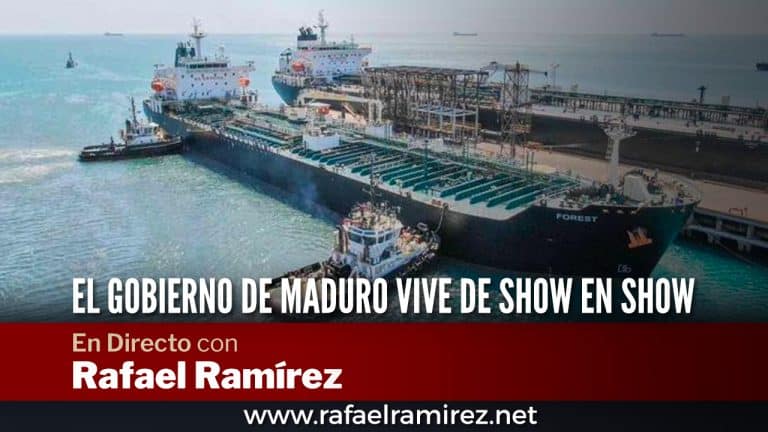
The first vessel, called Fortune, with a volume of 270,000 barrels of fuel, unloaded on Sunday, May 24th . Later, the Forest, Faxon, and Petunia tankers arrived, the first two with 275,000 and 268,000 barrels of fuel respectively, and the last one unloaded at the El Palito refinery with 365,000 barrels of alkylate fuel.
The volume of imported Iranian fuels amounts to approximately 1.17 million barrels, equivalent to one day of fuel production in the country back in 2013, and is enough for 9.8 days of national demand, if the strict quarantine measures imposed on the country get lifted, considering that national consumption only amounts to 120 thousand barrels per day.
But the government has already announced that this fuel will be available only for «authorized vehicles», which suggests that, since distribution is under the control of the National Guard, the fuel black market will continue to thrive. Currently, one liter of fuel sells for up to $2 on the black market.
On the other hand, the government has also announced its intention to charge fuel on the domestic market in dollars at international prices.
The importation of fuel and the collapse of the national refining system seem to have provided the government with an opportunity to advance in its plan to sell fuel to the domestic market at international prices, eliminating fuel subsidies, which used to be a traditional advantage enjoyed by the Venezuelan people as oil owners.
With its economy adjustment plan in line with the IMF’s adjustment recipes, but unable to reach agreements with the IMF, the government is making progress in its shock policy aimed at eliminating subsidies to fuel, gasoline, diesel, and gas.
Beyond any punctual adjustment in fuel prices, it seems that the government will be willing to sell fuels at international prices, preparing the favorable conditions for the privatization of the sector, as proposed by the PDVSA’s Restructuring Commission.
The tariffs currently discussed by the government range between US $0.50 and $0.70 per liter, equivalent to $20-30 for a 40-liter tank, which is the equivalent of 10-15 minimum wages for an average vehicle in the country.
There is no technical, economic, or political justification for this situation nor the national government’s claims since the Venezuelan people are being made to pay for the government’s inability to run PDVSA. On the other hand, it is an absolutely regressive and anti-popular measure to impose an absurd extra cost on the internal fuel market in a country in a severe economic crisis, an impoverished people, and with all kinds of deficiencies.
The government and its economic program are absolutely contrary to President Chavez’s oil policy and to the system of economic and social guarantees and competitive advantages that the economy and the citizens of our oil-producing country, the country with the largest oil reserves on the planet, have always enjoyed.
Finalmente maduro anunció el aumento de los precios de la gasolina y además la privatización de la distribución de combustibles, que se venderán a precios internacionales. El gobierno avanza en la aplicación de su paquetazo, con la dolarización de la economía, haciendo a nuestro país cada vez más injusto y desigual, y nuestro pueblo más pobre, el país de los bodegones. Bodegones que son creación de maduro y que éste, de manera cínica, dice “desconocer”.
El aumento del precio de la gasolina y su privatización, han sido parte de la propuesta de entrega de PDVSA hecha por el “Comité de Reestructuración” de la empresa, que denunciamos el pasado primero de mayo, así entre el caos y la tragedia del día a día, el gobierno viene aplicando un paquetazo neoliberal en el país, ahora le toca a la gasolina.
maduro anuncia que el precio del litro de gasolina será de 5000 bs/litro, hasta 120 lts, los vehículos y 60 lts las motos, al mes. Ésto quiere decir que el ciudadano debe disponer de 600.000 bs para llenar un tanque de su carro y 300.000 bs para llenar el tanque de la moto. Eso se dice fácil para el país de los bodegones de maduro, pero para las grandes mayorías, el país pobre, de los trabajadores, para el que vive de su sueldo mínimo de 400.000 bs al mes, es difícil o imposible dejar de comer o comprar medicinas, para llenar un tanque de gasolina.
Agrega el gobierno que por encima de esta cantidad de litros de gasolina disponibles a 5000 bs, el ciudadano tendrá que pagar la gasolina a precios internacionales. Es decir, los mismos precios que se pagan en Europa o EEUU, donde el salario mínimo es de 1.500 euros o 1.200 dólares, y ello para un país donde el salario mínimo mensual es de 2 dólares.
El gobierno impone esta alza brutal del precio de los combustibles y pretende llevarlo a precios internacionales en el país de las mayores reservas de petróleo del planeta, con un parque refinador nacional capaz de producir, como lo hicimoshasta 2013, 1,3 millones de barriles día de combustibles.
Para rematar, el gobierno asoma sus verdaderas intenciones, se entregan 200 estaciones de combustibles a los privados, sus privados, para que vendan allí la gasolina a un precio de 0,5 dólares el litro. Ésto significa que una persona con un vehículo de 40 litros debe disponer de 20 dólares, es decir, 4.000.000 bs para poder abastecerse de gasolina. Así, el gobierno inaugura “el bodegón de la gasolina”.
El aumento de la gasolina a estos groseros precios, o a precios internacionales, se imponen a un país que ha estado sometido a seis años de una catástrofe económica, con el 80% de la población empobrecida, las clases populares desesperadas, la clase media y profesional haciendo maromas para sobrevivir, con un salario mínimo mensual de solo 2 dolares, con hiperinflación, escasez, con una economía en una profunda y prolongada recesión, con una caída del 64%, con una industria petrolera destrozada, con un gobierno sin credibilidad, sin plan, gobernando a favor de una élite, acomodada y rapaz, un gobierno sin moral para exigir sacrificios al pueblo, un gobierno obeso e indolente, un gobierno impopular.
Recuerdo que este mismo esquema y todos los dispositivos de control que ahora aplica el gobierno, fueron los que en su momento nos propusieron los iraníes para aplicar en el país. El presidente Chávez rechazó esa propuesta.
Nosotros no le impondríamos un sobrecosto a los combustibles nacionales, que deberían producirse en el país, en un país petrolero. Nuestras exportaciones de petróleo compensaba con creces los subsidios a favor de nuestra población: la gasolina, diesel, gas, agua y electricidad. Y si no ¿para qué tenemos el petróleo? Una cosa es que las tarifas a los servicios públicos cubran los costos de operación y mantenimiento, hasta que dejen un margen razonable para sus ampliaciones y mejoras, pero otra muy distinta, es convertir los servicios públicos en un negocio privado, a favor de intereses particulares. Eso es lo que está haciendo el gobierno de maduro.
Ante el aumento del precio de la gasolina, en bolívares o dólares, a precios internacionales como el anunciado por el gobierno, habría que preguntarse y responder: ¿de quién es el petróleo?, del pueblo venezolano, desde 1829, gracias al Libertador Simón Bolívar y su Decreto de Quito, gracias a todas nuestras Constituciones, incluyendo la actual, ¿quién creó el petróleo?,nadie, está allí, es un beneficio de la naturaleza en nuestro territorio, nuestro país, ¿quién extrae y procesa el petróleo? PDVSA, nuestra empresa nacional de petróleo, una empresa al servicio del pueblo, por lo que, el precio de la gasolina que produce para el mercado interno sólo debe cubrir los costos de su procesamiento, ¿cuáles son los costos actuales de PDVSA?, no se sabe, ahora de PDVSA no se sabe nada, está destruida por la gestión de este gobierno ¿antes producíamos gasolina en el país? sí, hasta 2014 se producían más de un millón de barriles días de combustibles en el país, se satisfacía toda la demanda interna y además, se exportaba, ¿cuánto combustible produce PDVSA actualmente?, nada, no es capaz de operar sus refinerías, ni producir combustibles, ¿tiene el pueblo venezolano que pagar el costo de la ineficacia e incapacidad del gobierno en PDVSA? No!
Nada justifica este aumento. El pueblo venezolano es, por mandato Constitucional, el dueño del petróleo y PDVSA es la empresa nacional de petróleo de todos los venezolanos. Su responsabilidad es extraerlo y procesarlo en beneficio del pueblo. El pueblo no tiene porque pagar las ineficiencias, improvisaciones, la mala gestión del gobierno al frente de PDVSA.
Durante todos los años del gobierno del presidente Chávez, trabajamos en PDVSA para garantizar la satisfacción de las necesidades del consumo interno de nuestro pueblo, para que el mismo contara con combustibles a un precio nacional, en su beneficio, la economía del país estaba en crecimiento, bien administrada,conducida a favor de las grandes mayorías ¡Con nosotros nunca faltó la gasolina!
Lo hemos dicho, lo hemos venido denunciando, entre los insultos y acusaciones del madurismo: el verdadero plan del gobierno, es entregar PDVSA y nuestro petróleo al capital privado y transnacional. Han acabado con la única fortaleza económica que teníamos, la única empresa capaz de procesar nuestro petróleo y garantizar la demanda interna de combustibles, para ahora entregarla al interés de sus socios privados.
El aumento de la gasolina forma parte del paquetazo de maduro. Este gobierno le aplica al país, el programa de ajustes neoliberal más violento y sin sentido que se haya en el mismo llevado a cabo. El paquetazo de CAP, su fórmula de ajustes del precio de la gasolina, desencadenante del Caracazo, quedó en pañales ante lo que está haciendo maduro. Lo que pasa es que CAP no tenía al FAES, maduro si.
Qué ironía que este gobierno, que se la pasa arremetiendo contra los gobiernos de la IV República, está haciendo cosas, que ni siquiera hicieron aquellos. El venezolano, es un pueblo siempre traicionado por sus gobernantes. Solo Chávez murió, gobernando para el pueblo, su memoria es acribillada todos los días por este gobierno.
El gobierno ha liberado los precios, levantado los controles, privatizado empresas, eliminando las prestaciones, acabando con las conquistas sociales, “reduciendo la carga laboral”, como les gusta decir a los neoliberales, para llevar el salario mínimo a los niveles más bajos del hemisferio de 2 dólares por mes, y ahora levanta los subsidios a la gasolina, elevando su precio al internacional. Es la misma receta del FMI, sólo que este organismo no está dispuesto ni siquiera a hablar con maduro.
Entre los aplausos del PSUV y su Asamblea Nacional Constituyente, el gobierno arrasa con el pueblo venezolano, golpea a los más pobres, en medio de la peor crisis económica de nuestra historia contemporánea, impone un brutal programa de ajustes económicos de derecha, que condena a millones de venezolanos a la miseria y la pobreza.
Sostenido en la violencia del FAES y sus demás cuerpos represivos, el gobierno impone un paquete de medidas de choque a la población más pobre. maduro gobierna para las élites, para la minoría de privilegiados que tienen acceso a los negocios del gobierno o a dólares, para el público que puede acudir a los bodegones, para los privilegiados de su gobierno.
maduro gobierna en contra de los intereses del pueblo. ¿Por qué se impone un precio tan alto a la gasolina que resulta vital para el transporte de los ciudadanos?, ¿por qué hacer este ajuste neoliberal si el pueblo confronta la peor crisis económica de nuestra historia?, ¿por qué cobrar a precios internacionales combustibles que deberían producirse en el país, con petróleo venezolano?
Debe quedar claro que este gobierno ni es Chavista, ni tiene nada de revolucionario. Por sus acciones debe ser juzgado. Éste, es un mal gobierno de derecha, que entre caos y violencia, sigue apretando al pueblo, cargando sobre sus espaldas, sobre las espaldas de los humildes y los trabajadores, todo el peso de su incapacidad, el costo de su pésima gestión.
Ahora vendrán las excusas y justificaciones, que si las “sanciones norteamericanas”, que si “una invasión inminente”, otra “conspiración”, otro “plan secreto” develado por el gobierno. Sus voceros del odio arremeterán contra el gobierno de Chávez, contra sus ministros. Ahora, todos los males de este país son culpa de Chávez y de PDVSA. maduro tendrá que derogar las leyes del gobierno del presidente Chávez, la ley orgánica de reordenamiento del mercado interno de los combustibles líquidos, de septiembre del 2008, que detuvieron la privatización de la gasolina iniciada por L. Giusti durante la “apertura petrolera”.
Ya la gente está cansada de tanto caos, atropello, de tantas malas decisiones. El pueblo está asfixiado entre la falta de luz, agua, gasolina, gas, comida, en una cuarentena infinita, entre el FAES, los pranes, las malas noticias, la censura, todo el país está cansado de este mal gobierno.
No faltarán las élites, viejas y nuevas, que aplaudan a maduro, los chavistas que se acomodaron a este desastre, los que no quieren perder sus privilegios, los que guardan silencio desde su curul, los maduristas y la derecha. ¡Bravo!, maduro arrasa con las conquistas económicas y sociales alcanzadas durante el período del presidente Chávez, incluso, las alcanzadas durante los gobiernos de la IV República, de AD y Copei. ¡maduro arrasa con todo!
No faltarán los que están entregados, ese grupo del “por lo menos”: “por lo menos llega la luz unas horas”, “por lo menos llegó la cisterna de agua”, “por lo menos hay bodegones”, ahora será: “por lo menos habrá gasolina”.
Si el pueblo no pelea, si no lucha por sus derechos, si no se moviliza en defensa de sus intereses, seguirán privatizando todo: PDVSA, el petróleo, la gasolina, luego vendrán el gas, el agua, la electricidad, el transporte. Todo en nombre de Chávez, todo con una excusa, una justificación, entre el caos y la manipulación, con la violencia y la mentira, siguen acabando con el país. El aumento de la gasolina es inmoral, injustificado y profundamente anti popular ¡No al aumento de la gasolina!
Al día de hoy, viernes 29 de mayo, los referenciales del precio del petróleo cerraron al alza, con el Brent en 37,84 dólares el barril y el WTI con 35,49 dólares el barril. El mes de mayo cierra así como un mes de recuperación del precio del petróleo, donde el Brent ha tenido un incremento del 41,4 % y el WTI un incremento del 78,8 % en relación a los precios del lunes 4 de mayo de 26,75 y 19,84 dólares el barril respectivamente.
INCREMENTO DEL BRENT (Mayo)
FUENTE: BLOOMBERG
INCREMENTO DEL WTI (Mayo)
FUENTE: BLOOMBERG
Esta recuperación del precio resulta más bien un “rebote” de los marcadores del petróleo, luego de las caídas sufridas desde inicio del mes de marzo, cuando la propagación del covid-19 provocó un desplome de la demanda de petróleo, que coincidió con la “guerra de precios” entre Arabia Saudita y Rusia, que inundó el mercado con una sobreoferta que se reflejó de inmediato en la caída del precio y el aumento de los inventarios.
El mercado reacciona de manera positiva al inicio del recorte de 9,7 millones de barriles día de petróleo acordado por los países de la OPEP+ y que entraron en vigencia a partir del primero de mayo, así como a los anuncios de los países del golfo pérsico, Arabia Saudita, Kuwait y Emiratos Árabes de hacer recortes adicionales a los acordados en la OPEP+, así como los recortes anunciados por Noruega y la caída de producción norteamericana, tanto de EEUU, como de Canadá.
La reducción de la sobre oferta de petróleo, y la recuperación gradual de la demanda que se espera para la segunda mitad del año, con el inicio del levantamiento de restricciones al transporte y la reactivación de las actividad económica, sobre todo en China y Asia, debe venir acompañada del “drenaje” de los altos inventarios de crudo y producto, para luego de ello, observar una recuperación de los precios del petróleo a los niveles de antes del inicio de la crisis.
Los precios de cierre del mes de mayo, para el Brent y el WTI, todavía están por debajo en 38% y 31%, respectivamente, de los valores de los mismos al inicio del mes de marzo, cuando el Brent y el WTI se cotizaba en 52,5 y 46,78 dólares por barril, respectivamente.
PRODUCCIÓN
El mercado percibe y toda la información disponible indica que los recortes de producción acordados por los países de la OPEP+ tienen un alto porcentaje de cumplimiento, lo cual se refleja tanto en el drenaje de los almacenamientos flotantes, así como la recuperación del precio.
OPEP+
Los países de la Organización de Países Exportadores de Petróleo (OPEP) y sus aliados realizan un monitoreo conjunto para evaluar los efectos de los recortes de producción.
Habrá que esperar el reporte mensual de la OPEP o del Comité de Monitoreo de la OPEP+ para tener una información oficial del acatamiento de los recortes acordados, pero la recuperación del precio durante todo el mes de mayo se ha consolidado como una tendencia y refleja el hecho de que comienza a reducirse la sobre oferta de petróleo en el mercado.
Al recorte de la OPEP+ que iniciaron el primero de mayo, se suman los recortes adicionales de 1 millón, 80 mil y 100 mil barriles día anunciados por Arabia Saudita, Kuwait y Emiratos Árabes Unidos, respectivamente, y que entrarán en vigencia a partir del primero de julio.
El acatamiento de los recortes, los recortes adicionales, así como las perspectivas de recuperación de la demanda mundial de petróleo, serán fundamentales para cualquier decisión adicional en relación al ajuste o no de los recortes acordados por la OPEP+, en la próxima reunión del 9 y 10 de junio.
Los mensajes de cohesión política entre los dos grandes productores de petróleo, en el seno de la OPEP+, sigue disipando cualquier duda en el mercado respecto al compromiso al más alto nivel con la estabilización del mercado petrolero.
Así, el pasado 27 de mayo de 2020, según informó el Kremlin, el presidente ruso, Vladimir Putin, y el príncipe saudita, Mohammed Ben Salman al Saud, sostuvieron una conversación telefónica donde continuaron su discusión sobre los desarrollos en el mercado global de la energía y señalaron la importancia de los esfuerzos conjuntos para alcanzar acuerdos en el formato OPEP+ sobre la reducción de la producción de petróleo en abril. Acordaron una mayor y estrecha coordinación sobre este tema entre los ministerios de energía de Rusia y Arabia Saudita.
Esta semana la agencia de noticias saudí SPA reportó que el ministro de Energía de Irak, Alí Allawi, se reunió con su homólogo, el príncipe Abdulaziz bin Salman, de Arabia Saudita, para posteriormente informar que se encontraban satisfechos de los efectos en el mercado y su respuesta ante los recortes de producción. Este mensaje es importante debido a que siendo Irak un importante productor dentro de la OPEP, ha estado por muchos años al margen de los acuerdos de recorte de producción por los problemas internos derivados de la guerra y la prolongada desestabilización interna a la que ha estado sometido el país.
El alcance del equilibrio entre la oferta y la demanda comienza por la reducción de la sobre producción de petróleo y este es el objetivo más importante a lograr al cierre del segundo trimestre del año, con miras a estabilizar el mercado hacia finales del año.
En este sentido, el 28 de mayo el ministro de Energía de Rusia, Alexander Novak, informó de acuerdo a la cadena TASS que la demanda de petróleo se mantiene en un nivel bajo pero en mayo aumentó un 20% con respecto a abril. Hasta los momentos, el excedente de petróleo se ubica entre 7-12 millones de barriles diarios, pero el ministro de energía estima el reajuste del mercado debido al incremento de la demanda en junio-julio.
Noruega
Por otra parte, el pasado 25 de mayo, el Ministerio de Energía de Noruega, en un comunicado oficial de la ministra Tina Bru, ratificó que el recorte de producción anunciado por su país comenzará en junio, con una reducción de 250 mil barriles diarios, aumentando en 134 mil barriles diarios en el segundo trimestre, para alcanzar un total de 300 mil barriles diarios para el mes de diciembre.
Noruega, el principal exportador de petróleo de Europa, con una producción de 1.859 mil barriles diarios, anunció el pasado 30 de abril, un recorte voluntario de 300 mil barriles día para este año, para contribuir a la estabilización del mercado y la recuperación del precio del petróleo, sumándose al esfuerzo de los países OPEP+.
EEUU
En el reporte de esta semana, la Administración para Información de la Energía de los EEUU (EIA por sus siglas en inglés), reporta nuevamente un descenso en la producción de petróleo, registrando al 22 de mayo 11,4 millones de barriles día de petróleo, una caída de 1,7 millones de barriles día, 13%, respecto a la producción de 13,1 millones de barriles dia del 27 de febrero de este año, antes del inicio de la crisis.
En el boletín de lasemana anteriorhacíamos referencia a la caída de la producción en Estados Unidos, consecuencia directa del desplome del WTI, marcador de referencia para el crudo norteamericano, debido a los altos costos de producción tanto de las áreas tradicionales, así como del petróleo de esquistos o “Shale Oil”, se convertía en un problema estratégico para los EEUU, por las dificultades asociadas a su recuperación; dificultades tanto de orden financiero, como técnico debido a las complejidades y características de sus áreas de producción.
Tal como indicamos en el boletín anterior, la actividad de taladros ha caído en 56% en un periodo de dos meses, desde 772 taladros activos a 339 taladros activos.
CAÍDA EN LA ACTIVIDAD DE TALADROS EN LOS EEUU
FUENTE: ADMINISTRACIÓN DE INFORMACIÓN DE ENERGÍA DE LOS EEUU, CON INFORMACIÓN DE LA BAKER HUGHES
La producción de esquisto depende en gran parte de nuevas perforaciones, que generan de manera inmediata altos volúmenes y que van degradándose en el tiempo. Tal es la dependencia de Estados Unidos en la nueva perforación, que el 55% de la producción de esquisto del país proviene de pozos perforados en los últimos 14 meses, según ShaleProfile.
Por ello, la reducción paulatina de las nuevas perforaciones y cancelación de trabajos de subsuelo en estas arenas, afectará en gran medida la capacidad de recuperación de la producción de Shale Oil o petróleo de esquistos en el corto plazo.
De acuerdo a estimaciones de la revista de energia “World Oil”,la producción de petróleo de los campos de esquisto de EEUU probablemente caerá en más de un tercio este año a menos de 5 millones de barriles por día, según la empresa de datos ShaleProfile Analytics.
En un estudio realizado por Bloomberg a las empresas del producción de petróleo de esquisto en los EEUU, se estima que la reducción de pozos dependerá en buena parte de los precios del WTI, que es necesario se ubique en más de 20 dólares barril. El estudio reportó que empresas como la Parsley Energy Inc. y Centennial Resource Development Inc. informaron que detuvieron las perforaciones y el fracking, mientras que otras como las empresas EOG Resources Inc. y Diamondback Energy Inc. esperan seguir sus trabajos de perforación de nuevos pozos pero en un número muy reducido.
La variación del marcador WTI Nymex impacta en distinta medida a los productores de crudo de norteamérica, pues, este marcador es específico para una zona geográfica determinada, así como para unas características químicas particulares, por lo que no representa totalmente a los crudos de otras calidades.
El resto de los marcadores de crudos utilizados en norteamérica y América Latina se relacionan a través de los precios formulas indexados a los precios del WTI Cushing. Esto explica la variación de los precios utilizados en la zona,y la mayor afectación que algunos productores han sufrido por la caída del WTI, afectando en mayor medida sus operaciones de perforación, como es el caso del petróleo de esquisto o la producción en América Latina.
PRECIOS DE LOS CRUDOS DE AMÉRICA DEL NORTE
(marzo a mayo 2020)
FUENTE: ADMINISTRACIÓN DE INFORMACIÓN DE LA ENERGÍA DE EEUU, BASADA EN BLOOMBERG
DEMANDA
La economía y la demanda mundial de petróleo siguen impactadas fuertemente por la pandemia del Covid-19.
Economía
Al día viernes 29 de mayo, se han confirmado 5,8 millones de casos a nivel global, con 360 mil muertes confirmadas y 2,4 millones de personas recuperadas. El pico de contagios lo tiene a la fecha Estados Unidos, con 1,76 millones de casos confirmados y 103 mil muertes, ubicándose como el país con mayor número de muertes confirmadas, un saldo 63% por encima de Reino Unido, con 37.837 muertes.
El segundo país con gran número de casos es Brasil, con 441 mil contagios confirmados. Mientras que los países de Europa más afectados por la pandemia: Italia, España y Francia, pasaron el pico y entraron en la curva de descenso de afectación, con 232.248, 238.564 y 149.668 casos y 33.229, 27.121 y 28.714, decesos respectivamente.
Durante su intervención en un panel organizado por las Naciones Unidas, el pasado jueves 28 de mayo, titulado “Devastación Financiera”, la Directora del Fondo Monetario Internacional, Kristalina Georgieva, señaló que el organismo espera que la economía global llegue a una contracción mayor al 3% en 2020, un resultado peor al de 2008 y 2009.
Por otra parte, el impacto del coronavirus en la economía europea será aún mayor de lo que ya se esperaba. Así al menos lo ha transmitido la presidenta del Banco Central Europeo(BCE), Christine Lagarde, que ha asegurado que los pronósticos de contracción para la Eurozona oscilan entre el 8% y el 12%, frente al 5% del que partía en el escenario anterior menos negativo. «Creo que el escenario suave, con una caída del PIB del 5% en 2020 ya está anticuado”.
El desempleo en Europa se ha disparado como resultado de la actual crisis del Covid-19, según las estimaciones de la Comisión Europea, los países más afectados han sido España, Italia y Francia.
PAÍSES MÁS AFECTADOS POR EL DESEMPLEO EN EUROPA
FUENTE: Comisión Europea, gráfico de Estatista
La economía de los EEUU, con una caída estimada en 20-30% para el segundo trimestre de este año 2020, sigue confrontando problemas para su reactivación, estando el país en el pico del Covid-19 y enfrentando severos problemas con índices reales del impacto del mismo sobre el empleo y la actividad industrial, a pesar de los paquetes de masivas ayudas económicas de más de 6 trillones de dólares, aprobados tanto por la Casa Blanca como por el Congreso de ese país.
Esta semana el Departamento del Trabajo de Estados Unidos, según su informe semanal del 28 de mayo, reporta 2.12 millones de solicitudes nuevas para la ayuda de desempleo, el acumulado de solicitudes asciende a 41 millones esta semana. El secretario del Trabajo, Eugene Scalia, estima que la tasa de desempleo podría llegar al 20% en 2020.
Mientras que la Comisión Económica para América Latina y el Caribe (CEPAL), en su estudio publicado el 16 de mayo, estima que la contracción de la actividad económica de la región será de 5,2% para 2020, la tasa de desempleo se ubicará en 11,5% con una estimación de desempleados de 37 millones en la región.
Las únicas economías que parecen estar en su camino de recuperación son las asiáticas, lideradas por la recuperación de la actividad económica en China, la segunda economía mundial y principal importador de petróleo del mundo, con una estimación de crecimiento del 1,8% para este año, luego de pasar el pico de la pandemia y comenzar a recuperarse de sus efectos en la economía.
RECUPERACIÓN DE LA ECONOMÍA CHINA,
LUEGO DEL IMPACTO DEL COVID-19
FUENTE: WIND; ENT GROUP; FT RESEARCH
A pesar de los signos de recuperación de la economía china, las autoridades gubernamentales no hicieron pronósticos, ni fijaron objetivos para el desempeño económico de este año, tal como lo señaló el primer ministro Li Keqiang, en su mensaje ante el Congreso Nacional del Pueblo, del pasado 22 de mayo.
RECUPERACIÓN DE LA ECONOMÍA CHINA
FUENTE: BLOOMBERG
Mientras que, la India, el tercer importador de petróleo más grande del mundo, sigue confrontando medidas de confinamiento a sus 1.300 millones de habitantes y una caída de su economía, el informe de la Oficina Central de Estadísticas (CSO), publicado ayer 29 de mayo, mostró la previsión de crecimiento confirmando la tendencia a la baja, con un importante retroceso desde el 6,1 % de crecimiento en 2018-19 hasta el 4,2 % esperado para el concluido 2019-20.
Demanda petrolera
Todas las agencias y organizaciones especializadas coinciden en estimar que la caída de la demanda mundial de petróleo pasó su pico durante el primer trimestre del año, sobre todo durante los meses de marzo y abril, donde se observó una destrucción de demanda de más de 20 millones de barriles día, una situación sin precedentes provocada por la rápida expansión y afectación del Covid-19 en las principales economías industrializadas del mundo. A partir del segundo semestre del año, se espera una recuperación paulatina de la demanda, en la medida que se relajen o levanten las restricciones a movimientos, viajes y se reactive la actividad industrial, manufacturera y comercio.
La Administración de Información de la Energía de EEUU (EIA) en su reporte Short Term Energy Outlook, de febrero 2020, antes de la crisis del Covid-19, estimó una demanda promedio anual de de 101,7 millones de barriles día. Sin embargo, al cierre del segundo trimestre del año y luego del colapso de la demanda de marzo y abril, la EIA, estimó, en su informe del 12 de mayo, que la demanda tendría una caída de -9,1 millones de barriles día, previendo que la demanda mundial de crudo promedio para el 2020, sea de 92,6 millones de barriles día, una reducción de en 8,1 millones de barriles diarios en relación a la demanda de 100,1 millones de barriles día, promedio del 2019.
Mientras que la OPEP en su último reporte de Monitoreo del Mercado, del 13 de mayo, estima que la demanda de petróleo tendrá una lenta recuperación, para ubicarse a finales de este año entre 92,82 millones barriles día, según reflejamos en nuestro último reporte.
La Agencia Internacional de Energía (AIE), en su publicación “Global Energy Review 2020”, publicado a inicios de mes de mayo, estima que la caída de demanda de crudo será de 9,3 millones de barriles día, colocándola en 92,4 millones de barriles diarios.
Asia y China
La demanda petrolera de las economías asiáticas está dando indicios de una lenta recuperación liderados por la economía china, con una recuperación en el consumo de la región, evidenciada en la actividad del sector refinación y del precio de los productos.
INCREMENTO DEL PRECIO DE COMBUSTIBLES POR RECUPERACIÓN DE LA DEMANDA EN ASIA
FUENTE: BLOOMBERG
Esta semana, en una publicación del 27 de mayo del Grupo Valora Analitika, señalaron que la consultora del sector de energía, Wood Mackenzie, estima que la demanda petrolera de China se ubicará en 13 millones de barriles día para el segundo trimestre 2020, que aun cuando es 2,5% inferior a el mismo periodo de 2019, representa un aumento a lo registrado el primer trimestre cuando sufrió una caída del 16%.
EEUU
Según la Administración de Información de la Energía, el volumen de la demanda al 22 de mayo esa semana registró 16,1 MBD, lo que refleja un aumento de 10% en relación a la demanda registrada el 24 de abril, de 14,5 MBD, sin embargo, aún no se registra un consumo como el registrado en febrero de de 20,4 MBD, por lo que actualmente la demanda de Estados Unidos se encuentran alrededor de 26% por debajo de sus niveles normales.
DEMANDA DE PETRÓLEO DE ESTADOS UNIDOS
Fuente: Administración de Información de la Energía (AIE)
Almacenamiento
Como hemos mencionado, en la medida que disminuye la sobre oferta de petróleo y se comience a restablecer la demanda, comenzarán a drenarse los altos inventarios de petróleo y productos construidos durante el primer trimestre del año, sobre todo marzo y abril, con abundante petróleo barato o “cheap Oil”. Debido a sus altos costos, este proceso de drenaje comenzará por el almacenamiento flotante, como primer recurso para abastecer el mercado.
Almacenamiento flotante
En el boletín anterior reportamos que, según el Grupo Frontline, el volumen de crudo en almacenamiento flotante, alcanzó en el primer trimestre de 2020 los 200 millones de barriles de petróleo. Un número muy alto que reflejaba la crisis de almacenamiento en tierra ante la sobreoferta de petróleo.
Esta semana, la firma de análisis de petróleo Vortexa, señaló que 25 millones de barriles de petróleo en almacenamiento flotante fueron drenados hacia los mercados asiáticos, en vista de la reactivación de la demanda en China e India.
INCREMENTO DEL ALMACENAMIENTO FLOTANTE
(marzo-abril 2020)
FUENTE: VORTEXA
En los datos manejados por la agencia de petróleo Kpler se destaca que el almacenamiento flotante de Asia pasó de 35 millones de barriles el 23 de mayo a 29 millones de barriles tres días después. Los principales factores, además de la reactivación de la demanda, es también la reducción de la oferta de petróleo mundial.
En el caso del sector marítimo, la Alphatanker, en su Monitor Mensual, señala que se está acabando la época de bonanza del almacenamiento de VLCCs (Very Large Crude Carrier), buques entre 1-2 millones de barriles de petróleo de capacidad, ya que se ha registrado una fuerte caída en los contratos de estos buques en relación a las semanas anteriores, un claro índice de su disminución de uso como almacenamiento flotante.
Alphatanker destaca que la liberación del almacenamiento flotante es un proceso gradual, que podría tardar de seis a nueve meses a partir de junio.
Almacenamiento en tierra
Esta semana con el retorno de la demanda, principalmente en Asia, en donde se aliviarán las medidas de confinamiento y las restricciones en la región, así como en Europa, los almacenamientos de crudo han mostrado un alivio.
Los almacenamientos de petróleo en Asia comienzan a liberarse, las refinerías de China, Corea, Japón e India retoman operaciones ya que la economía de la región se activa lentamente. En un reporte de la agencia de noticias Bloomberg, se destaca que los almacenamientos de la zona comienzan a desahogarse, sin embargo, los volúmenes ubicados en almacenamiento flotante son la primera la primera opción de los refinadores.
Corea del Sur, que cuenta con una de las mayores capacidades de almacenamiento de la región, dada su ubicación estratégica, se ha convertido en un lugar propio de almacenamiento comercial de crudo en Asia, sus almacenamientos, que habían llegado a copar sus capacidades, inician un lento proceso de drenaje, dada la reactivación de las operaciones de los refinadores de la región.
EEUU
Los inventarios de crudo aumentaron en 7,9 millones de barriles en la semana al 22 de mayo, a 534,4 millones de barriles de acuerdo al informe semanal de la Administración de Información de Energía (IEA), This Week in Petroleum.
Los días de cobertura del inventario de Estados Unidos se ubican en 41,7, un leve aumento de 0,5 en relación a la semana anterior, su tendencia desde el 17 de abril, cuando se ubicaba en 38 días de cobertura el almacenamiento, es de aumento progresivo. A la fecha los días de cobertura de almacenamiento, son un 48% mayores a los del 2019 a esta fecha cuando eran de menos de 28 días de cobertura.
El aumento de las reservas estratégicas de los EEUU alcanzan un volumen histórico de 534 millones de barriles, en gran parte debido a las importaciones de crudo de 2,1 millones de barriles día. Analistas esperaban la semana anterior una disminución del almacenamiento en 1,9 millones de barriles.
NIVELES DE INVENTARIOS DE PETRÓLEO EN LOS EEUU
Fuente: Agencia Internacional de Energía (AIE) 28 de mayo 2020
Venezuela
El país sigue sumergido en una profunda crisis económica, política y social que se inició mucho antes que la aparición de la pandemia del Covid-19.
Con el país sometido a un total confinamiento, existen dudas razonables de que el gobierno oculta la información en relación a la afectación de la pandemia en el país, tal como ha ocultado los índices epidemiológicos, económicos y sociales del país.
Esta semana la Universidad Johns Hopkins, se pronunció en un informe presentado sobre la situación del Covid-19 en el país, en donde estiman que los casos llegan a 30.000 según sus registros.
La Doctora Kathleen Page, investigadora de la Universidad de Johns Hopkins, señaló que el informe se realizó luego de entrevistas con personal de salud del país, donde las pruebas realizadas de serología tienen un alto margen de error, además de que el sistema sanitario no cuenta con los requisitos mínimos para manejar la crisis sanitaria, por lo que alertan que la pandemia puede escalar exponencialmente, sin que el gobierno ni el sistema de salud tengan capacidad para hacer frente a una situación como esta.
Economía
La economía venezolana sufre una fuerte recesión, cayendo a niveles sin precedentes de -64% acumulada en el periodo de los últimos 6 años, con una hiperinflación estimada en 1.000.000%, las reservas internacionales en solo 6.300 millones de dólares, el nivel más bajo en los últimos 30 años y la destrucción del signo monetario, el bolívar.
El tipo de cambio oficial se ubica a 200.000 bolívares por dólar, lo cual coloca el salario mínimo mensual en 2,5 dólares por mes, equivalentes a 0,08 dólares por día, el más bajo de toda la región, incluso por debajo de Haití y Cuba, y por debajo del nivel de umbral de la pobreza extrema definido por la ONU de 1,9 dólares día.
Esta debacle económica ha provocado un dramático deterioro de la calidad de vida de la población con una aguda escasez de alimentos, medicamentos, servicios básicos como agua, luz, transporte, comunicaciones, combustibles y trabajo, provocando un éxodo estimado por la ONU en 5 millones de venezolanos a partir del 2016.
En el informe de la Comisión Económica para América Latina y el Caribe (CEPAL), presentado el pasado 21 de abril, sobre la afectación del Covid-19 en América Latina, se ubica a Venezuela con la mayor caída del PIB, de -18 %, el peor desempeño de toda la región.
Actividad petrolera
La industria petrolera venezolana se encuentra en la peor situación de su historia, luego de que, a partir del año 2014, el gobierno iniciara una persecución política contra sus cuadros directivos, gerenciales y trabajadores calificados, exiliado y colocando en prisión a más de cien gerentes y trabajadores, entregando la conducción de la empresa a 7 sucesivas Juntas DIrectivas con personal sin cualificación y conocimiento, o sin posibilidades de tomar decisiones, en el manejo de PDVSA y luego, a partir del año 2017, entregando el manejo de la empresa al sector militar.
En estos seis años, la industria ha estado sujeta a sucesivas intervenciones, suspensión de inversiones y desvío de los recursos presupuestarios fundamentales para el mantenimiento y operación de sus procesos medulares de producción de petróleo y gas, procesamiento, refinación y exportación de petróleo y productos.
El último reporte de la OPEP, correspondiente al mes de abril, coloca la producción de petróleo de Venezuela en 622 mil barriles día, equivalente a los niveles de producción del año 1.945, una caída de 2,4 millones de barriles de petróleo día respecto al cierre de 2013 de 3 millones de barriles día y un colapso del sistema de refinacion venezolano, por lo que no se puede atender la demanda interna de combustibles, ni exportar productos.
La producción de combustibles en el circuito de refinación nacional alcanzó para el cierre del 2013, 3.011 millones de barriles día, de los cuales se disponían 703 MBD para atender la demanda interna de combustibles y 2.425 MBD destinados para la exportación. Actualmente el sistema de refinación está técnicamente paralizado, con una producción muy por debajo del 10% de su capacidad, por lo que PDVSA no ha sido capaz de atender la demanda interna de combustibles, estimada en tan solo 120 MBD de combustibles debido a la fuerte recesión económica.
Producción Petrolera
A los problemas del deterioro de la infraestructura, instalaciones y abandono de las actividades de perforación y subsuelo que han traído como consecuencia el colapso en un 79% de la producción de petróleo en el país, se suma el problema de la salida de importantes operadores del país tal como el caso de la Rosneft y Chevron, esta última obligada a cesar operaciones en Venezuela por las sanciones del gobierno de los EEUU.
A la salida de las operadoras, se suma la salida de las empresas internacionales de servicios petroleras como Halliburton, Schlumberger, Baker Hughes y Weatherford también por la no renovación de las licencias de operación emitidas por el departamento de tesoro norteamericano en el marco de las sanciones de los EEUU en contra del país.
La salida de estos operadores y empresas de servicios, sin embargo no han podido ser asumidas por PDVSA, debido al desmantelamiento de sus propias capacidades operativas, diezmadas por las intervenciones del gobierno y la salida de más de 30 mil trabajadores a partir del 2014.
En situaciones de sanciones como las sufridas por la empresa en el 2010 de parte de los mismos EEUU o el sabotaje a la industria petrolera de diciembre-marzo del 2003-2003, PDVSA siempre les pudo hacer frente con éxito, por contar con sus capacidades operacionales, gerenciales y la movilización de los trabajadores, así como por la creación de las nuevas filiales petroleras a partir del 2008, tales como PDV Marina, o PDVSA servicios petroleros, los cuales permitian a PDVSA manejar más del 70% de sus propias exportaciones o más del 60% de las actividades de perforación y servicios petroleros en el país.
La imposibilidad de PDVSA de manejar sus volúmenes de producción al haber abandonado sus flota de buques propia de transporte o dejar que se deterioran sus capacidades operativas en el periodo de los últimos 6 años, ha dificultado el desalojo de los volúmenes de almacenamiento en los terminales venezolanos.
Según información difundida por Reuters, los inventarios de Merey en el terminal de exportaciones de Jose aumentó en 2 millones en 20 días, cuando pasó de 7,2 a 9,6 millones de barriles, lo que deja una disponibilidad de apenas 318 mil barriles.
Esta situación obligó a Petrosinovensa, la empresa mixta entre PDVSA y CNPC, a detener sus operaciones por segunda vez en el mes, el domingo 24 de mayo. Actualmente son pocas las plantas de mejoramiento de crudo que se encuentran en funcionamiento continuo.
Habrá que esperar el próximo informe de la OPEP, para revisar el reporte de producción del país en este escenario tan adverso.
Importación de combustibles
El gobierno finalmente ha reconocido que, ante la incapacidad de reactivar y operar el sistema de refinación nacional, luego de infructuosos intentos tanto en la refinería El Palito, como en el Complejo Refinador Paraguaná, debe importar gasolina.
No es la primera vez que el gobierno lo hace. Ya desde el 2018, 2019, la importación de combustibles se fue incrementando en el país a medida que se seguía deteriorando en sistema de refinación nacional, impidiendo abastecer el mercado interno de combustibles.
Este negocio estuvo bajo control de traders cercanos a uno de los grupos de poder dentro de PDVSA que lograron traer volúmenes de combustibles hasta este año. Con la salida de Quevedo y la instalación de la Comisión de Reestructuración encabezada por el actual vicepresidente de economía y ministro de petróleo de turno, se estableció un acuerdo con Irán para el suministro de combustibles al país, además de suministro de insumos y personal técnico para el sistema de refinación nacional.
Irán, país miembro de la OPEP, sometido desde hace muchos años a estrictas sanciones económicas y a su industria petrolera, sin embargo tiene capacidad de atender su demanda interna y exportar combustibles.
En el marco de esta alianza, de la cual nadie sabe los términos y condiciones, Irán acuerda la venta de combustibles al país, no se sabe tampoco a qué precio se tranzaron, los cuales han sido enviados a Venezuela en de 5 buques con combustible y aditivos.
Luego de una intensa campaña de propaganda e intriga de parte del gobierno que parece tener el objetivo de lo grave de la situación del colapso operativo de PDVSA y del sistema refinador venezolano, los buques finalmente arribaron al país, sin ningún contratiempo, ni problema.
El primer buque denominado Fortune, con un volumen de 270 mil barriles de combustible, descargó el domingo 24 de mayo, posteriormente llegaron los tanqueros Forest, Faxon y Petunia, los dos primeros con 275 y 268 mil barriles de combustible respectivamente, y el último que descargo en la Refinería El Palito con 365 mil barriles de alquilatos.
El volumen de combustibles iraníes importados suman aproximadamente 1,17 millones de barriles, equivalente a un día de producción de combustibles en el país al año 2013, y alcanza para 9,8 días de abastecimiento nacional, en el supuesto de que se levante la estricta cuarentena del país y considerando que el consumo nacional está solo en 120 mil barriles.
Pero el gobierno ya ha anunciado que este combustible estará disponible solo para “vehículos autorizados”, lo cual hace suponer que, estando la distribución bajo control de la Guardia Nacional, continuará el mercado negro de combustibles, donde actualmente un litro de combustible se vende hasta 2 dólares.
El día sábado 30 el presidente maduro anunció un importante incremento del precio de la gasolina y su intención de cobrar el combustible en el mercado interno en dólares a precios internacionales.
El precio del litro de gasolina será de 5000 bs/litro, hasta 120 lts, los vehículos y 60 lts las motos, al mes. Esto quiere decir que el ciudadano, debe disponer de 600.000 bs para llenar un tanque de su carro y 300.000 bs para llenar el tanque de la moto. Este aumento de la gasolina es difícil pagar para las grandes mayorías, el país pobre, de los trabajadores que devengan un sueldo mínimo de 400.000 bs, para ellos resultará muy duro dejar de comer o comprar medicinas, para llenar un tanque de gasolina.
El gobierno también informó que, por encima de esta cantidad de litros de gasolina disponibles a 5000 bs, el ciudadano tendrá que pagar la gasolina a precios internacionales. Es decir, los mismos precios que se pagan en Europa o EEUU, donde el salario mínimo es de 1.500 euros o 1.200 dólares, para un país donde el salario mínimo mensual es de 2 dólares.
Finalmente, el gobierno anunció el inicio de la privatización del sector, con la entrega de 200 estaciones de combustibles a los privados, sus privados, para que vendan allí la gasolina a un precio de 0,5 dólares el litro. Esto significa que una persona con un vehículo de 40 litros debe disponer de 20 dólares, es decir, 4.000.000 bs para poder abastecerse de gasolina. Así, el gobierno inaugura “el bodegón de la gasolina”.
La importación de combustibles y el colapso del sistema de refinación nacional, parece ser la oportunidad para que el gobierno avance en su plan de vender los combustibles al mercado interno a precios internacionales, eliminando los subsidios de combustibles al mercado interno , que ha sido una ventaja tradicional y un beneficio del que ha disfrutado históricamente el pueblo venezolano, como dueño del petróleo.
El gobierno, en su plan de ajustes económicos, en línea con las recetas de ajuste del FMI, pero sin estar en capacidad de llegar a acuerdos con dicho organismo, avanza en su política de choque, en el plan de eliminación de subsidios a los combustibles, gasolina, diesel y el gas.
Más allá de cualquier ajuste puntual en los precios de los combustibles, el gobierno el venderá los combustibles a precios internacionales, preparando las condiciones para privatizar el sector tal como ha planteado la Comisión de Reestructuración de PDVSA.
Una cosa es que las tarifas los servicios públicos cubran los costos de operación y mantenimiento, hasta que dejen un margen razonable para sus ampliaciones y mejoras, pero otra muy distinta es convertir los servicios públicos en un negocio privado, a favor de intereses particulares.
Esta situación y pretensión del gobierno nacional no tiene justificación alguna, ni técnica, ni económica, ni política, pues se está haciendo pagar al pueblo venezolano de la incapacidad del gobierno a dirigir PDVSA. Por otra parte, es una medida absolutamente regresiva y anti popular, imponer un sobre costo absurdo al mercado interno de combustibles en un país con una severa crisis económica, un pueblo empobrecido y con carencias de todo tipo.
El gobierno y su programa económico es absolutamente contrario a la política petrolera del presidente Chávez y al sistema de garantías económicas y sociales, y ventajas competitivas con las que siempre contó la economía y los ciudadanos de nuestro país petrolero, el país con las mayores reservas de petróleo del planeta.
Todos sabemos, y principalmente la gente de miraflores que presurosas arreglan sus maletas y su exilio, que maduro es un hombre caído, y todos sabemos que en su caída va transformándose en un fascista de la peor especie. Lo que vamos a escribir parecerá extraño a muchos, pero maduro no termina de caer porque nos ha fallado la teoría. Veamos
Mucho costó, primero entender que el madurismo no es chavismo, que esto ni se le asemeja a Chávez, así se consumieron algunos años intentando que el gobierno rectificase. Luego se pasó otro tiempo divagando antes de calificar al gobierno como una dictadura fascista, peor que la dictadura disfrazada de la cuarta república. Y aquí cabe una explicación. Todas las dictaduras aparentan, se disfrazan, ninguna declara “soy una dictadura fascista, feroz”, todas tienen su tsj que les barniza sus tropelías, todas tienen sus parlamentos sumisos, sus leyes absurdas, todas tienen su oposición conveniente, cómoda. Por lo tanto develarlas como dictadura no es directo, es una lucha de develamiento.
Aquí hay que aplicar la comparación del cochino que aprendimos allá en el pueblo natal de Pan Pan: “si tiene orejas de cochino, cuerpo de cochino, ronca como un cochino, trompa de cochino, es cochino y con él se puede hacer chicharrón”. Podemos, entonces, decir, si anuló al parlamento con ese bodrio que es la constituyente árbol que sólo da represión pero no termina de parir la constitución, es como el pariente que llegó por dos días y se quedó para siempre. Si secuestró a la justicia, a la fiscalía, al tsj. Si asesina a la disidencia, si pone presos sin derecho a la defensa, sin derechos humanos como a Vivas Santana, a Rodríguez Torres, Baduel, Alfredo Chirinos, Aryenis Torrealba, y mil víctimas más. Si sus elecciones huelen a guiso. Si la censura es evidente. Si tiene una policía especial para la persecución política que no respeta ley, que mata en los barrios a mansalva. No hay dudas de que es una dictadura.
Haber errado en el diagnóstico temprano del madurismo, sin duda ninguna, y lamentablemente, le costó carísimo al Chavismo auténtico. Le costó la perdida de la organización y de las banderas ideológicas que fueron capturadas por el falso chavismo. De aquí se desprenden una serie de consecuencias: la principal de ellas, la dificultad para recuperar su posición en el debate por el poder. La dictadura madurista no sólo estableció una censura feroz, una persecución de los líderes chavistas, sino que valiéndose de la candidez de la masa que los cree heredero del Comandante, desprestigio de manera brutal a los líderes capaces de hacer frente a la traición. Se puede decir que el madurismo nació y creció en los territorios de la lealtad boba.
La lealtad boba será motivo de estudio, ya en este momento, estamos seguros hay historiadores escribiendo libros desde sus pocitos de refugio contándole a las generaciones futuras algunas de las razones que hicieron posible la transición del Chavismo a la dictadura madurista. La lealtad boba debe incluirse en la explicación de la caída del Socialismo de la Unión Soviética y en otros socialismos donde ocurre el fenómeno de una transición absurda de gobiernos luminosos a monstruos inexplicables…
El Libertador con su vista larga que abarca siglos entendió que era la ignorancia la clave de la sumisión de los pueblos, y contra ella luchó. ¿A cuál ignorancia se refería Bolívar? Veamos.
La primera ignorancia de los pueblos, es desconocer su estado de esclavitud. El esclavo de tantas generaciones termina por hacer de la esclavitud su mundo, no comprende otra manera de vivir, la desea, defiende su opresión. Tomar consciencia de su condición de esclavo es el inicio de la rebelión. Esa conciencia al principio no es masiva, pertenece a un grupo pequeño, necesariamente le viene de afuera, los no esclavos son los que primero hacen consciente en toda su dimensión a la esclavitud, los sumidos en ella no la entienden como algo antinatural. La luz viene de afuera. Los dominantes se encargan de mil maneras de impedir que los esclavos vean la luz.
Una imposición de los dominantes es la ignorancia de la teoría de la revolución. Los dominantes la combaten deformándola, ocultándola, persiguiendo a los teóricos, satanizándolos. La hoguera está reservada para la palabra discordante del tejido embrutecedor, la pena es capital, desde aquel que nos invitó a “Amaos los unos a los otros”, o el que aseguró que la tierra se mueve alrededor del sol, hasta el que proclama que detrás de toda riqueza hay un robo, o el que asegura que la sangre de los reyes es roja como la de todos, y la sangre azul es una ficción. La palabra es revolucionaria.
Los dominantes temen a la palabra revolucionaria saben que antecede a la acción revolucionaria, y temen con igual terror a los hombres que la encarnan, los persiguen con saña, los persiguen hasta la crucifixión, el asesinato, el desprestigio. Bolívar, el Libertador de medio continente, salió de Bogotá a los gritos de longaniza, fue a morir en San Pedro Alejandrino sin camisa, las masas ignorando a su gran líder le dieron la espalda. A Cristo pocos quisieron ayudarlo a cargar la Cruz, (sólo Simon de Cirene lo ayudo) el pueblo ignoró a su Mesías. Trotsky fue asesinado luego de desprestigiarlo. Sucre eliminado privando así a los pueblos de América de un líder.
Pueblos que ignoran su condición de esclavos, que ignoran la teoría de la esclavitud, la teoría de la liberación, pueblo que ignora a sus líderes, es un pueblo instrumento ciego de su propia destrucción. A eso se refería el gran visionario.
Es esa la batalla principal de los revolucionarios, la lucha contra la ignorancia, por el conocimiento de la masa de su fuerza cuando se hace consciente de su condición de esclava, de despojada y de la fuerza que adquiere cuando se encuentra con la teoría liberadora, con sus líderes, cuando se organiza. Los revolucionarios deben conocer la teoría, protegerla llevarla a la masa, y sobre todo deben proteger a sus líderes, preservarlos, la experiencia nefasta de Martí en dos Ríos aún pesa sobre Cuba y sobre el Continente.
Pedirle, a los pocos líderes chavistas que se han mantenido fieles al legado de Chávez, que denuncian al madurismo como una traición a Chávez, que plantean salir del madurismo y del guaidismo, que no se han deslizado a la derecha, pedirles que regresen… es una tontería, a los que esos plantean les regalamos este poema de Martí:
«En silencio ha tenido que ser y como indirectamente, porque hay cosas que para lograrlas han de andar ocultas, y de proclamarse en lo que son, levantarían dificultades demasiado recias para alcanzar sobre ellas el fin.» José Martí.
La actualidad política venezolana está rodeada de una serie de eventos que son magnificados para desviar la atención de la gente de los verdaderos problemas que aquejan a la población
Maduro y su gobierno pretenden tapar la severa crisis económica y social que vive el ciudadano con el show de las amenazas norteamericanas, inexistentes, de hundir los barcos iraníes y con la invasión de supuestos “mercenarios” a nuestras costas, queriendo emular la épica de la Bahía de Cochinos en Cuba.
De estos y otros temas conversamos esta semana: En Directo Con Rafael Ramírez
Nuestra sociedad está en crisis. No solo el gobierno, no solo el Estado, nuestra sociedad se ha partido en pedacitos. Cada quién trata de sobrevivir a las carencias y necesidades sin mirar al lado. No hay medios adquisitivos fijos ni claros. El país está dolarizado sin dólares, aquellos que los consiguen son afortunados. No hay efectivo, no hay bolívares. Los sueldos no existen, en la mayoría de los trabajadores no representan un valor significativo para la vida. Las cajas del Clap y los bonos sorteados son pírricos y no completan lo básico necesario para vivir decentemente. Ante esta situación la conciencia social se pierde; cada quien sale a buscarse la vida como sabe o como puede. A causa del virus y la cuarentena la masa se atomiza y cada partícula se capsula de forma individual en sus casas (y aun así hay robos nocturnos oportunistas). Con la cuarentena impuesta y la paranoia se agrava todo, se despedaza más la sociedad. Estamos mentalmente sensibles. El intercambio humano escasea porque escasean los recursos materiales y las razones políticas y morales para él: esa es la propensión del conjunto, fraccionarse y encerrase en sus propios asuntos.
Mucha gente se distrae de este desbarajuste como puede y el tiempo que puede, para eso es Directv y para eso están los “problemas nacionales”; de éstos nos hablan los “Elías Jaua”, moderados conciliadores.Esa posición “apaciguadora” representa un punto intermedio entre la manipulación del gobierno y lo que cree mucha gente que son las razones del gobierno para no darnos una vida mejor. Son los problemas de otros, con los cuales cargamos todos, gracias a la imposición de un punto de vista mediático (Roberto Malaver), a las “noticias nacionales”, por su efecto e intención de manipular y desviar la atención hacia otro lado, el lado que no es.
Las “noticias nacionales” nos distraen de la raíz del problema verdadero, que no es una noticia, es una verdad que yace en el fondo, el problema vivo, existencial de la revolución, y de la nación, de la propia idea de pueblo; es lo que padecemos a diario como pérdida, como sociedad y como individuos. Los efectos del terror nos distraen de no ver en el fondo la causa de una disolución existencial. Quizá, de llegar a conocer este origen el gobierno sería otro, en sentido estricto, sustancial.
Dice el sentido común de nuestro pacifista social: “…el anuncio de la administración Trump de impedir militarmente la llegada de buques provenientes de Irán, cargados con combustibles para aliviar la actual situación de desabastecimiento de los mismos que afecta a toda la población; … la suspensión, producto de las sanciones unilaterales y por tanto ilegales, del principal servicio de televisión satelital en Venezuela –es decir Directv –, afectando cerca de 10 millones de personas; … la noticia de la confiscación judicial de CITGO, empresa refinadora de combustibles de propiedad venezolana en los Estados Unidos, hoy manejada ilegalmente por el fallido gobierno paralelo de Juan Guaidó, con el aval del gobierno de Donald Trump … paradójicamente, están forjando un punto de encuentro de amplios sectores en torno al rechazo a la intervención armada, a las sanciones ilegales y a la pérdida de nuestros activos patrimoniales como Nación.”https://www.aporrea.org/imprime/a290904.html
Hace unos días citábamos a Fidel Castro, en uno de sus discursos a los CDR, donde decía a su gente que no se podía construir una unidad por razón de una amenaza de guerra, o de motivaciones fortuitas o superficiales, sino a través de la conciencia, y ahora nos asombramos de cuán perceptivo era Fidel, vemos como nuestro conciliador da valor a una unidad fortuita, “paradójica”, producto de una contradicción sin conciencia de ella, lo que es en el fondo eso, una falsa conciencia nacional que emerge del fondo como las impurezas, o cuando mucho, es un deseo personal, como “pacificador social”, de que sea posible esa rara unidad nacional basada en amenazas y miedo.
Con el caso de Directv Jaua teme junto al gobierno a una sublevación popular de “10 millones de personas”, por razones realmente ridículas, las cuales más bien desprestigiarían a cualquier revolución socialista respetable. Esa sanción afectaría a quienes contratan Directv y son adictos al cable, o sea, a la clase media pobre y empobrecida, machucada de miedo y de hambre, que no defendería ni su propia honra en una eventual invasión extranjera, pero sí sería capaz de tumbar al gobierno. En el caso de Citgo, preocuparse por esto es un gesto patriotero tonto: a nadie le afecta ni le interesa el destino de Citgo, la industria petrolera ya está quebrada, rematada desde hace rato; peor que la venta de Citgo es no producir gasolina en nuestras refinerías, o alimentos, medicinas. Citgo y los barcos iraníes no van a solucionar un problema social y político tan grave; solo con gestos patrioteros insulsos no vamos a recuperar lo perdido. Con gestos no se defiende un país, con deseos, con miedo. Se trata de 10 millones (incluidos intelectuales, políticos, trabajadores etc.) de pendejos, no de patriotas.
Cuando Jaua dice: “…paradójicamente, están forjando un punto de encuentro de amplios sectores en torno al rechazo a la intervención armada, a las sanciones ilegales y a la pérdida de nuestros activos patrimoniales como Nación”. Esto quiere decir que funciona la distracción, los que deberían ir a la raíz del problema terminan quedándose en la superficie, chapoteando sobre sus consecuencias sin ver las causas. La causa del problema es nuestra falta de conciencia social, de conciencia del deber social, y el gobierno parásito madurista que es como un tumor maligno: no sirve y estorba; “la causa está en Miraflores”. Y él lo sabe, cada quién lo sabe, pero no hay tiempo para ocuparse de eso, hay que llenar el estómago.
Jaua: “Cada vez más, con sentimiento patrio, leo, veo y escucho voces opositoras de todos los ámbitos de la vida política, económica, social y cultural deslindándose de la ignominia. Con coraje y valentía, dirigentes políticos, periodistas, empresarios, académicos, entre otros, le salen al paso al chantaje de ser señalados como “colaboracionistas del régimen”, cuando en verdad los mueve un auténtico sentimiento de defensa de su Patria, nuestra Patria; del derecho del pueblo a vivir con tranquilidad y de promover un acuerdo político democrático y transparente.”
Mientras “los mueve un auténtico sentimiento de defensa de su Patria” – si esto es cierto– se distraen del hecho de que no hay patria, cuando miran hacia los lados no encuentran nada, solo desolación y caos.
Creemos que Jaua describe muy bien el nivel de conciencia política que soporta el miedo. Hasta allí alcanzan a ver esos ojos acobardados, temerosos, ¡no de perder la revolución!, sino de que haya una revolución social verdadera, un cambio de conciencia, y la masa reaccione contra la vergüenza de vivir excluidos de todo, y sometidos a la voluntad de manipuladores y pícaros.
Cuando teníamos más de medio siglo jugando con unas reglas, naufragados en una tradición, surgieron un grupo de jóvenes que propusieron un nuevo juego, nuevas reglas. Entonces todo se estremeció: el bipartidismo, la guerra fingida, los cambios para que todo siguiera igual estallaron, ahora había un nuevo escenario. Aparecieron los COMACATES y se negaron a vivir en el mundo hipócrita que habían heredado, lleno de miserias, de mentiras, bueno para una minoría y terrible para las grandes mayorías; superaron las reglas del juego, fueron valientes para intentar buscar otro mundo, derrumbaron con su tanqueta irreverente las puertas del viejo mundo, abrieron camino a nuevos horizontes.
Quizá pocos recuerdan a los COMACATES, quizá muchos no quieren recordar, ellos cambiaron nuestro mundo, fueron los Comandantes, Mayores, Capitanes y Tenientes que una madrugada luminosa irrumpieron contra la democracia hipócrita del pacto de punto fijo y se salieron del juego que nos tenía distraídos por más de medio siglo. No había generales, no fueron necesarios, solo ideas y sentimientos, mentes, corazones y coraje para emprender la hermosa aventura de cambiar al mundo, de no conformarse con la ruta individual.
En el Samán de Güere comenzó el juramento, rescataban así al Libertador que lo habían convertido en imagen vacía, sin el aliento que libertó a medio continente y asombró al mundo, rescataron su espíritu y se fueron a fundar, no a ser apoyos del oprobio.
¿Triunfaron? Claro que triunfaron: demostraron que el viejo mundo se derrumba frente a la dignidad, nos enseñaron que la dignidad, el decoro, como dijo Martí puede concentrarse en un puñado de hombres y de allí fecundar a todo un pueblo. Buscaron nuevas ideas y las encontraron, el Cristianismo alumbró su camino, el “amaos los unos a los otros” los hermanó con lo mejor del pensamiento universal, supieron que “Patria es Humanidad”, que los desposeídos del mundo deben unirse, y así lo gritaron; descubrieron que sólo los desposeídos organizados alrededor del espíritu altruista pueden llamarse pueblo. Y se toparon con el núcleo de la infamia: “la propiedad”. Y propusieron nuevas formas sociales, y los poseedores de siempre los declararon sus enemigos.
Y se profundizó la batalla milenaria entre poseedores y desposeídos. Los capitalistas no podían tolerar la insurgencia. Asesinaron al líder. A unos los intoxicaron con el poder, a otros los apartaron, los anularon, a los más destacados los asesinaron. Después, como emergiendo de las miasma donde permanecía al acecho, surgió el viejo mundo. Regresamos al bipartidismo, a la guerra de cambiar todo para que nada cambie, la sociedad del egoísmo volvió con nuevas caras.
Ahora vivimos la misma pesadilla del pasado que aquella madrugada los COMACATES quisieron superar. Unos se volvieron verdugos de sus compañeros, otros se fueron apartados, deambulan en el extranjero sobreviviendo en embajadas increíbles, otros fueron encarcelados, exiliados, otros se retiraron desconcertados, algunos pisan en falso como los sonámbulos en las noches. Un grupo pequeño, arrinconado, permanece fiel al legado, lo mantiene vivo, garantiza la lealtad, lo transmite, lo defiende.
¿Fracasaron los COMACATES? No, no fracasaron triunfaron. Ayer nos enseñaron el camino hacia un nuevo mundo, nos demostraron que es posible. Y hoy volverán a triunfar surgirán con nuevas caras, se encontrarán con los ideales auténticos del Libertador y Chávez. Y entonces, junto a ellos recuperaremos, el sueño secuestrado por los traidores, volverá la prodiga aurora…